



Famous figures
Portraits of famous mathematicians, historical and contemporary
 Podcast
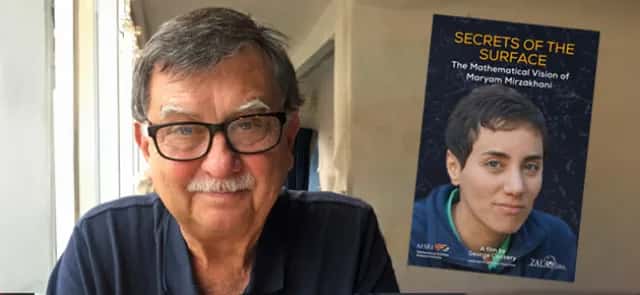
Mirzakhani's mathematical vision | Tangente
In 2020, George Csicsery directed a documentary about Maryam Mirzakhani titled Secrets of the Surface: The Mathematical Vision of Maryam Mirzakhani. Through numerous firsthand accounts, it reveals the life, personality and work of the Iranian mathematician.
 Podcast
The magic wand theorem | Tangente
Maryam Mirzakhani is also known for having obtained, with Alex Eskin and Amir Mohammadi, the magic wand theorem, so named because it made it possible to solve at a stroke many previously inaccessible problems. To explain it, let's first delve into translation surfaces. The illumination problem is one of its many applications.
 Podcast
Mirzakhani's geodesics
Maryam Mirzakhani first became known for the work she carried out for her thesis, in which she counts closed geodesics on hyperbolic surfaces. To explain her results, we will take a short tour through the world of hyperbolic geometry.
 Podcast
Mirzakhani: a revolutionary medal | Tangente
On August 13, 2014, Hassan Rouhani, president of the Islamic Republic of Iran from 2013 to 2021, congratulated Maryam Mirzakhani on Twitter on winning the Fields Medal, along with two photographs: one showing her wearing a hijab, the other showing her bareheaded.
 Podcast
Maryam Mirzakhani prizes | Tangente
The first woman and the first Iranian to receive the Fields Medal, Maryam Mirzakhani broke a historic barrier. Her visual approach turned mathematical problems into veritable landscapes. Today, numerous prizes bear her name to encourage young women pursuing research.
 Podcast
Mirzakhani: thinking in pictures | Tangente
Even before her research career began, Maryam Mirzakhani started filling small notebooks with drawings of imaginary surfaces resembling fantastical worlds. Some of these sketches, which she found "simply beautiful," inspired several of her works in topology.
 Podcast
Maryam Mirzakhani, from Tehran to Stanford | Tangente
A brilliant, passionate young woman, Maryam Mirzakhani turned her curiosity into an exceptional scientific career. Her optimistic outlook and perseverance changed the place of women in a field long dominated by men. Her life, brief but luminous, continues to inspire.
 Podcast
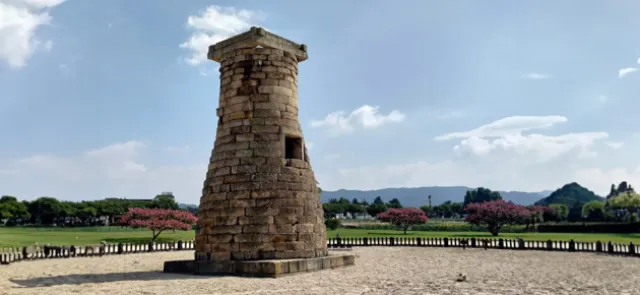
Algebraic tradition and innovation in Korea | Tangente
The tradition of examinations helped develop a culture blending tradition and innovation in 18th-century Korea. Thus, a Euler square was created even before Euler took an interest in the subject, while the Chinese method corresponding to Gauss-Jordan elimination was widely mastered.
 Podcast
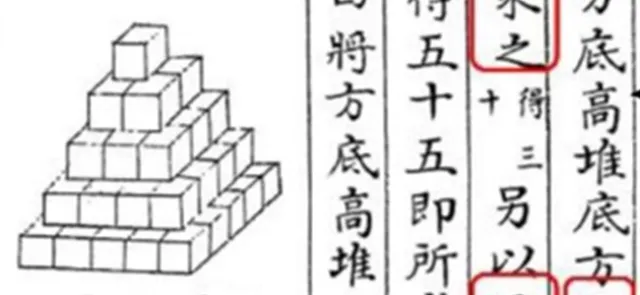
How division was done in China
Once a polynomial equation is given, its roots can be found simply by applying a division algorithm. This algorithm is based on the process of division. Here are its main principles.
 Podcast
The nonexistent proof in ancient China?
Mathematical proof, which comes from the Greek tradition, is often radically contrasted with Chinese mathematics, where it is absent. In reality, monstration was used there, and an enriching hybridization of mathematical reasoning methods emerges, particularly in the work of Xu Guangqi.
 Podcast
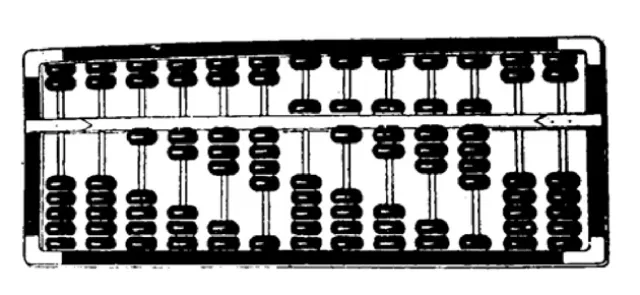
Spread of Chinese math practices, 13th–16th c. | Tangente
The abacus was not the only practical mathematical tool to have existed in China. Concise formulas also made it possible to calculate very quickly. These tools enabled the spread of knowledge over the centuries, thanks to numerous treatises explaining their mechanism.

The Chinese remainder theorem
An early method for what is known as the "Chinese remainder theorem" appears in the Classique mathématique de Maître Sun (Mathematical Classic of Master Sun), but its generalization had to await Qin Jiushao and his Neuf chapitres du traité des nombres (Nine Chapters of the Treatise on Numbers).
 Podcast
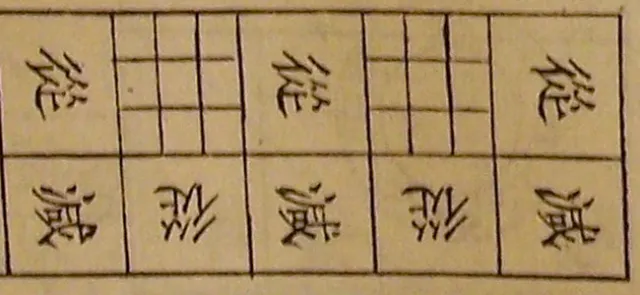
Setting up polynomial equations in medieval China | Tangente
Several methods exist for arriving at a polynomial equation to solve a given problem. The celestial source is the best known but not the only one. This is also an opportunity to see the different strategies of mathematicians in Song-dynasty China.
 Podcast
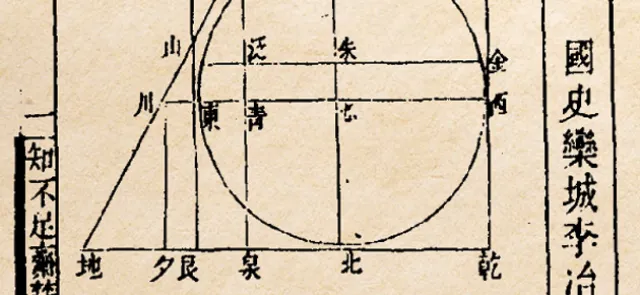
The math quartet of the Song-Yuan dynasties | Tangente
The period covered by the two Song dynasties and the early Yuan dynasty was particularly conducive to mathematics. Indeed, four great names emerged during this time: Li Ye, Zhu Shijie, Qin Jiushao, and Yang Hui. Their works share common influences but sometimes very different approaches.
 Podcast
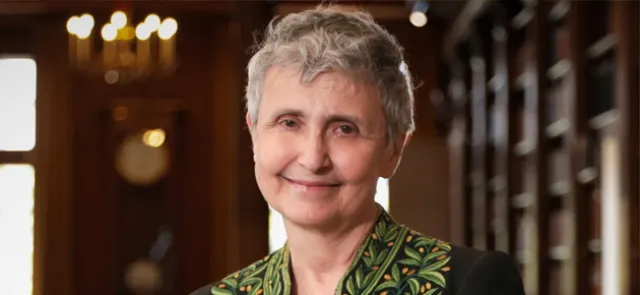
Karine Chemla, mathematician and sinologist | Tangente
Karine Chemla is a central figure in the history of mathematics in China, which she has helped make accessible to a wide audience. A mathematician, historian and translator all at once, she looks back on her rich career and her work.

New geometric volumes... | Tangente
In a recent study published in the Notices of the American Mathematical Society, mathematicians Claudia Fevola (Inria Saclay) and Anna-Laura Sattelberger (Max Planck Institute in Leipzig) explore the emerging field of positive geometry to propose a novel bridge between particle physics and cosmology.
 Podcast
Making art with the Conway knot | Tangente
An artist passionate about mathematics, Michel Delaunay creates works that plunge the eye into the infinity of geometric and topological aesthetics. He notably combines the potentialities of the cube with those of the Conway knot.
From Pascal to Poncelet
In the winter of 1812, the retreat from Russia ended in disaster. Jean-Victor Poncelet (1788–1867), a 24-year-old military engineer, was taken prisoner. Steeped in Gaspard Monge's (1746–1818) descriptive geometry, he laid the foundations of modern projective geometry in the prison camps of Saratov, without books or instruments.
 Podcast
When Legendre believes he has proved the fifth postulate
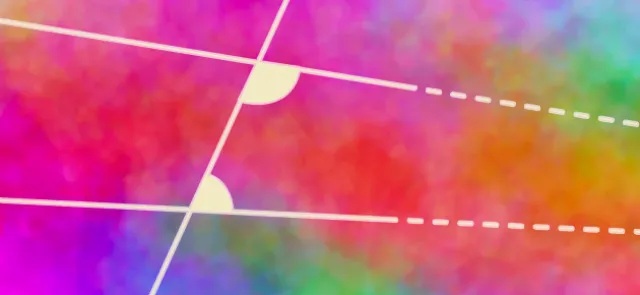
For two millennia, mathematicians sought to prove Euclid's fifth postulate. Adrien-Marie Legendre believed he had found a proof, before realizing that his proof implicitly assumed the truth of that same postulate. A circular argument…
 Podcast
A shaky proof revolutionizes arithmetic
Euler rescued from oblivion Fermat's proposition that it is impossible for the sum of two cubes to be a cube. Though the explanation he provided for it was shaky, it opened up a new framework for arithmetic.