



Knowledge
In-depth articles on mathematical knowledge and theories

Observing curves with magnifying glasses
Used appropriately, extremely powerful magnifying glasses make most curves appear to coincide locally with a tangent line or an osculating circle.

Beyond Descartes
Several results in the plane and in space generalize Descartes' theorem on the curvatures of tangent circles.

Touching circles
Euclid's Elements, the standard reference for centuries, established straightedge-and-compass proof as the norm in geometry. But many problems involving circles tangent to one another become simpler when using conics or transformations, such as the indispensable inversion.
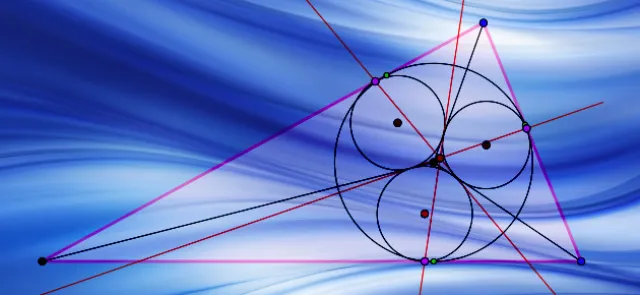
The Malfatti circles in a triangle | Tangente
In a triangle, how should three non-overlapping circles be chosen so as to minimize the area of the triangle left over once the three circles are removed? A natural solution, involving tangents within the triangle, is not the best one, but it gives rise to interesting problems.

A theorem puzzle in pictures: Monday's challenge | Tangente
Since 2015, the Image des maths website (https://images.math.cnrs.fr) has featured a "picture-theorem puzzle" every Monday, taken from Geometry in Figures, a book published in 2011 by the young Russian mathematician Arseniy Akopyan (CreateSpace Independent Publishing Platform) and available in French as Figures sans paroles (Independently Published, 2019).

Pitot's theorem for quadrilaterals | Tangente
First stated by the French engineer and physicist Henri Pitot (1695–1771), the theorem that bears his name concerns quadrilaterals with an inscribed circle (known as tangential quadrilaterals).

Yitang Zhang's long, solitary quest | Tangente
Born in China in 1955, Yitang Zhang developed an interest in mathematics at an early age: at the age of 10, he discovered prime numbers and the puzzle of Fermat's Last Theorem. But during the Cultural Revolution, he was sent to work in the countryside with his mother and was unable to continue his studies.

What neurologists think | Tangente
It seems widely accepted that our faculties diminish with age. What about our capacity to do mathematics? What can neuroscience specialists teach us about this?

The factorization of large integers:
The most widespread cryptography system relies on the use of very large integers, whose factorization remains beyond the reach of our computers. As early as the 17th century, Mersenne and Fermat were investigating the prime factorization of very large numbers; their work inspired modern factorization algorithms.
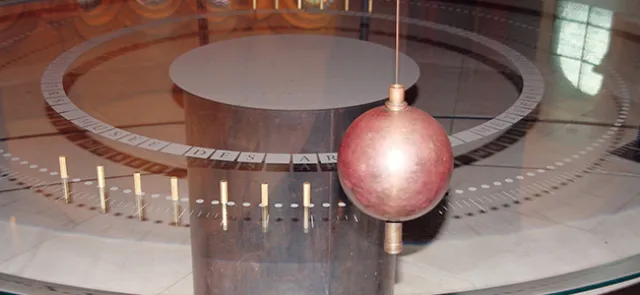
Tangente Day 2023 at the Musée des Arts et Métiers | Tangente
Come celebrate the Trophées Tangente day, the world's only magazine of mathematical culture sold at newsstands! There will be something for every taste, every age and every level. Here is a preview of what this full day has in store.

From coin tossing to stochastic differential equations
Tossing a coin many times naturally leads to an interest in certain types of paths on a line, in a plane, in space… The random nature of these experiments means that their study goes beyond the classical framework of ordinary differential equations.

Proof
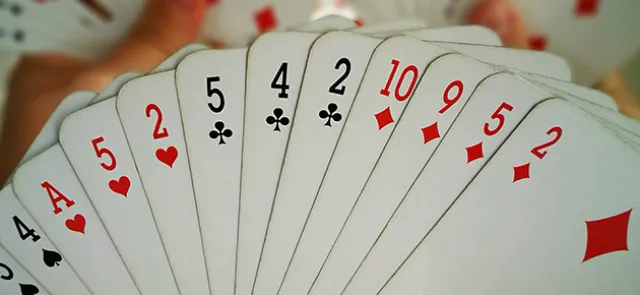
Bridge: Suit Combinations and Probability | Tangente
Bridge (and its ancestor, whist) is, along with chess, one of the two most celebrated games in the West, as the quotation below from Edgar Allan Poe attests — no doubt too flattering. Probability is often invoked in deciding which strategy to adopt.

Board games and chance: the maths of dice | Tangente
What role does chance play in a board game? It can vary widely, ranging from total dominance, where players have no say at all, to complete absence. Between the two extremes, the strategies of many games rely on optimizing probabilistic principles.
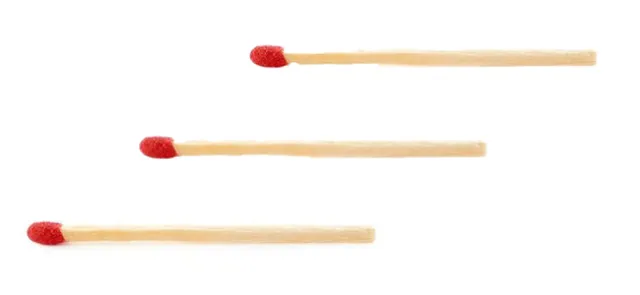
Nimbers applied to the game of Cram
The game of Cram consists in placing dominoes on a grid. Remarkably, its study can be reduced, via the definition of a category of mathematical objects called "nimbers", to the Marienbad matchstick game.

Half-move advantage in combinatorial games | Tangente
In a board game, it is fairly common, partway through a match, to feel that you are ahead of (or behind) your opponent. Through the example of Domineering, this article invites you to discover how John Conway formalized this notion.

The Mathematics of Tchoukaillon
Mancala is the generic name for traditional sowing games in Africa and Asia. One of the solitaire variants of these games gave rise to a mathematical recreation with unexpected properties and consequences.
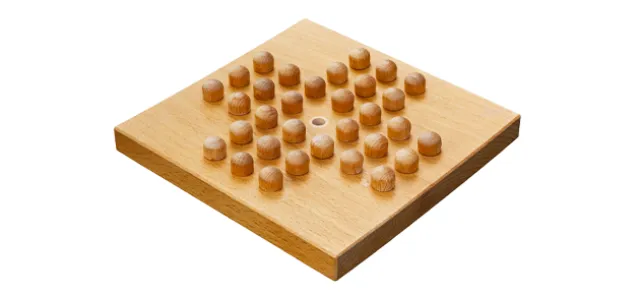
Solitaire on a line
Are solitaire games board games? Whatever answer you give to that question, this article and the next show that their mathematical treatment is in no way inferior to that of multiplayer games.
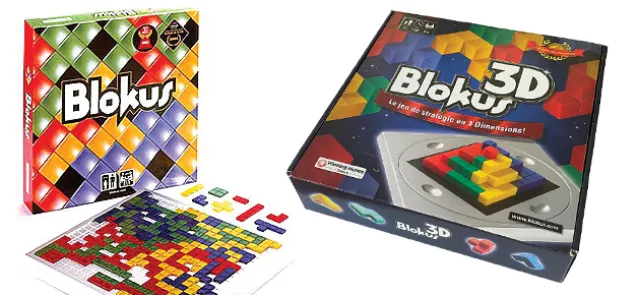
A family of five games: Blokus and its variants | Tangente
What's presented here isn't a game of five families, but a family of five games (siblings and cousins!) — blocking games, in which a player leaves the game once they can no longer play. All of them concern geometry. In particular, the pieces in these games take many forms, made up of squares, triangles, line segments and cubes.
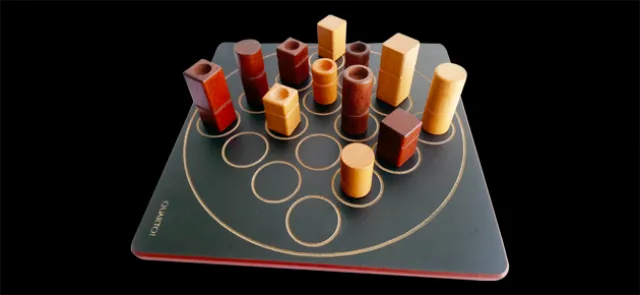
Quarto!: Combinatorial reasoning and strategy | Tangente
Shape, color, size and topology (with or without a hole) are the four characteristics of a Quarto! piece. Since each has two possible values, the players facing off in this thrilling combinatorial game — one of the most award-winning in the world — must contend with sixteen pieces.