



Knowledge
In-depth articles on mathematical knowledge and theories
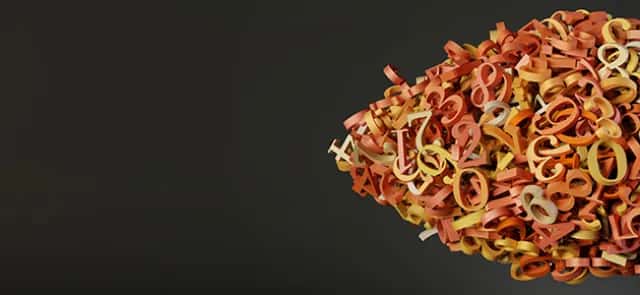
The classification of finite simple groups
Are finite groups simple? Not so fast: although the classification of finite simple groups began more than a century ago, a complete proof is still being written! Work on this proof began in the late 1980s and should be completed in 2025. But the task is daunting…
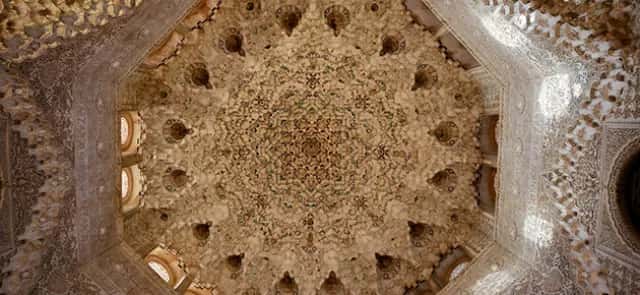
Symmetries that leave objects invariant
In geometry, what could be more natural than to seek, for each object, the transformations that leave it unchanged? This means dissecting those transformations and identifying the object's symmetries—and, surprise, groups emerge quite naturally...
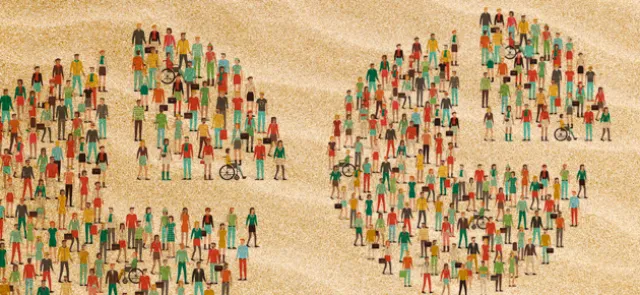
Quotient structures
A detailed analysis of the internal structure of finite groups is a formidable challenge. What can be said about an arbitrary group? The idea is to look within G for subgroups from which the whole of G can be reconstructed. Quotient structures are an unfailingly effective tool for this purpose.
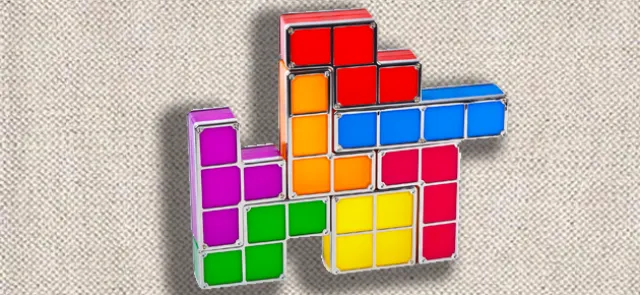
Elegant problem-solving: eight puzzles | Tangente
The final installment in our three-part series on methods for solving problems with a minimum of technical machinery. The aim is to discover an imaginative, original approach that shifts the puzzle into familiar territory.
Hypercube: a mathematical conjecture is disproved | Tangente
The challenge: covering sets of points with as few hyperplanes as possible, particularly sets consisting of certain vertices of the hypercube.
Schwarz's theorem
From Euler to Cauchy, via Clairaut, no one doubted that reversing the order of partial differentiation left the result unchanged. Hermann Schwarz overturned this belief with a superb counterexample.
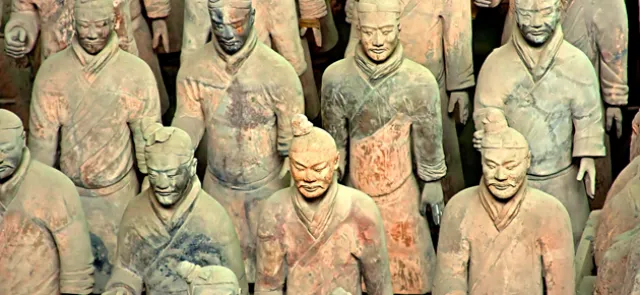
The Chinese remainder theorem
The periodic nature of planetary revolutions naturally gives rise to the notion of congruence. The earliest surviving written problem on this theme is known as the Chinese remainder theorem. Its universality has led to many fundamental applications in the theory of numbers and polynomials.

An incongruous little tour through the world of congruences
Cooks have long known that making the most of leftovers is an art. The same is true in mathematics, where congruence is a remarkably rich concept. This notion has applications ranging from everyday life to highly theoretical settings.

Artificial intelligence to the rescue
Using computers to solve mathematical problems is nothing new. Adam Zsolt Wagner of Tel Aviv University (Israel) has now shown how artificial intelligence can uncover counterexamples to several previously open conjectures. A promising path for the future?
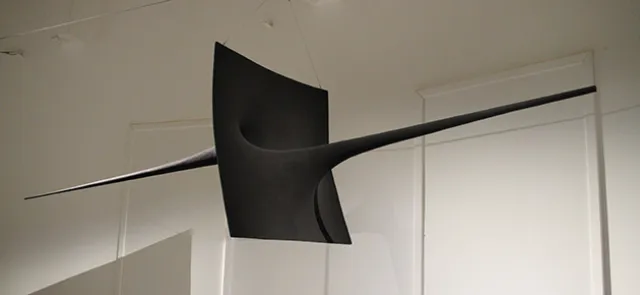
From intuition to rigor:
From Cauchy to Weierstrass, rigor steadily took hold in analysis throughout the 19th century. A variety of counterexamples swept away mistaken beliefs and forced mathematicians to define the relevant concepts more precisely. Some "monstrous" functions were introduced, fascinating to some and repellent to others.
The exception that does not prove the rule
A persistent belief holds that counterexamples are primarily a source of amusement. Yet they play a fundamental role in several areas, both as mathematical proofs and as teaching tools—not to mention their entertaining, or even artistic, side, depending on how one looks at them.
Forerunners in mathematics publishing | Tangente
On a more modest scale, several French-language magazines preceded Tangente. Some of those featured on this page even ceased publication to help launch Tangente.

A driving force for innovation in education
Tangente reaches a great many teachers and is also available in secondary-school libraries across France and the French-speaking world. Alongside its initiatives aimed directly at teaching, its support for more diverse approaches to learning has proved extremely valuable. Experts attest to this.
Tangente: a catalyst for mathematical culture | Tangente
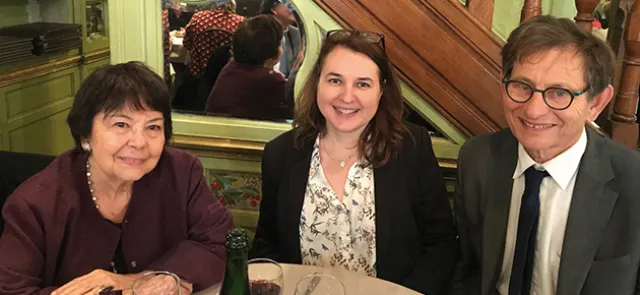
A magazine devoted to mathematical culture—that is sure to surprise more than a few people! When Tangente arrived in 1987, it transformed the way mathematics was viewed. It inspired some readers to pursue a path they had never considered and others to embark on initiatives to popularize mathematics. Many prominent figures bear witness to this.
Tangente: an extraordinary story | Tangente
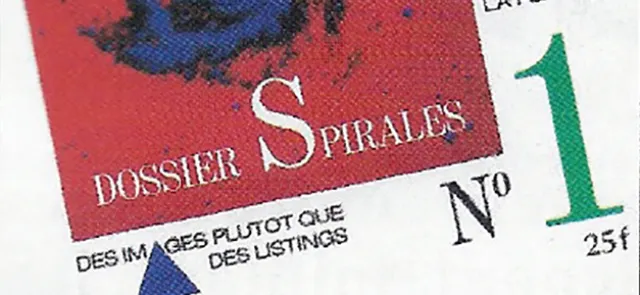
How did France manage to create the world's only general-interest mathematics magazine, sold at newsstands? How did this bimonthly reach its 200th issue after a third of a century of uninterrupted publication? What a story!
Let’s bite into maths: 2021 Fair | Tangente
Get a first glimpse of the programme for the 22nd Culture and Mathematical Games Fair. Held online, it will be accessible to everyone, from anywhere.
Math City Map: Math trails | Tangente
If, by chance, you ever find yourself confined to within 10 km of your home, you can always turn the restriction to your advantage by creating mathematical challenges in your local area.
Math tourism: mathematics, geography and travel | Tangente
For some fifteen years, the "math tourist" website (mathouriste.eu) has been sharing photographs from Alain Juhel's mathematical travels and visits to places connected with mathematics and mathematicians.
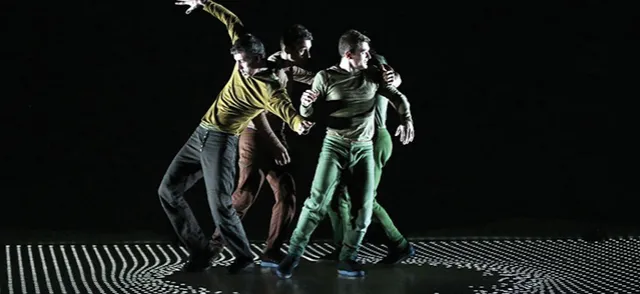
Art and mathematics: creative encounters | Tangente
Digital art takes many forms, surprising us with the new territory it explores. It can be 2D or 3D, static or moving, passive or interactive. It lies at the intersection of art and technology. How have artists moved from a mathematical concept to creating a work of art?
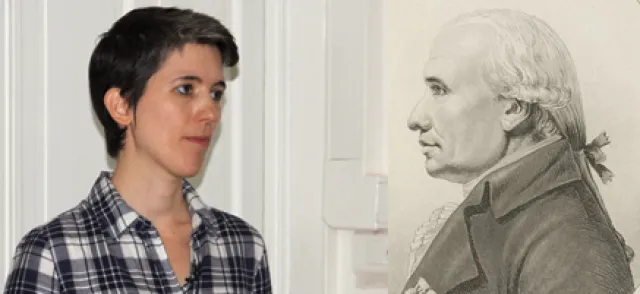
Two and a half centuries of optimal transport
Moving a pile of sand, transferring colors from one image to another, minimizing a group’s travel time—all these problems can be tackled using optimal transport. Gaspard Monge pioneered a theory that computing has made remarkably effective.