



Knowledge
In-depth articles on mathematical knowledge and theories

Proof desperately wanted | Tangente
One hundred thousand results are stated worldwide each year—but how many of them are proved? In number theory, for example, many problems remain unsolved. Some are well known to enthusiasts, others less so...

Lean: a new library of Alexandria | Tangente
Building a digital repository of mathematics—a new "Library of Alexandria for mathematics"—is the wildly ambitious collaborative undertaking on which many mathematicians have embarked.

Famous partnerships in research | Tangente
Compound theorem names offer a clue as to which pair of mathematicians worked on the subject... or perhaps not.
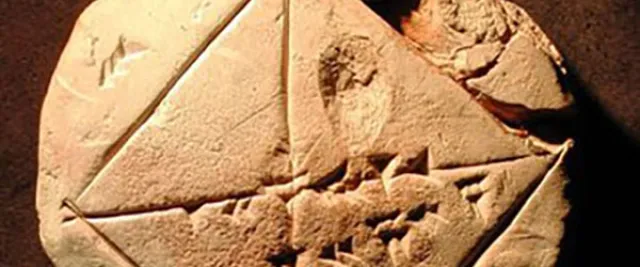
The Euclidean revolution
Some profound results, such as Pythagoras' theorem, predate any awareness of mathematics as a science. Rather, once theorized and proved, these results gave rise to this science.
A century of conjectures
Mathematics has always advanced through the curiosity of people seeking to answer new questions and pose new problems. Once solved, these give rise to others, creating an endless chain of advances in knowledge.
Toward open science | Tangente
Mathematical practice is undergoing profound change. Researchers are organizing, established ways of working are being questioned, and bringing knowledge to the general public has become a key concern. A new model—"open science"—is emerging.

A sequence of ideas: Ulam and Recamán | Tangente
Algorithms for constructing integer sequences from a given number are diverse. Many were devised in the 20th century by well-known mathematicians (Ulam, Kaprekar, Sloane...) and sometimes produce surprising results, some of which remain conjectures.

A little etymology
Proofs by induction were given long before this form of reasoning was formalized, let alone named.

When an error bears fruit
Many mathematicians have made mistakes, whether through inadvertence, a miscalculation, a flaw in a proof, or a temporarily mistaken belief.
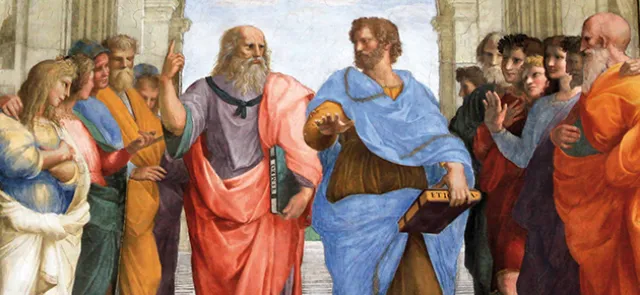
The unreasonable effectiveness of mathematics
In the latest physical theories, mathematical models have achieved such descriptive and predictive power that the question inevitably arises: is this mysterious fit a miracle, or does it have a deeper meaning?

Albert Ayme | Tangente
Albert Ayme left his engineering post in 1960 to devote himself to painting and sculpture. His scientific training led him to devise a combinatorial system of variations on the square, combining visual pleasure with mathematical rigor. He made the square magical!
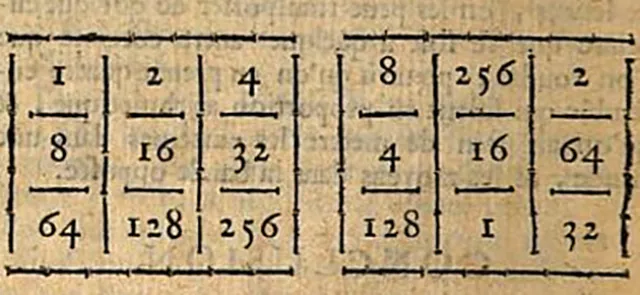
Multiplications—for a change! | Tangente
The world of magic squares is still very much alive and remains an active field of research. Access to computing power has rekindled enthusiasts’ interest in these arithmetical objects. What happens if we try to define a multiplicative form of magic?

Numbers in computers | Tangente
Many kinds of software, from scientific computing to video games, need numbers to perform their tasks. These numbers may be integers or real numbers. Despite the enormous power of computers, approximations are inevitable; as they accumulate, they can be harmful and sometimes even catastrophic.
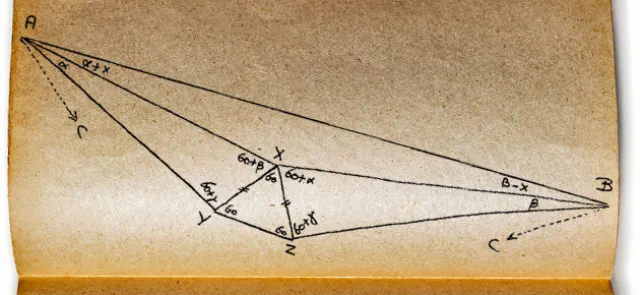
Morley's "miracle"
A symmetry appearing out of nowhere, an equilateral triangle emerging amid the trisectors of a completely arbitrary triangle: that is the whole "miracle" of Morley and his theorem. The many proofs of this beautiful property are marvels of geometry and trigonometry.

How to test without making mistakes
Statistical tests are invaluable for assessing a hypothesis about a population from observations of a random sample. But they are also the source of many errors. Let's learn how to avoid them—in both methodology and the interpretation of results!
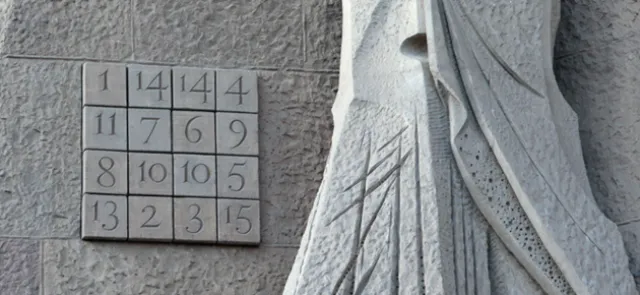
Build your first magic square | Tangente
can numbers be arranged so perfectly that they produce equal sums in every direction? The challenge is certainly difficult, but construction methods do exist! The magic of arithmetic...

When errors propagate...
Error is inseparable from scientific computation. Calculations of this kind inevitably involve errors. However, it is essential to know where they may come from, to keep them under control, and to estimate their order of magnitude so as to determine whether a result is reliable.

How Archimedes squared his spiral
Archimedes is admired for his great discoveries. Less well known is how his proofs unfolded. Without effective mathematical notation, reasoning was fraught with difficulty and demanded considerable ingenuity…
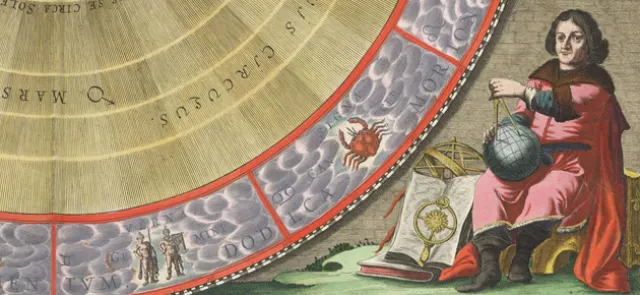
Mathematical models and measurement | Tangente
When direct measurements are impossible, we must rely on mathematical models, which need to be validated. The results then depend on the precision of the available direct measurements and on how well suited the chosen model is.
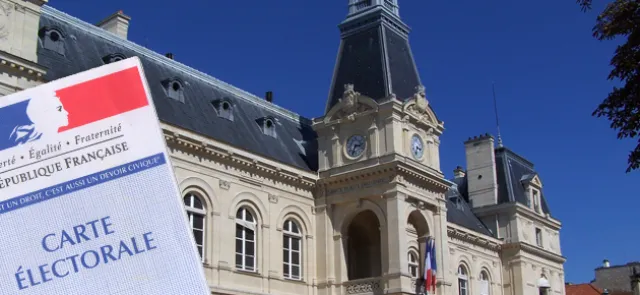
Elections: the PLM Act explained | Tangente
Do Parisian voters know that they are choosing the members of three different assemblies? Do they understand how the lucky winners are selected once the votes have been counted? In Marseille and Lyon too, the winner is not necessarily the candidate who received the most votes!