



Knowledge
In-depth articles on mathematical knowledge and theories

Nivat's conjecture
Although easy to state, questions in discrete mathematics are generally hard to solve. Progress often comes when a problem is linked to another field. This is the case with Nivat's conjecture, which has resisted mathematicians for more than twenty years.
The Zodiac's encrypted messages | Tangente
At the turn of the 1970s, a serial killer was at large in California. What set him apart was that he communicated with the police through seventeen letters, four of them encrypted. The first was deciphered in 1969; the second has only just been cracked. These cryptograms put a new spin on classic cryptographic methods.
The magic of autostereograms
How can we see a three-dimensional object in a flat image? Glasses and stereoscopes offer technological solutions. Autostereograms, like optical illusions and trompe-l'œil, require no device or apparatus.
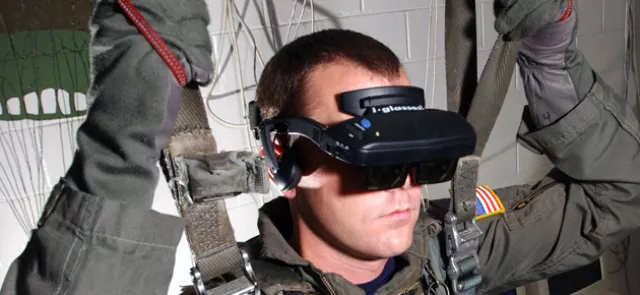
Representing three-dimensional objects
Digital techniques for creating 3D images have been developing since the mid-20th century. Initially driven by the needs of industry and later by those of a wider public, they offer numerous possibilities, including the representation of movement.
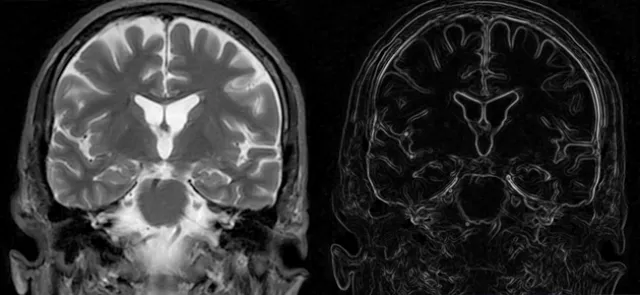
Image segmentation
Once a medical image has been obtained, an important step is to identify certain features within it, either to assist with diagnosis or to take measurements. The challenge is to partition the image into several regions. This is the realm of image segmentation.

The mathematics of medical imaging
Medical imaging is an indispensable tool for physicians, whether for diagnosis, prognosis, or surgery. It provides anatomical or functional information about an organ or part of the human body while being either noninvasive or only minimally invasive.

From the Fourier transform to the discrete cosine transform
How do we go from discrete digital signals to the light and color waves emitted by our screens, and how can we reduce incoming data streams as much as possible without overly degrading the images? Converting signals to a spectral representation allows them to be compressed selectively to suit our visual system.

An image as a matrix
When we speak of an "image," we need to know what kind of object we are dealing with: how is the image represented, what do we want to do with it, and what medium is it intended for? Mathematics lies at the heart of these questions. Here is a brief overview of the basic concepts involved.
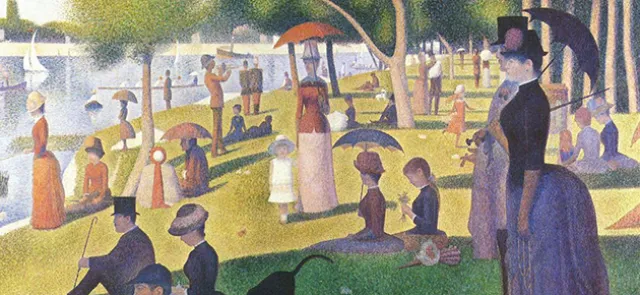
The components of our images: luminance and chrominance
Screens are now part of our daily lives—and taking up more and more space. But how are the images they display constructed? What lies behind the standards (ITU 709, etc.) and formats (4:3, 16:9, etc.) in use?
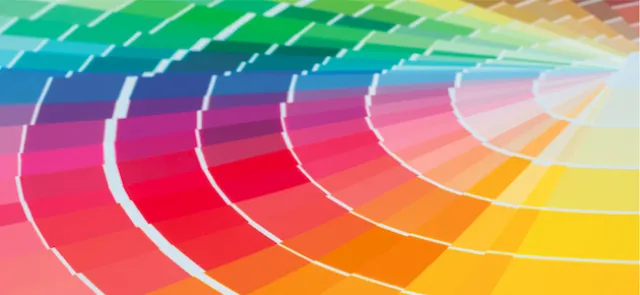
Different color systems
We live surrounded by color images. But what exactly are these colors? How are they defined, broken down, or reconstructed? Different representations are used in different contexts, the best known being RGB and CMYK.
Counting protesters | Tangente
One hundred thousand protesters, according to the organizers; twenty thousand, according to the police! The discrepancy between estimates of the number of people in a march is a perennial source of puzzlement—and mockery—for outside observers. Is there really no way to provide a reliable figure for the number of protesters?
Political rationality and calculation | Tangente
Public policies are often supported by rational, even mathematical arguments. Philosophers such as Leibniz, Condorcet and Bentham sought, through a variety of approaches, to put both economic and social behavior on a mathematical footing. Yet they all came up against the fact that combining individual rationalities does not necessarily serve the common good.

Stochastic processes:
How can we model a phenomenon that evolves randomly over time? To tackle this question, it was first necessary to ask what randomness is, formalize it, and incorporate it into mathematical models. That is what stochastic processes seek to do.
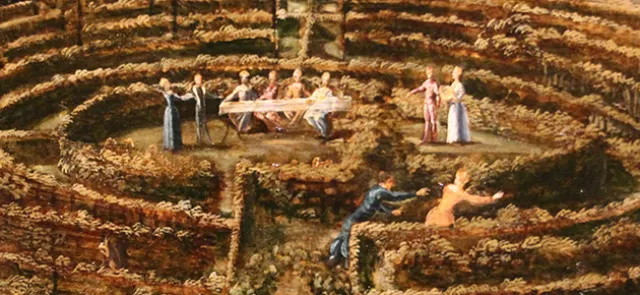
Homo academicus in his labyrinth | Tangente
Exploring the literary corpus offers an opportunity to highlight some of the logical and paradoxical arguments that can be brought to bear. Let us take a closer look at Le Stratagème (The Stratagem), a story from Jorge Luis Borges's Le Livre de sable (The Book of Sand).
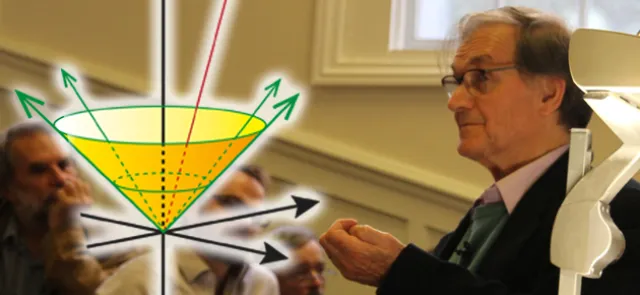
Singularities in general relativity
The year 1965 saw the first modern theorem on singularities in general relativity, due to Roger Penrose. This geometric result would have major implications for the origin of the universe and the collapse of massive stars.
A Nobel prize for black holes | Tangente
The 2020 Nobel Prize in Physics honors black hole astronomy. Thanks to Roger Penrose, Andrea Ghez and Reinhard Genzel, general relativity has at last been recognized by the celebrated Swedish institution—something that, surprisingly, had rarely happened before!
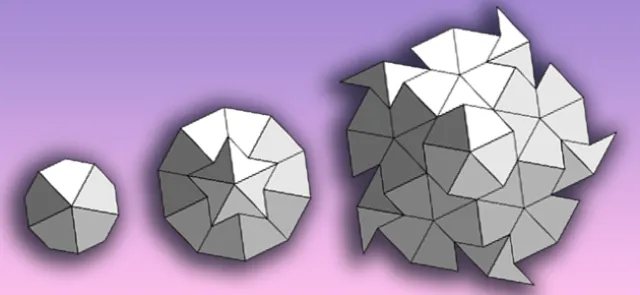
Dazzling Penrose tilings
Sir Roger Penrose is renowned for his remarkable and foundational work in geometry and cosmology, and for the applications of that work to black holes. It is puzzling, however, that he is famous to the general public for the tiling that bears his name, with its many remarkable properties.
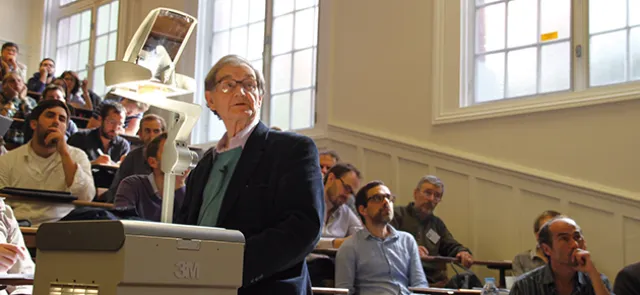
An extraordinary scientist | Tangente
How did a pure mathematician trained at Cambridge come to win the Nobel Prize in Physics at the age of 89? This is the remarkable story of an extraordinary scientist who realized that his work in topology could help shed light on black holes.
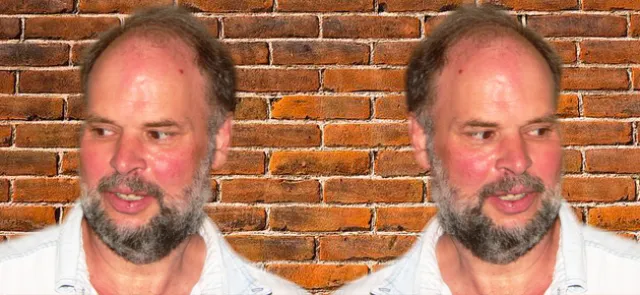
Vaughan Jones, the knot magician
The mathematician Vaughan Jones, who died on September 6, 2020, profoundly influenced several areas of mathematics, including topology and functional analysis, as well as physics, particularly quantum theory. His name remains associated with powerful invariants in knot theory.
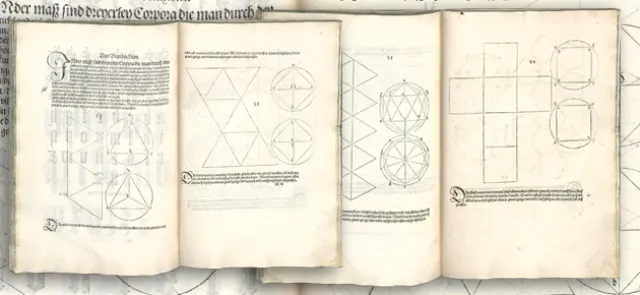
Three unsolved problems in geometry | Tangente
Geometry abounds in problems that remain unsolved. Some date back to the Renaissance! In tribute to Richard Kenneth Guy (1916–2020), here are three, gleaned from his book Unsolved Problems in Geometry (with Hallard Croft and Kenneth John Falconer, Springer, 1991).