



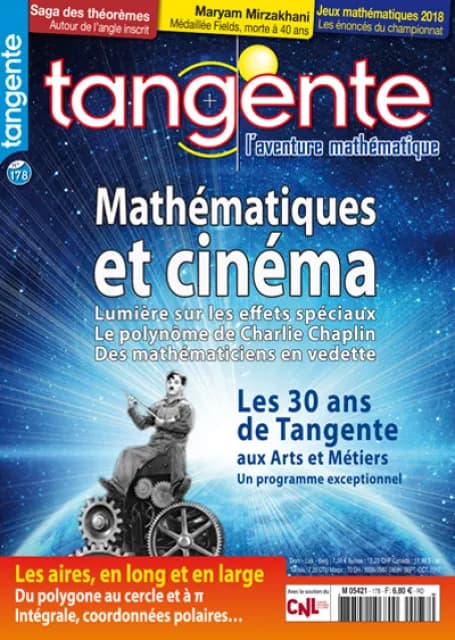
Maths and cinema
This issue is not fully translated into English yet; only translated content is shown.
Read the French versionAll folders in this issue
Maths et cinéma
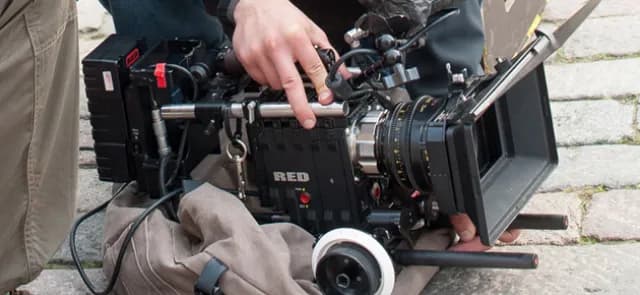
Cinema was made possible by the determination of great visionary pioneers combined with technological advances. How to create a special effect or illusion on the big screen? How to suggest a curve, evoke a shape, make movement and the third dimension visible? The pioneers - the Lumière brothers, Méliès... - used theatrical tricks. Today, we use mathematics! Morphing and fractal imaging are taking the lion's share in an industry that increasingly calls upon geometry, topology and algorithmic techniques. Aspiring graphic designers and future special effects creators, get your maths ready!
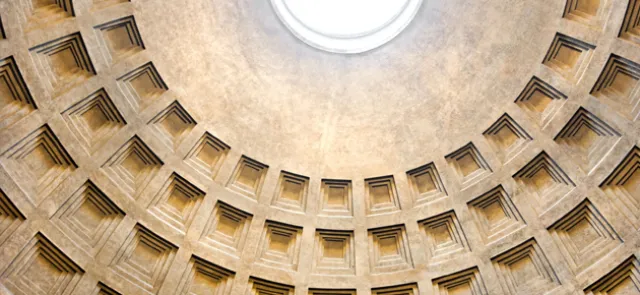
Area calculations
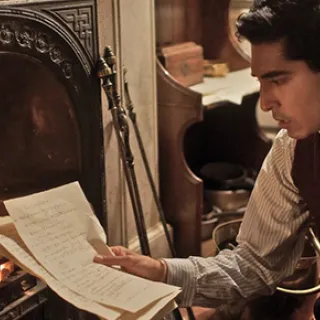
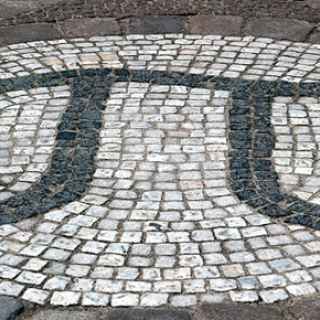
It was originally called 'surface', the same name as what it measured… The area of plane figures had to be calculated long ago for reasons rooted in reality! Sharing a field equitably, subjecting a domain to the fairest possible tax require precise and uncontestable calculations. During Antiquity, Egyptians and Greeks proceeded by successive approximations, a long and tedious method, especially when this elusive number that we call π today comes into play. It will take several centuries for scientists to establish integral calculus, which in practice solves all the cases one may encounter, from the area of a corn field to that swept by a planet during its revolution around the sun.
All articles in this issue
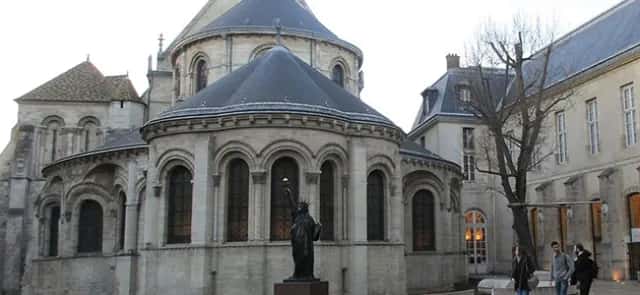
Tangente turns 30
A grand celebration awaits you on Sunday, December 3, at the Musée des arts et métiers in Paris to mark Tangente's 30th anniversary, followed by an event in Brussels on December 8 and 9. No one is left out: there will be something for everyone, whatever their age or level.
2018 Championship
The 32nd Mathematical and Logical Games Championship, organized by the Fédération française des jeux mathématiques, is under way. Tangente brings you an exclusive look at the eighteen problems from the individual quarterfinals.
And the angle makes history…
The so-called inscribed angle theorem, still part of every middle-school student's mathematical toolkit today, was already known to ancient geometers. It can sometimes have unusual applications.
On inscribed angles
The inscribed angle theorem is one of the key results of elementary Euclidean geometry. It requires few tools to state—or even to prove—and has many consequences.
Maryam Mirzakhani: a star has just gone out
The brilliant Iranian mathematician Maryam Mirzakhani died of breast cancer on 15 July 2017, at the age of 40
Gérard Tronel: A life devoted to mathematics
Mathematician Gérard Tronel, a great friend of the Tangente editorial team, had been battling cancer for years. He passed away on August 25.
The gravity equation
For once, an economist is talking about an "equation"—which makes it worth a closer look
The Earth in a ping-pong ball
Nothing is mathematically impossible! Although, back in the 1950s, the Dutch mathematician Nicolaas Kuiper and the American John Nash had already proved the existence of a vast class of paradoxical mathematical objects (flat tori in 3D, shrunken spheres…), they lacked the tools to visualize them
Geometry according to Malevitch
A hundred years ago, the artist Kasimir Severinovitch Malevitch (1878–1935) was appointed commissioner for the preservation of buildings and the arts
No doubt about it
We were used to highly faceted origami figures with clearly visible folds. Now a group of Austrian researchers has given these forms much smoother contours.
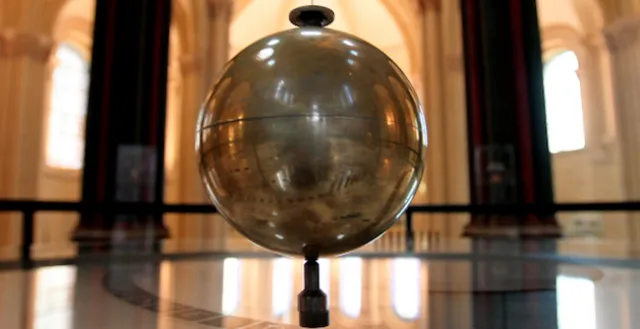
Tangente's 30th anniversary programme
Here is the programme (which will be updated regularly) for Tangente's 30th anniversary celebrations at the Musée des arts et métiers on Sunday, December 3, 2017. Admission is free for everyone!
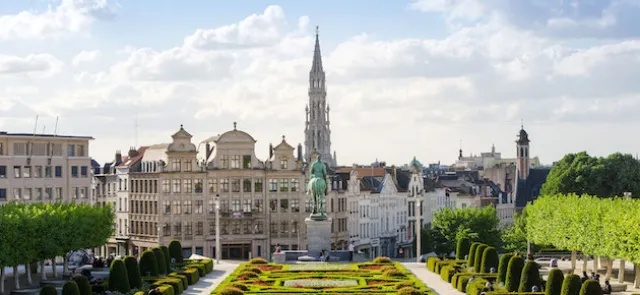
Tangente turns 30 in Brussels
Tangente is also celebrating its 30th anniversary in Brussels. Here is the programme, built around the theme "Popularizing isn't vulgar!".