



Mathematical Themes
Explore the major mathematical themes: geometry, algebra, analysis, arithmetic, logic, and many other fascinating fields.
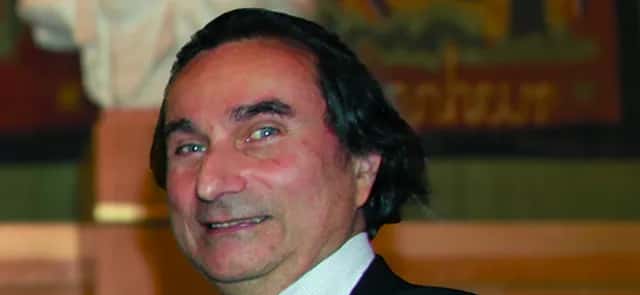
A life spent sharing mathematics | Tangente
Gilles Cohen was far more than the director of Éditions POLE and its flagship magazine, Tangente. Brimming with projects and ideas, he launched initiatives in every direction to bring mathematics to a wider audience. In recent years, he was chiefly involved in Club Tangente's activities.

2023 Tangente Awards winners | Tangente
Since 2010, the Tangente Club has used the Tangente Awards to honor creative works that showcase mathematics. The winners receive a work of art. The awards ceremony took place at the Musée des Arts et Métiers in Paris on December 3, 2023, during Tangente Day.
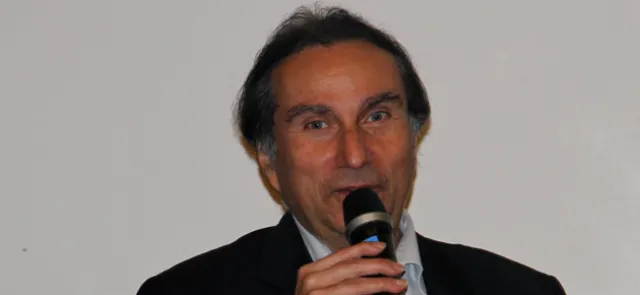
Gilles Cohen, Tangente founder and director, dies
Solar System stability: Laplace and Newton | Tangente
Laplace set out his model for the creation of the Solar System in his Exposition du système du monde, several successive editions of which appeared between 1796 and 1824.
Before black holes: Laplace's hidden stars | Tangente
In astronomy, a "black hole" is neither a hole nor black. The existence of these celestial objects was predicted by Einstein's theory of general relativity in the early twentieth century. It was demonstrated several decades later through the detection of gravitational waves produced by the coalescence of objects that came to be called black holes. What exactly are they?

Laplace is in the house: stations, high schools and memory | Tangente
The scientist's legacy lives on today in the various places and institutions… that bear his name!
Pierre-Simon Laplace: a giant for the ages | Tangente
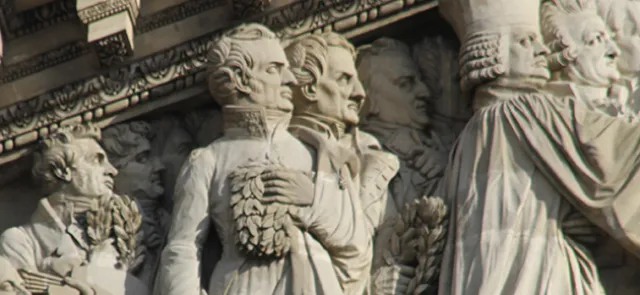
Laplace's scientific output is colossal. A tireless researcher, the "French Newton" also devoted himself to making the latest discoveries widely known and to providing scientific training for new generations.
A pedagogical interest in transmitting knowledge
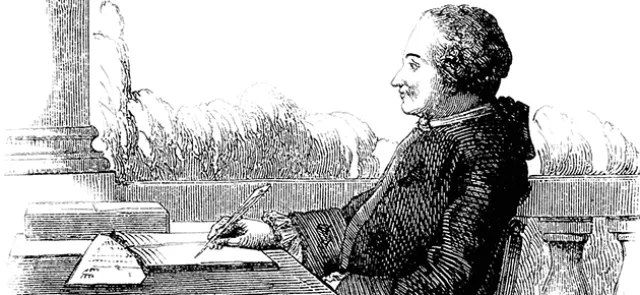
An exceptional scientist, Laplace was also a driving force behind the development of education at the highest level, helping to devise curricula and concerned that mathematics teaching should not be detached from philosophical reflection.
The empire of resonances
Kepler's laws and the law of gravitation made it possible to predict the positions of the planets over time. Yet Jupiter and Saturn insisted on straying from those predictions—and every attempt to explain why had failed! It was Laplace who would uncover the underlying phenomenon of resonance.
From Laplace's equation to the Laplacian
The Laplacian operator is used to describe most diffusion phenomena in physics. It is central to analysis, geometry and probability theory, among other fields. Its origins lie in an equation discovered by Laplace that governs the gravitational interaction between bodies separated by empty space.
The ebb and flow of the sea: a dynamic theory | Tangente
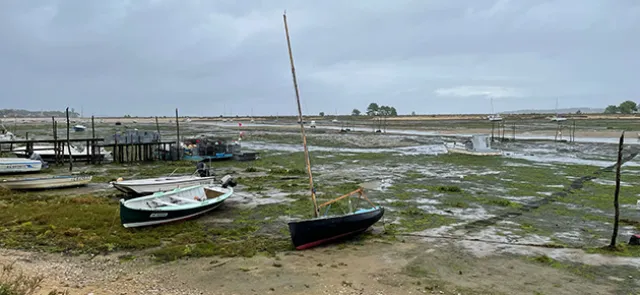
Laplace took an interest in "the ebb and flow of the sea," as he put it. After examining the approaches taken by his predecessors, he grasped the impact of the Earth's rotation and studied the tides, paving the way for their times to be calculated accurately.
Laplace: philosopher of chance and determinism | Tangente
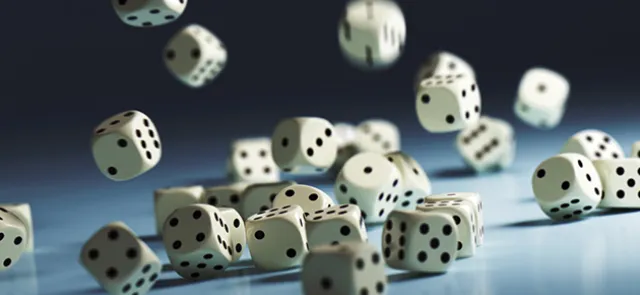
The chief architect of determinism, Laplace marked a crucial milestone in the transformation of probability theory into a fully fledged branch of mathematics. Is that a paradox, or a coherent intellectual approach? Let's return to his writings to find out!
The first law of large numbers
Repeating a random experiment with two possible outcomes a large number of times leads to probabilities that are difficult to predict directly, let alone calculate explicitly. Yet the de Moivre–Laplace theorem provides an excellent approximation.
The first law of large numbers
Repeating a random experiment with two possible outcomes a large number of times leads to probabilities that are difficult to predict directly, let alone calculate explicitly. Yet the de Moivre–Laplace theorem provides an excellent approximation.
Census-taking and the normal distribution
To calculate France's population, Laplace proposes a sampling method based on births and introduces the normal distribution to estimate the error. It would take until the 21st century for Insee to draw inspiration from his method.
The beginnings of linear algebra
Linear algebra took off in the mid-19th century, notably through the work of Arthur Cayley (1821–1895) and Hermann Günther Grassmann (1809–1877), and was formalized fifty years later with the emergence of algebraic structures.
Three laws of error
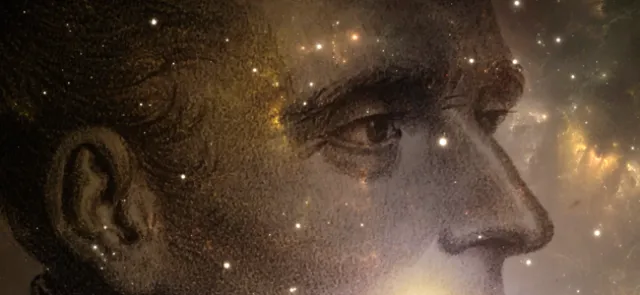
Observations of celestial bodies are invariably subject to error. How can we choose the "most relevant" value from several measurements? Laplace, along with Legendre and Gauss, developed theories that ultimately led to the celebrated normal distribution.

Will the Sun rise tomorrow?
Should we live each day as though it were our last? The question is a fair one, given that in 1814 Pierre-Simon de Laplace put the probability of the Sun rising again the next day at 0.99999945…
Laplace's many mathematical functions | Tangente
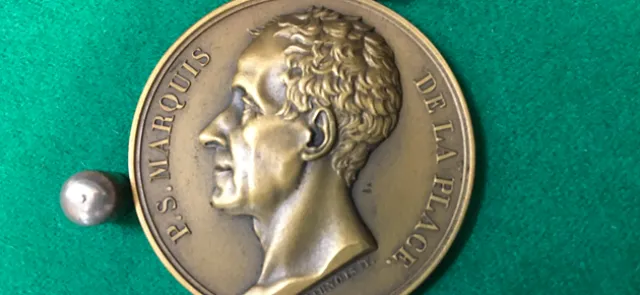
In his scientific work, Laplace introduced and used numerous mathematical functions. Alongside the Laplacian and the Laplace transform, we find generating functions and the potential function.

Laplace on probability and metaphysics | Tangente
When Laplace took up a seat in the Senate, he thought his active involvement in science was effectively over. Yet he went on to state a fundamental law of probability theory, before exploring the philosophical implications of his findings in this emerging new science.