



Mathematical Themes
Explore the major mathematical themes: geometry, algebra, analysis, arithmetic, logic, and many other fascinating fields.
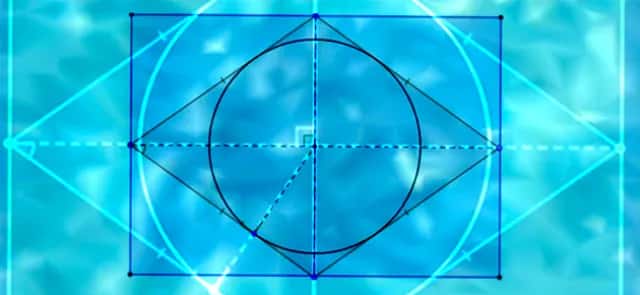
This is not a square
A square is a special kind of rhombus. Anyone can easily calculate the area of a square, but what about the area of a rhombus? Similarly, a square has both a circumcircle and an incircle. What happens in the case of a rhombus?
Square matrices and transformations of the plane
The notion of a square root can be extended to very general sets. One may then obtain more than two square roots—even infinitely many! Matrices provide one example. Orientation-preserving similarities, viewed through the lens of complex numbers, lead us back to less startling results.
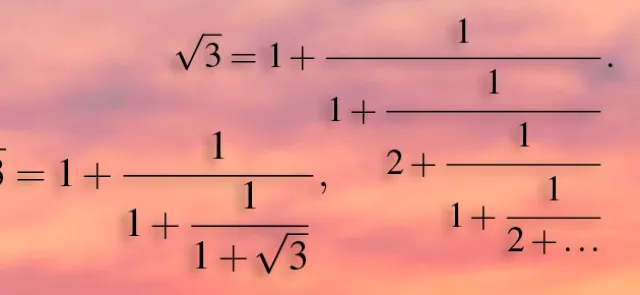
Roots and continued fractions
There are other ways to represent real numbers besides our decimal notation! One of the best known is to write a number as a continued fraction. The resulting representations, even when truncated, very quickly provide "good" approximations of the original number.

Newton's method
Do you know how your calculator—or your smartphone's calculator—computes the square root of a number a > 0?

Lightning calculators
How do lightning calculators use root-extraction algorithms so quickly?
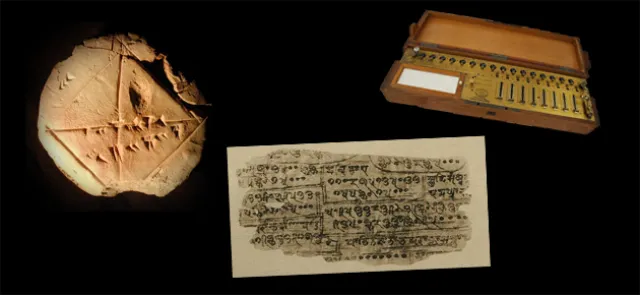
Extracting square roots: the main algorithms
Calculating square roots "with a quill," as people said in the 18th century, is a challenging art with many facets. Let's explore some famous methods and see why they work.
Évarhistoire: a forum about Galois's life | Tangente
Far from it—there is still much to be said about Galois! New communication tools, online discussion forums, and the documents digitized and made available online each day are enabling the investigation into this fascinating figure to continue.
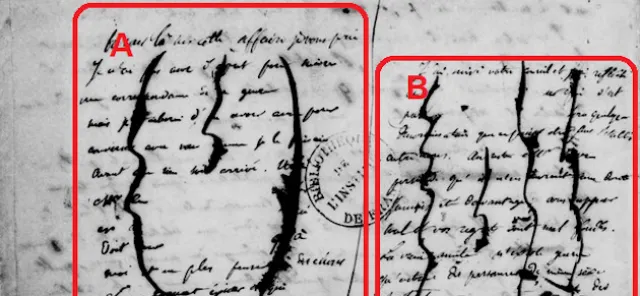
Galois manuscript mystery solved | Tangente
A contributor to the les-mathematiques.net forum, known by the username anqian, recently solved a small mystery that successive editors of Galois's works had puzzled over in vain.

How many stars are there in our galaxy? | Tangente
The first map of the Milky Way was drawn by William Herschel (1738–1822) in 1785. Unable to count every star, he used a statistical method.

Marie Crous's two books digitized | Tangente
And soon Marie Crous, a pioneer of decimal arithmetic in France, will no longer be forgotten!

An adventure in fifteen videos | Tangente
Directors Cassia Sakarovitch and Gwenael Mulsant have set themselves a challenge: to make short videos about mathematical concepts from the specialist mathematics curriculum in the final two years of French high school.

Marguerite at the ENS | Tangente
Le Théorème de Marguerite, screened last June at the La Baule Festival, received a standing ovation!

Vauban… for the pigs | Tangente
Sébastien Le Prestre (1633–1707), Marquis de Vauban, better known simply as Vauban, was an eighteenth-century man of many talents: engineer, military architect, urban planner, encyclopedist… Louis XIV appointed him Marshal of France near the end of his life. He was responsible for numerous military fortresses throughout France.

Perrin's test for primes… almost! | Tangente
The Perrin numbers are named after Raoul Perrin, a French engineer (1841–1910) who served as president of the Société mathématique de France in 1908.

Fibonacci for rabbits | Tangente
These numbers are named after the 13th-century Italian mathematician Leonardo Fibonacci (c. 1175–c. 1250).

The many facets of counting | Tangente
The etymology of the French verb "dénombrer" is relatively transparent: as in the words "énumérer" and "numération", we can recognize the Latin root numerus, meaning number or quantity. To dénombrer is thus to seek an answer to the question "how many?"

Counting squirrels and other wild animals
By definition, wild animals cannot be counted systematically and exhaustively: it is difficult to warn them that a census taker will be calling at their home next Monday! This is where statistics—and estimation theory in particular—comes to the rescue.
Carmichael numbers | Tangente
Does Fermat's little theorem characterize prime numbers? Far from it! Yet few composite numbers satisfy the theorem's conclusion, making them all the more intriguing to number-theory enthusiasts and specialists alike.
Great names for great numbers
Many mathematicians have lent their names to numbers in common use. "Very large" numbers have names too: a way had to be found to represent them as well, since they come up in several fields, from combinatorics to mathematical logic!
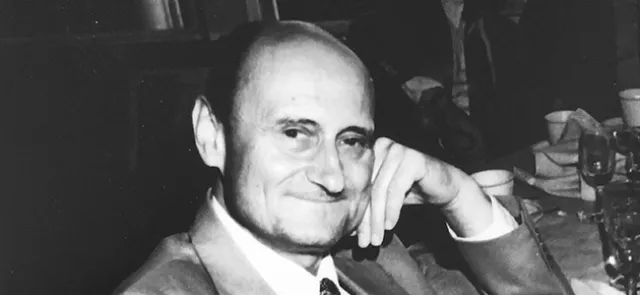
Egon Balas | Tangente
Egon Balas's life story reads like an adventure novel. Discover the remarkable story of this mathematician from communist Romania, who managed to escape the turmoil brought upon him by his love of freedom and whose name is associated with numerous discoveries, particularly in operations research.