



Mathematical Themes
Explore the major mathematical themes: geometry, algebra, analysis, arithmetic, logic, and many other fascinating fields.
 Podcast
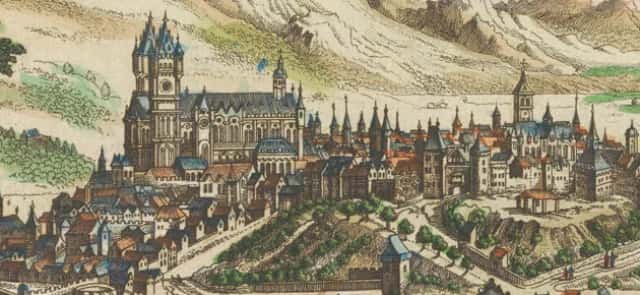
Gabriel Cramer: the journey of an 18th-century Genevan mathematician
Explore Gabriel Cramer's journey, from his education in Geneva to his European Grand Tour among the leading mathematicians of his day.
 Podcast
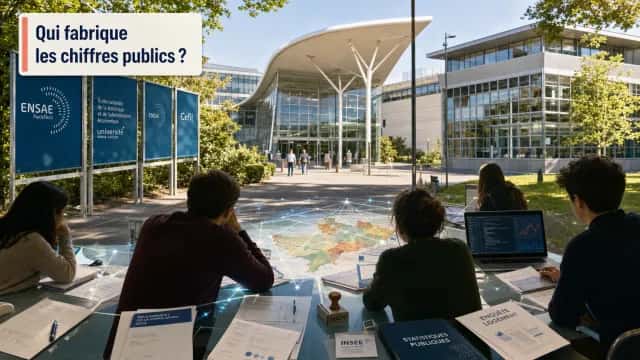
Training Insee staff: ENSAE, ENSAI and Cefil
Insee trains its staff at three schools with admission by competitive examination: ENSAE, ENSAI and Cefil. Their multidisciplinary programs in statistics, economics and computer science prepare students for data careers.
 Podcast
Insee surveys: methods and the challenges of official statistics
Discover how Insee rigorously conducts its statistical surveys, from sampling to estimating unemployment.
 Podcast
Econometrics: measuring to understand | Insee
Econometrics uses mathematics and statistics to uncover causal relationships in economic phenomena and inform public policy.
 Podcast
How are statistical data collected in France?
Official statistics are governed by strict rules for surveys. Discover the institutions involved, multimode data collection and the biases inherent in each method.
 Podcast
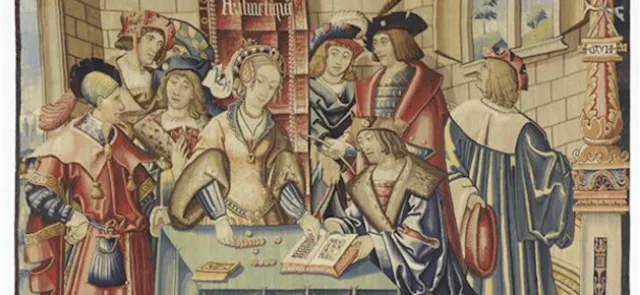
History of official statistics: from antiquity to Insee
A look back at the evolution of counting and enumeration methods, from ancient Rome to the creation of Insee in 1946.
 Podcast
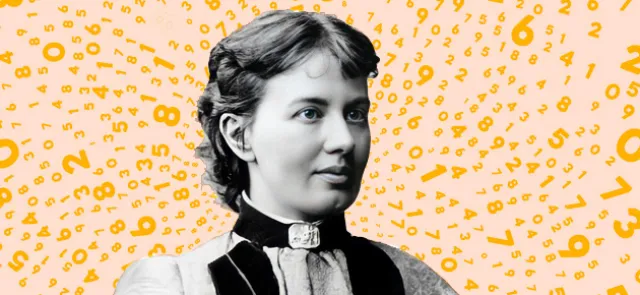
Sofia Kovalevskaya, from poetry to mathematics
Sofia Kovalevskaya was not only a great mathematician but also a socially engaged writer, drawn to poetry from a very early age. This dual calling makes her a figure apart.
 Podcast
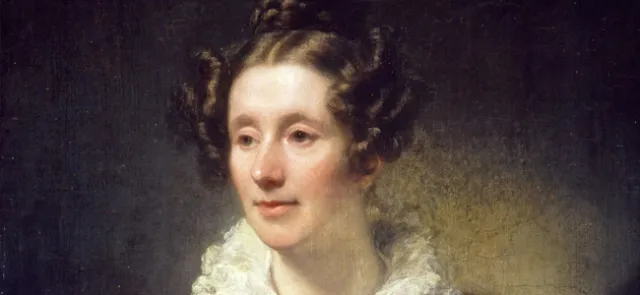
Mary Somerville: a European career
Mary Somerville's life reveals how personal choices, encounters and sheer hard work could turn a woman into a true star of mathematics, while her passion for the subject remained undimmed until the age of ninety-two.
 Podcast
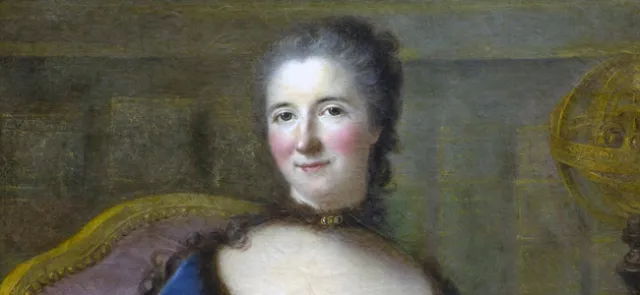
Émilie du Châtelet: love and science
Some women mathematicians benefited from their husbands; others would have been better off without them. While translating Newton, Émilie du Châtelet fell in love. Mistreated by her lover, she became pregnant by him and died in childbirth before completing her work.
Caroline Herschel, professional astronomer
Caroline Herschel (1750–1848) was not destined for astronomy. Thanks to her brother, she became first a singer and then an astronomer. Their partnership led her to discover new comets and become the first woman to work professionally as an astronomer.
 Podcast
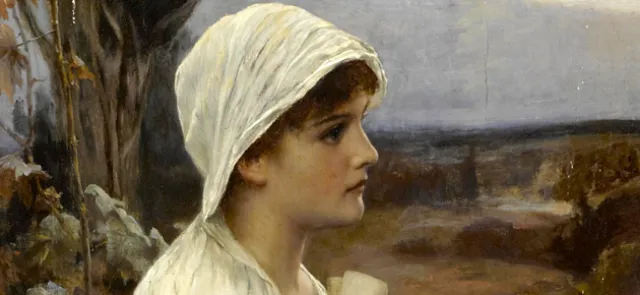
Ancient dynamics: Hypatia and the others
The names of four women associated with mathematics in antiquity are often cited: Theano, Aglaonice, Ban Zhao and Hypatia. But what do historical records tell us about them? And what can we learn about the social dynamics of the relationship between women and mathematics?
 Podcast
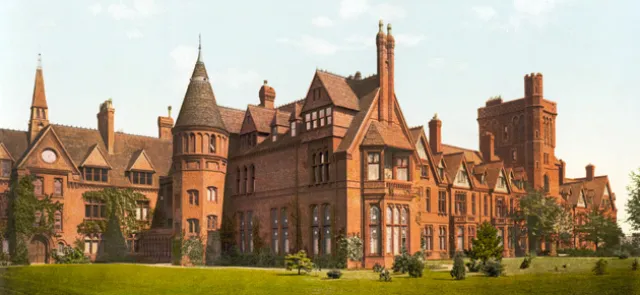
The struggle for acceptance of women mathematicians at Cambridge
At Cambridge, women students such as Sarah Woodhead, Charlotte Angas Scott and Philippa Fawcett could sit mathematics examinations unofficially, yet despite their brilliant results, they were not awarded degrees. The resounding vote of 1897 even confirmed that they would remain barred from receiving them.
 Podcast
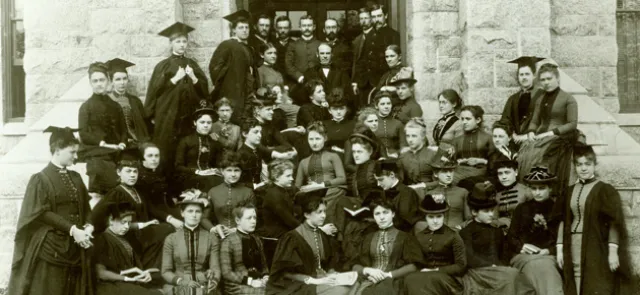
Bryn Mawr: a revolution in America
Founded in 1885, Bryn Mawr College in Pennsylvania is a women's college and a leading center for mathematical research. Charlotte Angas Scott played a central role there and helped create the "golden triangle" linking Bryn Mawr, Girton and Göttingen.
 Podcast
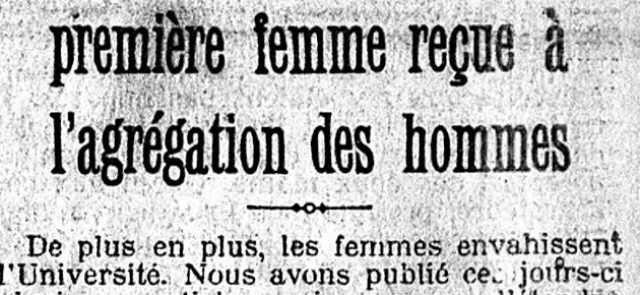
The first women to pass the agrégation in mathematics
Camille Sée's Law of 21 December 1880 on secondary education for girls created a need for women teachers. Although Liouba Bortniker could have taken the women's mathematics agrégation, in 1885 she passed the standard agrégation instead.
 Podcast
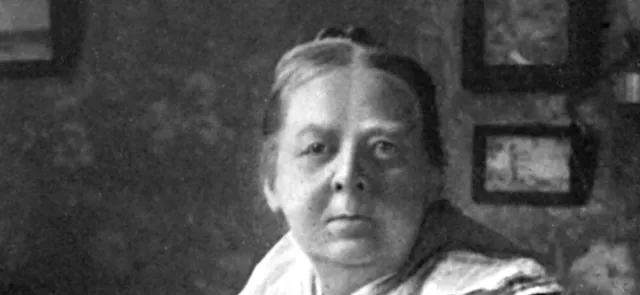
Mary Everest Boole and modern education
Mary Everest Boole should not be reduced to her role as the wife of her illustrious husband. Not only was she a genuine mathematician, but her work as an educator, bringing mathematics to girls, was both highly original and remarkably modern. Her influence can still be felt today.
 Podcast
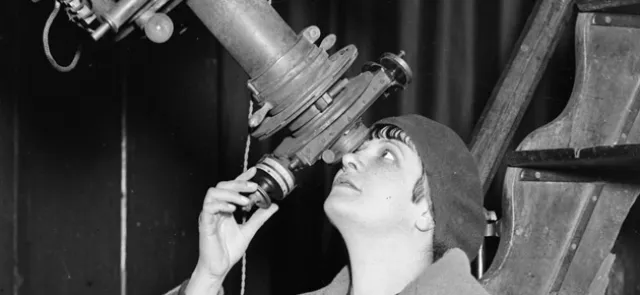
Women enter the Paris Observatory
Women began entering French astronomy in large numbers as computers in the 1880s. But it was not until 1908, when the standard career path for astronomers was reformed, that women began pursuing professional careers as astronomers, following in Edmée Chandon's footsteps.
 Podcast
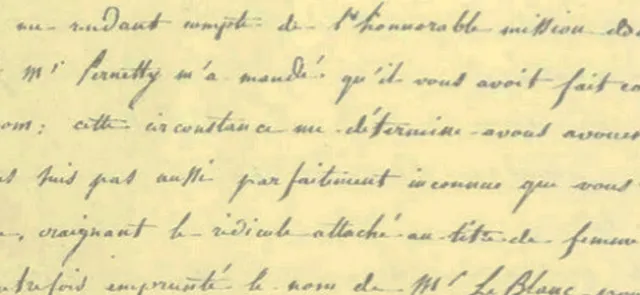
Sophie Germain and her alter ego
The use of a male pseudonym became common from the Revolution onward. It was the strategy adopted by Sophie Germain, whose 250th anniversary we celebrate this year. Her correspondence with Gauss, in which she eventually revealed her identity, shows that this only heightened the admiration she inspired.
 Podcast
Recognition for women scientists of the Enlightenment
Contrary to what we might imagine today, a number of women scientists were paid for their work, and some were even honored with positions as corresponding or full members of learned academies. The scientific community knew what it owed them, and their varied career paths can be traced.
 Podcast
Categorizing eighteenth-century women of science
Identifying and classifying the diverse activities pursued by women versed in science gives us a better understanding of their roles. Several types of women scholars emerge: natural philosophers (in Newton's sense), technicians, scientific managers, students, translators, salon hostesses, and others.
 Podcast
At least two women scholars in Islamic lands
The Middle Ages left us few female mathematicians—at least, few whose names we know. In Islamic lands, at least two names have survived: al-΄Ijlīyah and Lubna of Córdoba.