



Mathematical Themes
Explore the major mathematical themes: geometry, algebra, analysis, arithmetic, logic, and many other fascinating fields.
 Podcast
Mirzakhani: a revolutionary medal | Tangente
On August 13, 2014, Hassan Rouhani, president of the Islamic Republic of Iran from 2013 to 2021, congratulated Maryam Mirzakhani on Twitter on winning the Fields Medal, along with two photographs: one showing her wearing a hijab, the other showing her bareheaded.
 Podcast
Maryam Mirzakhani prizes | Tangente
The first woman and the first Iranian to receive the Fields Medal, Maryam Mirzakhani broke a historic barrier. Her visual approach turned mathematical problems into veritable landscapes. Today, numerous prizes bear her name to encourage young women pursuing research.
 Podcast
Mirzakhani: thinking in pictures | Tangente
Even before her research career began, Maryam Mirzakhani started filling small notebooks with drawings of imaginary surfaces resembling fantastical worlds. Some of these sketches, which she found "simply beautiful," inspired several of her works in topology.
 Podcast
Maryam Mirzakhani, from Tehran to Stanford | Tangente
A brilliant, passionate young woman, Maryam Mirzakhani turned her curiosity into an exceptional scientific career. Her optimistic outlook and perseverance changed the place of women in a field long dominated by men. Her life, brief but luminous, continues to inspire.
 Podcast
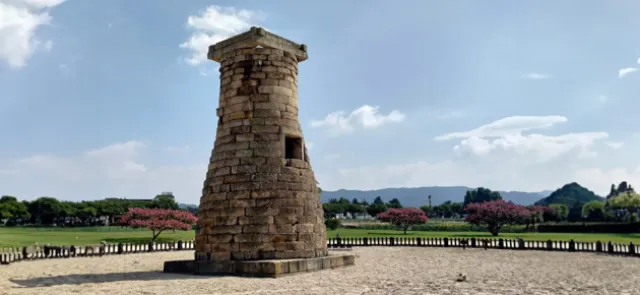
Algebraic tradition and innovation in Korea | Tangente
The tradition of examinations helped develop a culture blending tradition and innovation in 18th-century Korea. Thus, a Euler square was created even before Euler took an interest in the subject, while the Chinese method corresponding to Gauss-Jordan elimination was widely mastered.
 Podcast
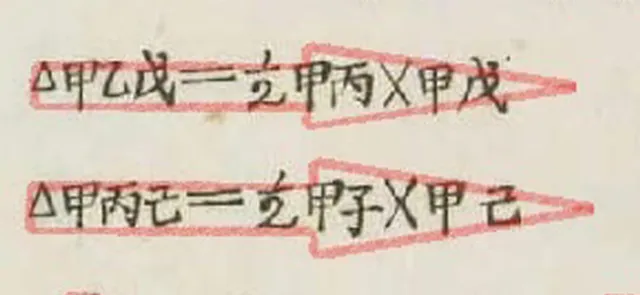
Wasan to yōsan: Japan's Meiji math revolution | Tangente
The opening of Japan during the Meiji era brought changes in the way mathematics was done and written. Questions of method, but also of language, arose. Kikuchi Dairoku, the future Minister of Education of Japan, overhauled mathematics textbooks accordingly.
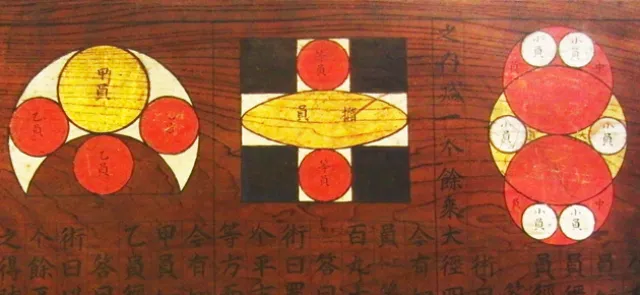
Sangaku: geometry in Japan's temples | Tangente
Sangaku are a remarkable practice, bringing together mathematics, art and spirituality. They offer a precious glimpse into the mathematics practiced during the Edo period and give a sense of how sophisticated popular mathematical culture was at the time.
 Podcast
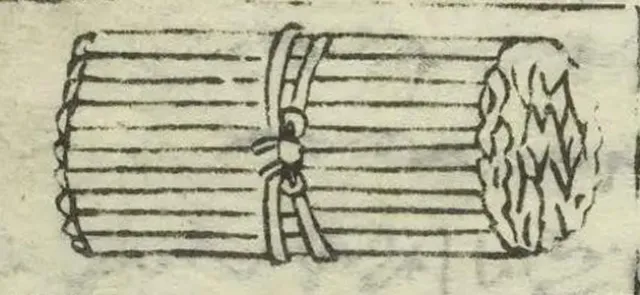
Wasan: Japanese mathematics of the Edo period | Tangente
Rooted in the tradition of Chinese-language treatises, the Japanese mathematics of the Edo period (wasan) is far from a pale copy: the problems and methods developed at the time display remarkable originality in the history of mathematics.
 Podcast
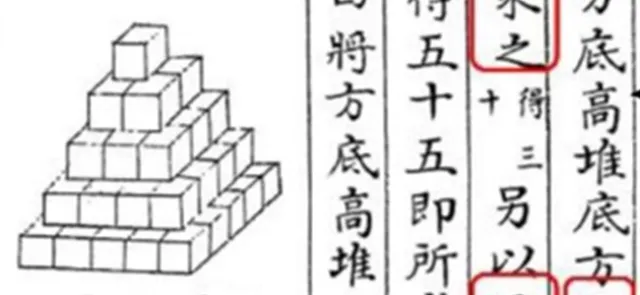
How division was done in China
Once a polynomial equation is given, its roots can be found simply by applying a division algorithm. This algorithm is based on the process of division. Here are its main principles.
 Podcast
The nonexistent proof in ancient China?
Mathematical proof, which comes from the Greek tradition, is often radically contrasted with Chinese mathematics, where it is absent. In reality, monstration was used there, and an enriching hybridization of mathematical reasoning methods emerges, particularly in the work of Xu Guangqi.
 Podcast
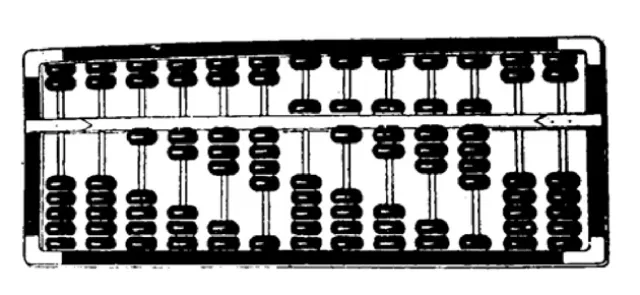
Spread of Chinese math practices, 13th–16th c. | Tangente
The abacus was not the only practical mathematical tool to have existed in China. Concise formulas also made it possible to calculate very quickly. These tools enabled the spread of knowledge over the centuries, thanks to numerous treatises explaining their mechanism.

The Chinese remainder theorem
An early method for what is known as the "Chinese remainder theorem" appears in the Classique mathématique de Maître Sun (Mathematical Classic of Master Sun), but its generalization had to await Qin Jiushao and his Neuf chapitres du traité des nombres (Nine Chapters of the Treatise on Numbers).
 Podcast
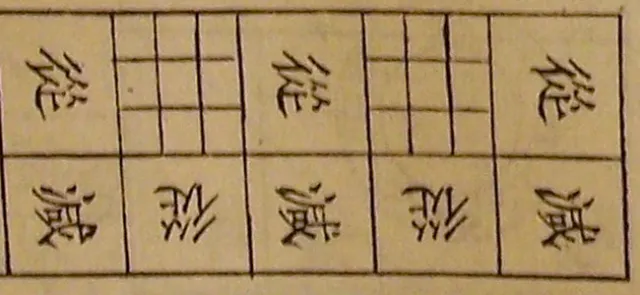
Setting up polynomial equations in medieval China | Tangente
Several methods exist for arriving at a polynomial equation to solve a given problem. The celestial source is the best known but not the only one. This is also an opportunity to see the different strategies of mathematicians in Song-dynasty China.
 Podcast
Chinese science history: an awakening interest | Tangente
At the end of the sixteenth century, contact with knowledge and practices from Europe changed the way mathematics was perceived in China, both from a technical and a historical point of view, around two major questions: how should it be practiced, and who invented it first?
 Podcast
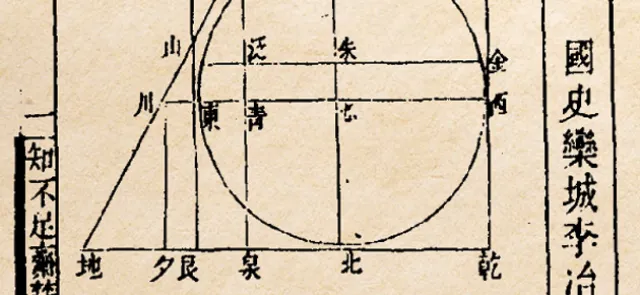
The math quartet of the Song-Yuan dynasties | Tangente
The period covered by the two Song dynasties and the early Yuan dynasty was particularly conducive to mathematics. Indeed, four great names emerged during this time: Li Ye, Zhu Shijie, Qin Jiushao, and Yang Hui. Their works share common influences but sometimes very different approaches.
 Podcast
The Book of Changes and Leibniz's binary system | Tangente
The Book of Changes is a seminal work in the history of Chinese thought and has notably influenced several mathematical texts. Its interest in permutations explains its importance.
 Podcast
The Nine Chapters, a foundational work
The Nine Chapters on the Mathematical Procedures is a collection of problems, each chapter unified by a common procedure for solving them. Their mathematical interest lies chiefly in the commentaries and elaborations of Liu Hui, their principal commentator.
 Podcast
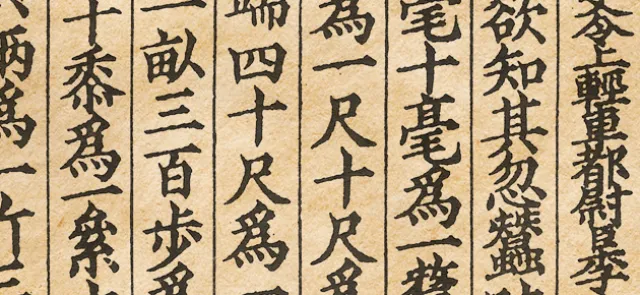
Sources and variety of Chinese mathematics | Tangente
Surprisingly few ancient mathematical works survive from China. This can partly be seen as the result of political choices made by successive dynasties. It helps us understand that the history of mathematics is neither linear nor made up of homogeneous cultural blocks.
 Podcast
Karine Chemla, mathematician and sinologist | Tangente
Karine Chemla is a central figure in the history of mathematics in China, which she has helped make accessible to a wide audience. A mathematician, historian and translator all at once, she looks back on her rich career and her work.
 Podcast
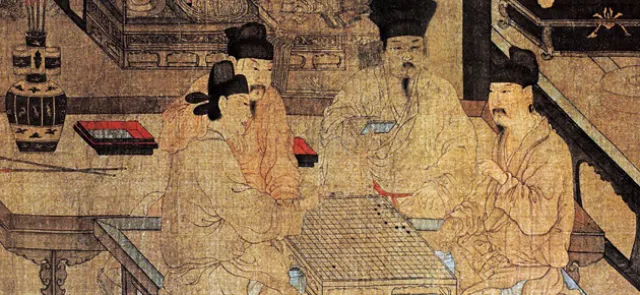
Why study Chinese mathematics? | Tangente
The history of mathematics in Asia is marked by the central place occupied by China, as a producer of both knowledge and institutions for teaching the sciences. Both were, in the past, taken up by other countries in East Asia. Several of the mathematical classics developed in China were studied elsewhere and inspired the mathematical knowledge and practices implemented there.