



Mathematical Themes
Explore the major mathematical themes: geometry, algebra, analysis, arithmetic, logic, and many other fascinating fields.
 Podcast
Whitehead: logical harmony of mathematics and philosophy
A journey into the thought of Alfred North Whitehead, who laid the foundations of the Principia Mathematica with Russell and developed a metaphysics of the cosmos in which God and mathematics work together in the world's unfolding.
 Podcast
Pascal's Wager: probability and faith in mathematical analysis
An explanation of Blaise Pascal's famous argument about the wager of faith, applying probability theory to the question of God's existence.
 Podcast
The divine perspective: geometry and art in the Renaissance
How did Renaissance painters work around the vanishing point—a profane image of divine infinity—before projective geometry formalized their intuitions?
 Podcast
Determining the qibla: spherical trigonometry and direction to Mecca
Discover how Muslim tradition inspired elegant mathematical solutions for finding the direction of Mecca, combining spherical geometry and astronomy.
 Podcast
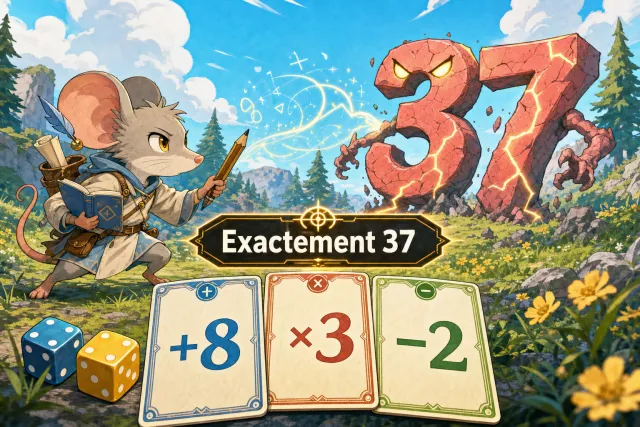
Talystro: maths strategy game review on Steam
Talystro is a Norwegian roguelite where every enemy has a precise value to reach through equations. A playful, strategic approach to maths.
 Podcast
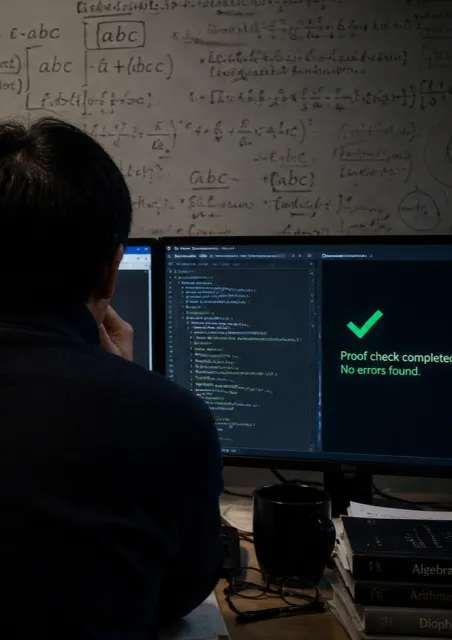
abc conjecture: why computer verification could solve math's biggest scandal
Since 2012, Shinichi Mochizuki's proof of the abc conjecture has divided the mathematical community. Researchers are turning to computer-assisted formal verification to finally settle the matter.
 Podcast
EGMO 2026 Bordeaux: 260 girls shake up math
The European Girls' Mathematical Olympiad brought together 260 participants from around the world in Bordeaux for the 15th edition of this competition dedicated to promoting girls in mathematics.
 Podcast
Gladys West: the mathematician who made GPS possible
A portrait of Gladys West, the African-American mathematician whose geodetic models enabled the development of modern GPS.
 Podcast
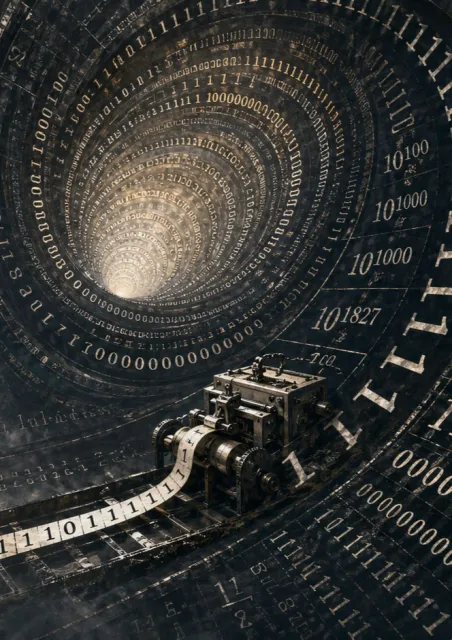
Busy Beaver: the function beyond all computability
The Busy Beaver function grows faster than any computable function. Discover why some numbers are mathematically inaccessible.
 Podcast
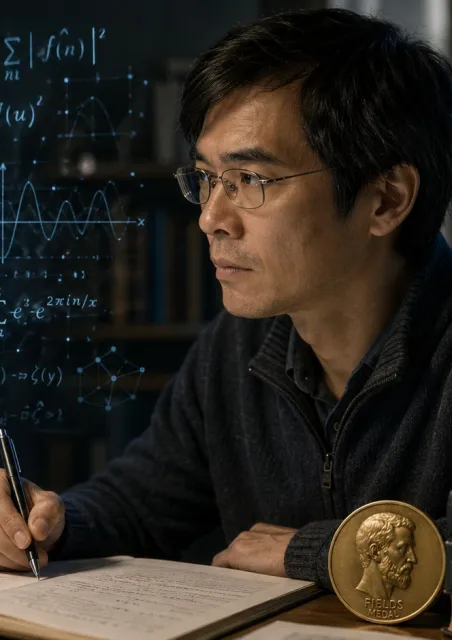
Terence Tao and AI: what they are changing in mathematics
Terence Tao, a Fields Medalist, shares his experience with AI in mathematical research: an exploration partner that is transforming the way problems are formulated.
 Podcast
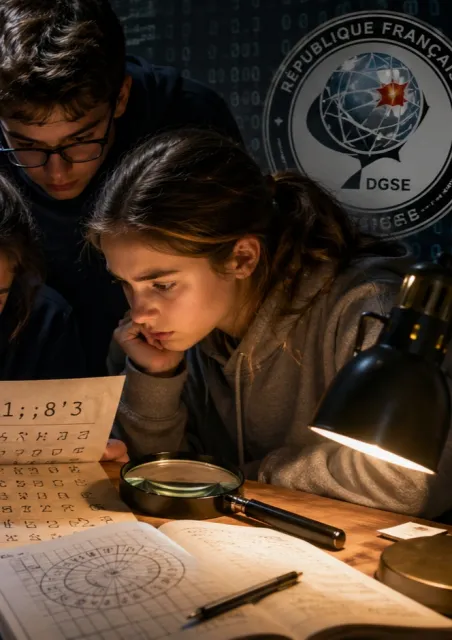
Alkindi 2026: cryptanalysis final for middle schoolers at the École des Mines
Twenty teams of middle and high school students go head-to-head on 13 May at the École des Mines de Paris to win the title of France's best junior cryptanalyst.
 Podcast
Two locally identical yet different tori break 150 years of geometry
Two tori plainly impossible to tell apart locally yet topologically distinct: a discovery that breaks a rule geometry has accepted for 150 years.
 Podcast
Ace: the math-powered robot beating ping-pong champs
Discover how Ace, a robot that combines reinforcement learning with event-based vision, can beat ping-pong champions. We break down the mathematics behind this feat, published in Nature.
 Podcast
Ackermann-Péter function: recursion without bounds
With a surprisingly simple definition, the Ackermann–Péter function generates numbers of a staggering size. This mathematical construction, born out of research into computability, shows how quickly a recursive procedure can exceed all the usual bounds.
 Podcast
Michèle Audin: mathematician, writer and Oulipian
Michèle Audin's life brought together several forms of commitment. Professional mathematician, writer, social and political activist: every strand was intertwined with and enriched the others.
 Podcast
Mersenne primes: discover perfect numbers
The search for Mersenne primes very quickly leads us to examine gigantic numbers.
 Podcast
Year 2038 bug: the 32-bit timestamp problem explained
A massive bug related to the way computers represent large numbers looms on January 19, 2038, at 3:14:08 a.m.
 Podcast
Google: an almost accidental choice
In 1996, when they launched the famous search engine, Sergey Brin and Larry Page called it BackRub internally, a reference to its ability to identify and index even the most deeply hidden links (backlinks).
 Podcast
The Boltzmann equation: from molecular chaos to macroscopic equilibrium
Formulated in 1872 by the Austrian physicist Ludwig Boltzmann (1844–1906), this equation describes how a gas or fluid evolves toward equilibrium. It bridges molecular collisions at microscopic scales and the macroscopic world.
 Podcast
Edward Kasner: the man behind googol and googolplex
Staggeringly large numbers invented by an eccentric mathematician that would inspire an iconic domain name...