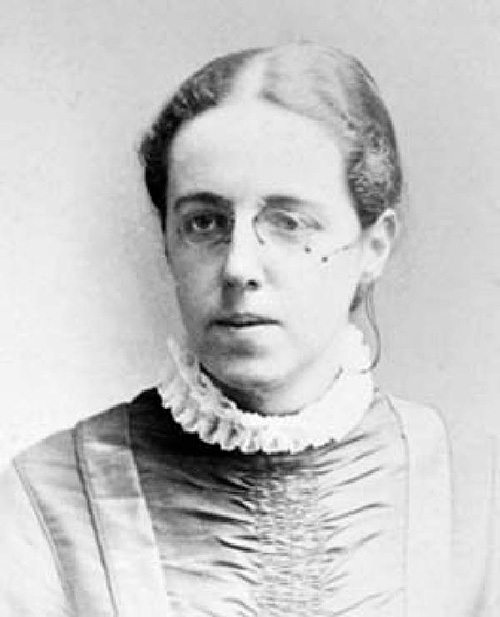
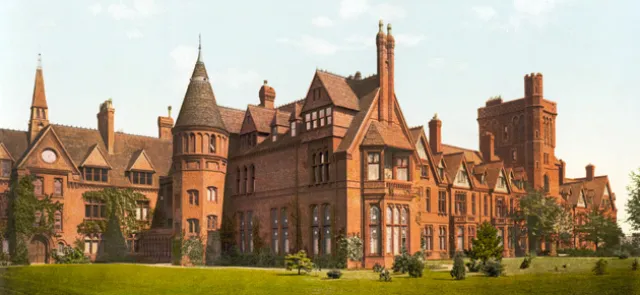
Before crossing the Atlantic to Bryn Mawr in Pennsylvania, it is useful to look at the situation in England, and more specifically at Cambridge. Charlotte Angas Scott (1858–1931) first came to public attention in the spring of 1880, when she achieved the unexpected feat of placing eighth in the Mathematical Tripos (see the article “The difficult acceptance of women mathematicians at Cambridge”). As a woman, she was not only forbidden to attend the ceremony, but her name could not even be mentioned. Yet the event caused such a stir in the press that women students won the right to have their names included on the official list, in a separate column, though still without receiving a degree; one cannot ask for too much… The event made headlines around the world. Charlotte became a role model for women. On 18 April 1922, at a ceremony held in her honour by the American Mathematical Society, the mathematician James Harkness (1864–1923) recalled the event from his youth. To him, it marked “the turning point in England between the theoretical feminism of Mill and others and the practical education and political advances of the present time”. It was also excellent publicity for Girton College (see the article “The difficult acceptance of women mathematicians at Cambridge”).