



En effet, on a souvent l’impression que connaître le nom d’al-Khwārizmī et l’appeler « père de l’algèbre » fait qu’on a déjà tout dit. Mais c’est ignorer la manière dont il faisait de l’algèbre, une manière parfois toute différente de celle de ses successeurs. On sait parfois qu’il s’est intéressé à des questions d’héritage pour établir des équations, mais qui est entré dans le détail pour comprendre en quoi la complexité de cette question a pu titiller son esprit ?
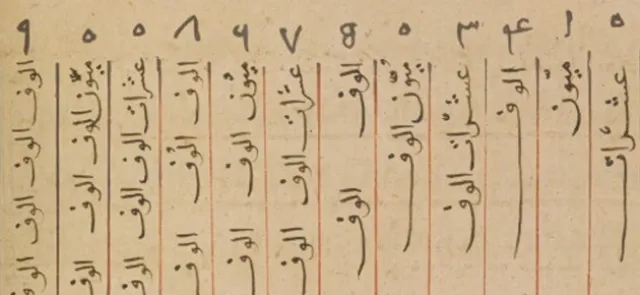
De même, on parle volontiers de « chiffres arabes » sans savoir qu’ils sont indiens et que le monde arabo-musulman a utilisé de nombreux systèmes de numération concurrents, y compris après l’introduction des chiffres indiens. C’est ainsi que l’on trouve parfois, dans un même paragraphe de manuscrit, plusieurs numérations différentes, sans forcément aujourd’hui être capable de comprendre pourquoi tel mathématicien a fait ce choix.
On a aussi parfois tendance à ne voir dans la science arabe qu’un simple trait d’union entre la Grèce et l’Occident latin : son seul mérite aurait été d’avoir conservé des textes durant les périodes sombres du Moyen Âge. Certes, les traductions en arabe ont une grande importance, et on a parfois pu redécouvrir des textes grecs perdus grâce à ce travail, mais il serait fautif de négliger les approfondissements et innovations originales qui furent apportés des siècles durant.
De fait, s’intéresser à l’histoire des mathématiques en pays d’Islam permet de découvrir des méthodes ingénieuses qui révèlent une profonde intelligence et sont tout à fait pertinentes non seulement pour l’enseignement mais aussi pour le simple plaisir de comprendre leur fonctionnement.
D’al-Bīrūnī à al-Zanjānī en passant par Abū l-Wāfā’ ou Thābit ibn Qurra, vous allez ainsi pouvoir découvrir dans ce numéro onze articles signés par des chercheurs, spécialistes des sujets qu’ils abordent, vous permettant de dépasser les aspects souvent rebattus, grâce à des visions originales et approfondies qu’on ne trouverait habituellement que dans des publications académiques mais qui ont été ici rendues accessibles à toutes et tous.
Un grand merci doit être adressé à Marc Moyon pour son aide à constituer ce numéro hors-série qui est le premier – mais pas le dernier – à se focaliser sur une aire géographique ou culturelle particulière, en sorte de vous faire entrer dans la réalité des mathématiques telles qu’elles ont été pensées et développées ailleurs.