A fundamental structure
--------------------------
A natural idea? No doubt…
Far-fetched? Perhaps…
Brilliant? Certainly!
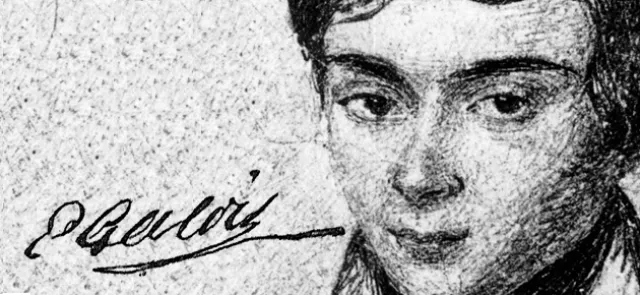
The concept of a group emerged in the early 19th century in the mind of the brilliant young mathematician Évariste Galois, in response to a specific problem ("Can a polynomial equation be solved by radicals?"). It has since spread to every field of mathematics, often in connection with symmetry properties.
This expansion was gradual and has greatly advanced human thought. Many contemporary problems in mathematics involve determining a group, studying its properties, or finding an isomorphism between several groups.
This is often true in geometry, for example, even though the concept of a group originated in algebra. Groups extend beyond mathematics into other sciences – physics, through fundamental particles or quantum mechanics, and chemistry, through the study of crystals… – and even into other fields of human activity, such as the social sciences, literature and the arts.
Alexandre Grothendieck, probably one of the greatest mathematicians of the 20th century, revolutionized algebraic geometry and believed that the two greatest mathematical inventions of all time were zero and the concept of a group.
François Le Lionnais puts it this way in Les Grands Courants de la pensée mathématique (1948):
*"The extraordinary generality of this concept, born of Galois's genius in the first half of the 19th century, enables it to feature in the most diverse branches of mathematics and to link their existence and workings to the structure of the human mind, and perhaps even to the architecture of the universe."*
What more is there to say?
Join us in this special issue as we discover this great invention, its history and its influence…