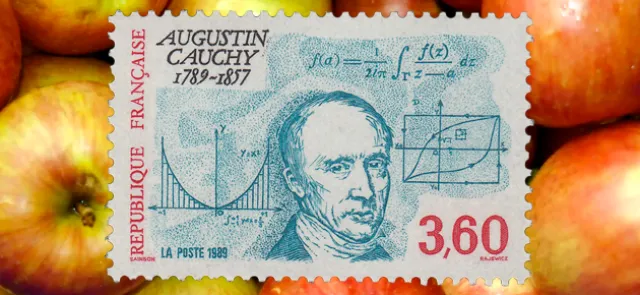




Remarquables d’élégance technique et d’originalité, les deux mémoires de Cauchy sur les permutations (voir article « Substituer pour compter ») sont fondateurs de la théorie des substitutions et, par suite, de la théorie des groupes. Cauchy s’intéresse aux permutations pour elles-mêmes, là où Waring, Vandermonde, Lagrange ou Ruffini avaient, eux, envisagé les permutations comme un simple outil pour la résolution des équations algébriques. En développant ses idées, Cauchy introduit ainsi les notions de groupe cyclique et de partition d’un groupe en classes selon un sous-groupe. Son travail reste cependant ignoré de ses contemporains, aux brillantes exceptions près d’Abel et de Galois qui sauront en tirer parti. Galois a lu les mémoires de Cauchy dans le Journal de l’École polytechnique, et y puise les définitions de permutation et de substitution.
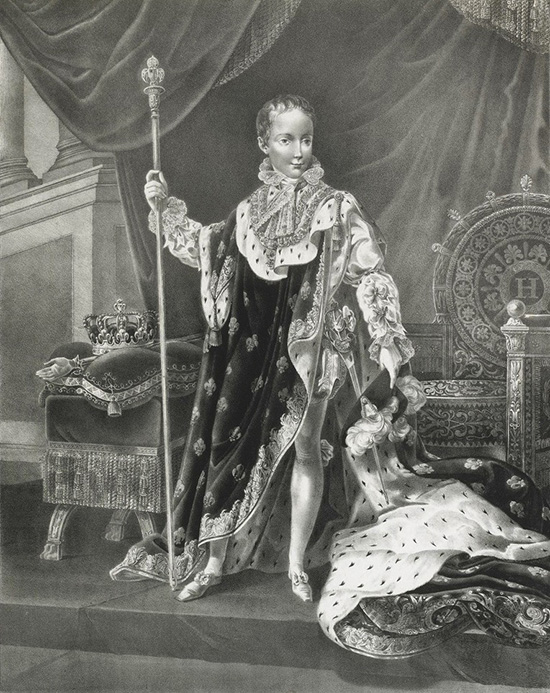
Henri d’Artois, fils de Charles X, vers 1833,
à l’époque où Cauchy était son précepteur à Prague.