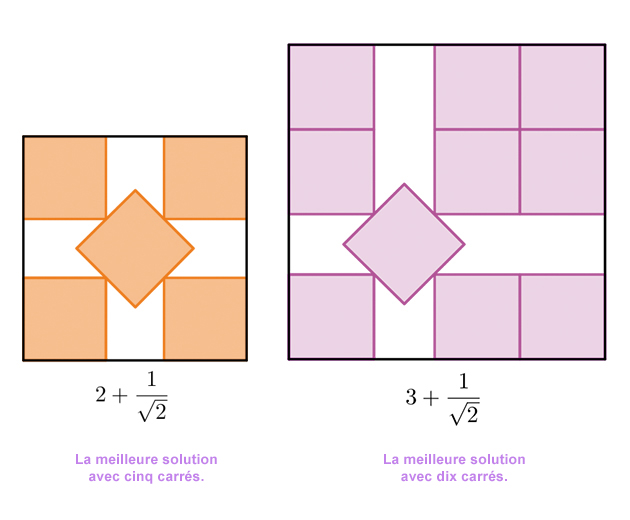




Comment arranger n carrés de côté 1 dans un grand carré de façon à ce que celui-ci soit le plus petit possible ? Évidemment, si n = 4 ou 9, il suffit de considérer un grand carré de côté 2 ou 3. La question est beaucoup moins triviale si on souhaite empaqueter cinq carrés. La meilleure situation est celle représentée ici et le résultat a été démontré en 1979. D’autres résultats pour de petites valeurs de n n’ont été démontrés qu’au début des années 2000 !
Le cas n = 11 est le plus petit cas qui reste ouvert.