



All articles
Dive into the fascinating world of mathematics with our captivating articles, written by passionate experts. Whether you are a curious amateur or a seasoned mathematician, our articles cover a wide range of topics, from fundamental concepts to the latest discoveries, including practical applications and philosophical reflections.
Artificial intelligence to the rescue
Using computers to solve mathematical problems is nothing new. Adam Zsolt Wagner of Tel Aviv University (Israel) has now shown how artificial intelligence can uncover counterexamples to several previously open conjectures. A promising path for the future?
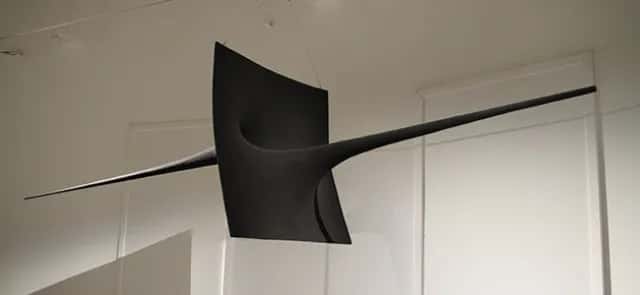
From intuition to rigor:
From Cauchy to Weierstrass, rigor steadily took hold in analysis throughout the 19th century. A variety of counterexamples swept away mistaken beliefs and forced mathematicians to define the relevant concepts more precisely. Some "monstrous" functions were introduced, fascinating to some and repellent to others.
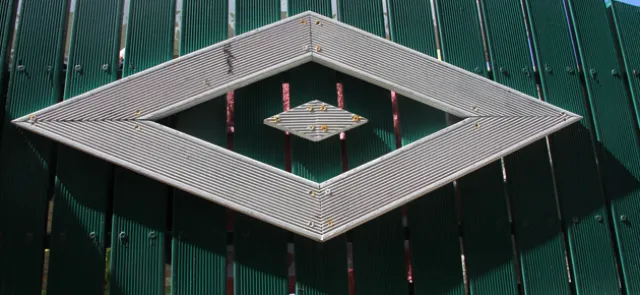
The exception that does not prove the rule
A persistent belief holds that counterexamples are primarily a source of amusement. Yet they play a fundamental role in several areas, both as mathematical proofs and as teaching tools—not to mention their entertaining, or even artistic, side, depending on how one looks at them.
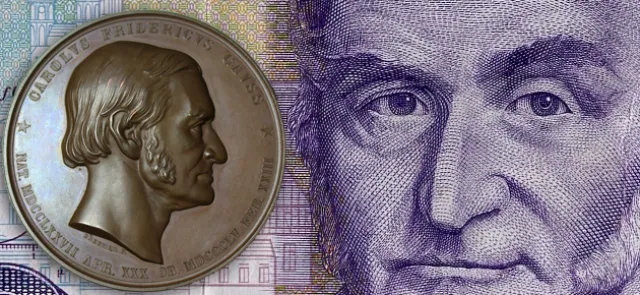
A history of modular arithmetic
The idea of working with the remainders obtained when numbers are divided by certain integers, rather than with the numbers themselves, gradually gained ground. Gauss formalized the idea with his notion of congruence, giving rise to modern modular arithmetic. Congruences have quite a history!
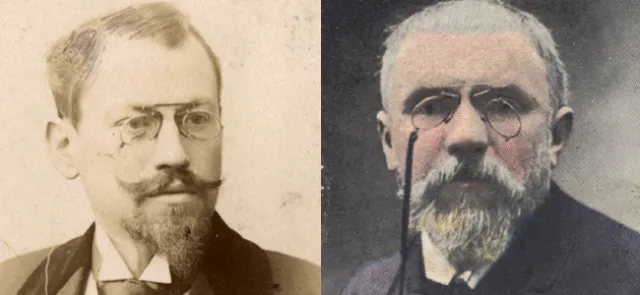
Poincaré: psychology of mathematical invention | Tangente
Henri Poincaré wrote extensively about his experience as a mathematician and the role of intuition in mathematics. Less well known is that he also agreed to take part in a clinical study conducted by the psychiatrist Dr Toulouse. Even so, the origins of mathematical creativity remain mysterious.
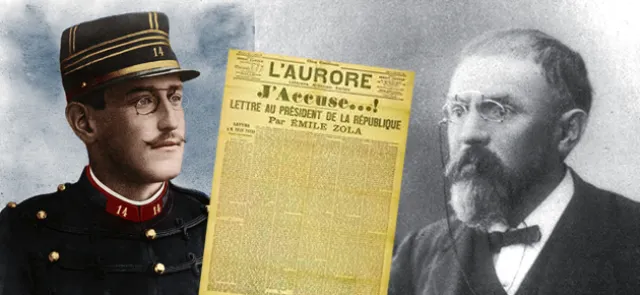
A major role in the Dreyfus affair
The Dreyfus affair ranks among the great fiascos of French legal history, tearing society apart in its day. Mathematicians played a major role in securing Captain Dreyfus's rehabilitation, notably by writing a report on an application of probability theory.
Poincaré, an extraordinary student: zero in math | Tangente
The teachers who crossed paths with Henri Poincaré remembered a brilliant, unconventional student.
Poincaré's sieve
Poincaré's sieve formula gives the cardinality of a finite union of finite sets in terms of the cardinalities of those sets and their intersections.
Poincaré on mathematical induction | Tangente
"This, then, is mathematical reasoning par excellence, and we must examine it more closely" (La Science et l'Hypothèse, "Sur la nature du raisonnement mathématique").
Poincaré's qualitative approach to analysis | Tangente
Every high-school student learns how to express the real roots of a quadratic equation explicitly in terms of square roots. This becomes much more difficult for higher-degree equations and impossible from degree five onward.
Poincaré conjecture in manifold topology | Tangente
By the end of the 19th century, following the work of Poincaré and many other mathematicians, including Bernhard Riemann (1826–1866) and Enrico Betti (1823–1892), the topology of surfaces in our ordinary space was well understood.
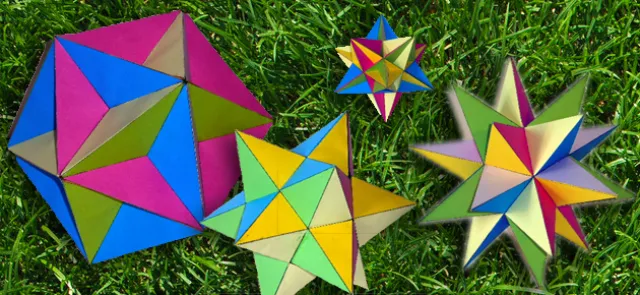
Polyhedra: from Euler's formula to Poincaré's characterization
What is a polyhedron? Throughout history, several characterizations have been proposed, only to be repeatedly undermined by the appearance of "monsters" serving as counterexamples. We look back at this epic story, which reaches its conclusion in Poincaré's work.
Institut Henri-Poincaré: activities and missions | Tangente
The Poincaré Seminar on theoretical physics takes place in a venue worthy of the name: the Institut Henri-Poincaré, in Paris's 5th arrondissement, at the heart of the Latin Quarter.
Cédric Villani's tribute to Henri Poincaré | Tangente
A 2010 Fields Medalist, Cédric Villani drew heavily on Poincaré's work in analysis for his own research.
Poincaré and his heirs: the documentary | Tangente
Henri Poincaré, l'harmonie et le chaos (Henri Poincaré: Harmony and Chaos) is a 53-minute documentary made by Philippe Worms in 2012 and available online. Its unusual premise: the director brought six scientists together in a manor house for a weekend and filmed their informal conversations about Henri Poincaré.
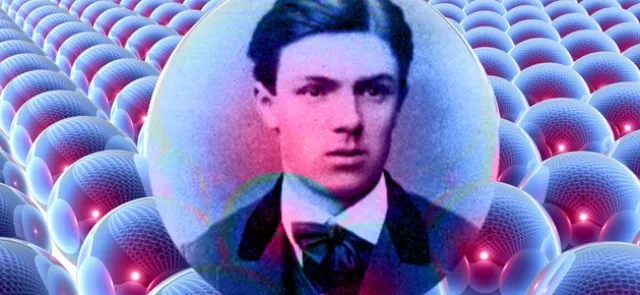
The adoption of non-Euclidean geometries
Euclid's fifth postulate differs from the others: it seems provable. Yet its negation leads to other geometries, known as non-Euclidean geometries. They have their place within mathematics and have applications both in arithmetic, as Poincaré showed, and in general relativity.
Poincaré amid the quantum revolution | Tangente
At the dawn of the 20th century, quantum theory set the world’s scientific community abuzz.
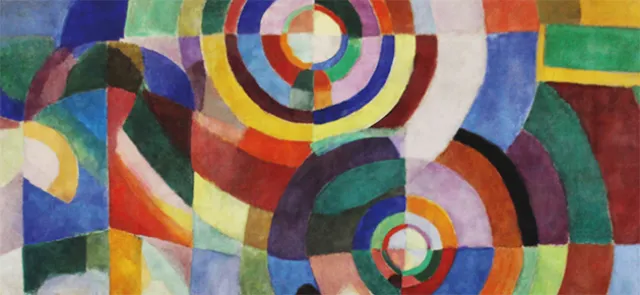
Poincaré and analytical Cubism: geometry and art | Tangente
As an artistic movement, Cubism grew out of a fundamentally mathematical approach to space, shortly after the publication of La Science et l’Hypothèse. In it, Henri Poincaré discusses the nature of space, and artists would strive to "turn his words into paintings."
Poincaré and science: conventions and reality | Tangente
Poincaré's works on the philosophy of science were a resounding popular success. Today they have lost none of their value, interest or charm! His distinctive way of understanding and describing facts is one hallmark of Poincaré's original thought.
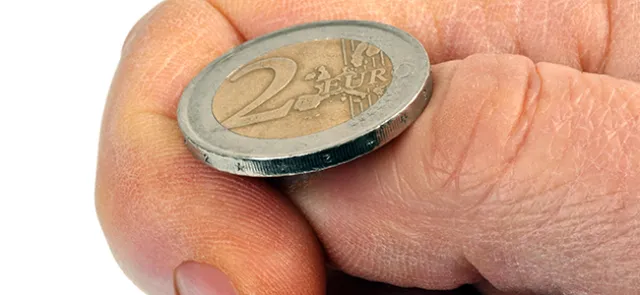
The calculus of probabilities according to Poincaré | Tangente
Poincaré is rarely associated with the calculus of probabilities. And yet his writings and teaching reveal much about his work and thinking on the subject. Although he did not revolutionize probability theory, he deserves credit for asking the right questions.