



All articles
Dive into the fascinating world of mathematics with our captivating articles, written by passionate experts. Whether you are a curious amateur or a seasoned mathematician, our articles cover a wide range of topics, from fundamental concepts to the latest discoveries, including practical applications and philosophical reflections.
The physics behind medical imaging
Physics gave rise to technologies that allow us to see inside the human body without surgery. Developed during the 20th century, these techniques rely on X-rays, particle emissions, ultrasound detection, or magnetic fields.
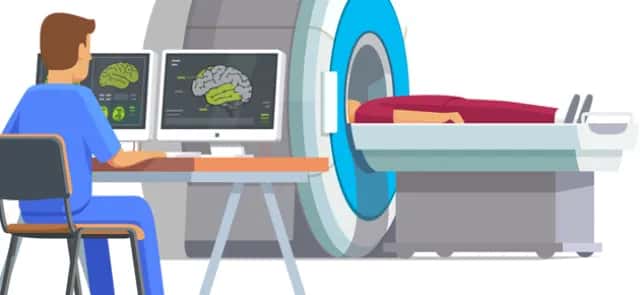
The mathematics of medical imaging
Medical imaging is an indispensable tool for physicians, whether for diagnosis, prognosis, or surgery. It provides anatomical or functional information about an organ or part of the human body while being either noninvasive or only minimally invasive.
Three-dimensional printing
3D printing has enjoyed a real surge in popularity in recent years. Do you know how it works?
Could Georges Méliès have discovered 3D cinema?
French illusionist and filmmaker Georges Méliès (1861–1938) is well known for his fantastical, poetic films, which are often seen as dated today.
Ray tracing
The ray-tracing technique is used to compose 3D computer-generated scenes.
Holograms: genuine three-dimensional images?
Envisaged as early as 1892 by Jules Verne in his Gothic novel Château des Carpathes, holograms—three-dimensional images—were not actually theorized until more than half a century later by the Hungarian-British engineer Dennis Gabor (1900–1979), winner of the 1971 Nobel Prize in Physics.
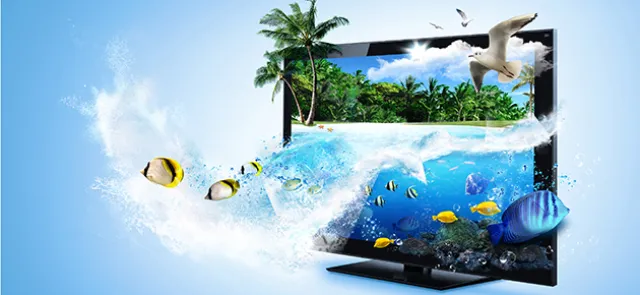
3D television: the TV of tomorrow?
How can the flat screens in our offices and living spaces create the illusion of everyday depth? By showing each eye a slightly different image, they can prompt the brain to create a three-dimensional representation.
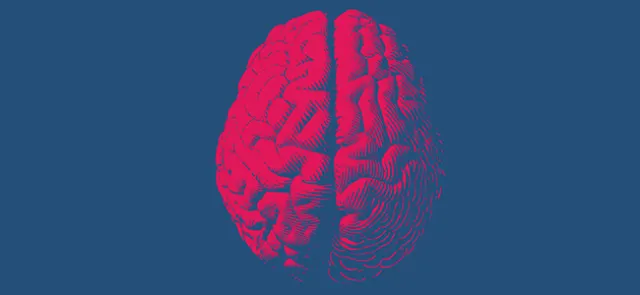
“A better understanding of how the brain works”
Dr Christophe Habas is a neuroradiologist. He heads the medical imaging department at the Quinze-Vingts Hospital in Paris. His work combines hospital practice, research and university teaching. He has an in-depth understanding of the role mathematics plays in medical techniques, which he kindly agreed to share with us.
Vectors and matrices
Rectangular arrays of numbers can be added and multiplied. That is when they become matrices.
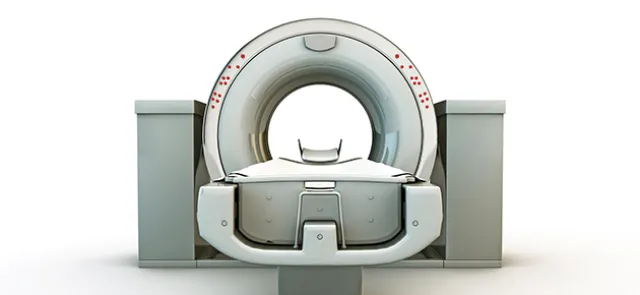
Tomographic reconstruction
How can we use computed tomography or magnetic resonance imaging (MRI) to see inside the human body without opening it up or cutting into it? That is the true mathematical challenge of tomographic reconstruction!
Steganography
For millennia, the most extraordinary tricks have been used to transmit hidden messages.
Digital watermarks
No doubt your Internet searches have turned up images you liked but could not use because they were overlaid with a translucent image credit.
Television’s “missing” lines
The information received by our television sets is digital. Each image corresponds to a certain number of bits specifying the luminance and chrominance of each pixel (see the article “The components of our images: luminance and chrominance”). But the on-screen image is not the whole story.
Tomorrow's ultra-high-definition TV
Our screens are taking up more and more room. And they are not done growing yet. The International Telecommunication Union (ITU) has set a new standard for tomorrow’s televisions: ITU 2020.
Lena, the "first lady" of the Internet
Nearly every computer scientist knows this image: "Lena" (or "Lenna") is a photograph that has been used as a standard test image for digital image-processing algorithms for almost fifty years.
Unexpected changes
Requirements for display quality are becoming increasingly stringent. Screens are growing ever wider, and their color gamut continues to expand.
The JPEG format
By breaking each image into blocks and moving into the frequency domain, the JPEG format discards high frequencies, to which our eyes are less sensitive. This is what makes the compression effective. JPEG: vector spaces underpinning image compression!

From the Fourier transform to the discrete cosine transform
How do we go from discrete digital signals to the light and color waves emitted by our screens, and how can we reduce incoming data streams as much as possible without overly degrading the images? Converting signals to a spectral representation allows them to be compressed selectively to suit our visual system.

An image as a matrix
When we speak of an "image," we need to know what kind of object we are dealing with: how is the image represented, what do we want to do with it, and what medium is it intended for? Mathematics lies at the heart of these questions. Here is a brief overview of the basic concepts involved.
The components of our images: luminance and chrominance
Screens are now part of our daily lives—and taking up more and more space. But how are the images they display constructed? What lies behind the standards (ITU 709, etc.) and formats (4:3, 16:9, etc.) in use?