



All articles
Dive into the fascinating world of mathematics with our captivating articles, written by passionate experts. Whether you are a curious amateur or a seasoned mathematician, our articles cover a wide range of topics, from fundamental concepts to the latest discoveries, including practical applications and philosophical reflections.
 Podcast
Fermat's false theorem
Fermat formulated many theorems, but one of them proved false: he conjectured that all "Fermat numbers" were prime, an error exposed by Euler. This notably illustrates how induction can lead us astray.
Math games: 2048 and more | Tangente
All right… a little screen time after all—not to do the arithmetic for us, but to practise mental arithmetic while having fun. The games featured on this page can be downloaded to a smartphone.
 Podcast
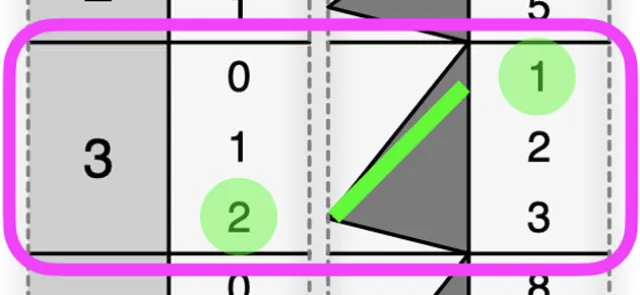
Conquering carries: Genaille–Lucas rulers | Tangente
Napier's rods had simplified multiplication, but handling carries remained an unsolved problem. The obstacle they posed remained insurmountable for three and a half centuries, until Genaille and Lucas finally found a solution.
 Podcast
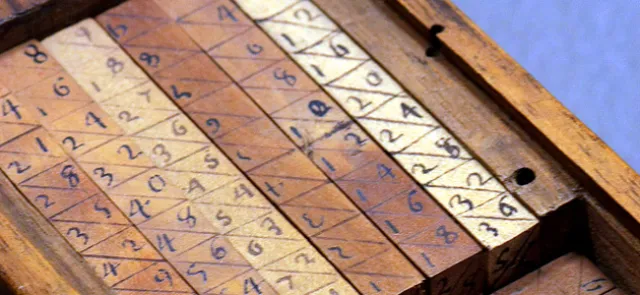
Napier's bones: multiply without tables | Tangente
With the advent of calculators and, later, smartphones, people have become less and less likely to work out a multiplication, division or square root by hand. Yet for centuries this was a problem, inspiring a host of ingenious ways to streamline calculations. One such invention was Napier's bones, which effectively automated multiplication.
 Podcast
At Ratchinski's public school
For fifteen years, Sergei Ratchinski developed his own teaching method, based on creativity.
 Podcast
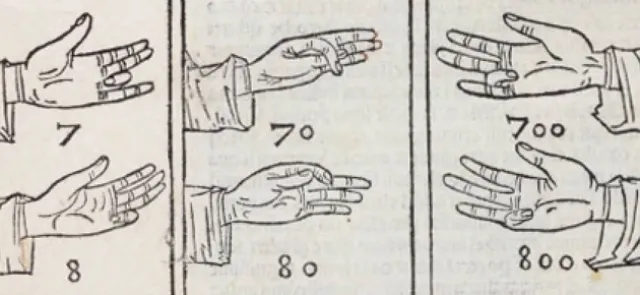
Finger multiplication: tables at your fingertips | Tangente
Even before they had words for numbers, human societies developed counting systems of varying sophistication to suit their activities. To count beyond a handful of units, they used the tools they always had to hand: their own bodies. The result was a range of ingenious methods for performing certain operations.
 Podcast
The abacus mindset: soroban and mental arithmetic | Tangente
The enduring use of the abacus has made Asia the continent where mental arithmetic is most highly developed. Competitions are held there, and the leading experts regularly set new records.
 Podcast
Fermi's wacky problems
They contain no data, yet a little ingenuity and plenty of common sense are all you need to work them out in your head: welcome to the world of the wacky problems invented by physicist Enrico Fermi.
 Podcast
Logarithms to the rescue
Mental arithmetic usually brings to mind the four basic operations, or perhaps a few square-root calculations. Yet a little additional theoretical groundwork can take us much further, allowing us to tackle in our heads problems that might otherwise seem impossible without a calculator.
 Podcast
A mnemonic for the number π
Whether for doing mental arithmetic or impressing the crowd, certain numerical values need to be learned by heart. The digits of π are an important example, but a particularly tricky one to memorize, since they follow no simple pattern. To overcome the difficulty, nothing beats alexandrine verse.
 Podcast
The rule of 72
Interest-rate and monthly-payment problems are hard for our brains to grasp, because we struggle to picture an exponential phenomenon. During the Renaissance, however, trade expanded, bringing with it a growing need for calculations of this kind. This led to the development of new shortcuts.
 Podcast
Heron's method for approximating square roots
What is the square root of 50? Since 50 is not a perfect square, the best we can give is an approximation. Put away our pencils and smartphones, and let's try to work it out in our heads.
 Podcast
Grains on the chessboard and other high powers
Are billions, trillions, quadrillions and the like beyond our grasp? Not necessarily. With approximate calculations, many immense numbers become perfectly intelligible.
 Podcast
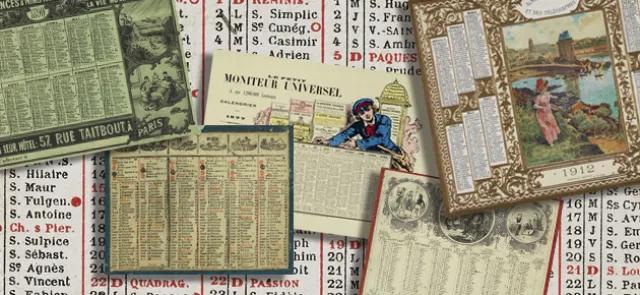
What day will Doomsday fall on? | Tangente
A classic mentalist trick is to work out instantly, in their head, which day of the week corresponds to a given date. How do they know at once that January 27, 1962, was a Saturday? Here are some of the methods they use for our Gregorian calendar.
 Podcast
Number sense — A history of mental arithmetic | Tangente
For a time, electronic tools seemed to have consigned mental arithmetic to history. Yet in recent years it has made a strong comeback among educational priorities. Far from being merely a set of automatic procedures, mental arithmetic is an irreplaceable way to explore numerical structures and deepen our understanding of certain concepts.
 Podcast
Is this number prime?
Prime numbers form the backbone of arithmetic. Although their distribution remains a subject of cutting-edge research, being able to decide mentally whether a number is prime is an excellent mental exercise—both enjoyable and creative.
 Podcast
Divisibility in 19th-century textbooks | Tangente
Divisibility rules are numerous and are used by everyone who practises mental arithmetic. Blending arithmetic with common sense, they are a source of countless mathematical recreations, and have long been used in teaching.
 Podcast
Calculating prodigies
Calculating prodigies fascinate the public with their ease in rapidly performing operations on large numbers. The tricks used by these number magicians draw on abilities that are more mnemonic than mathematical, but also on numerous methods and stratagems based on various theorems.
 Podcast
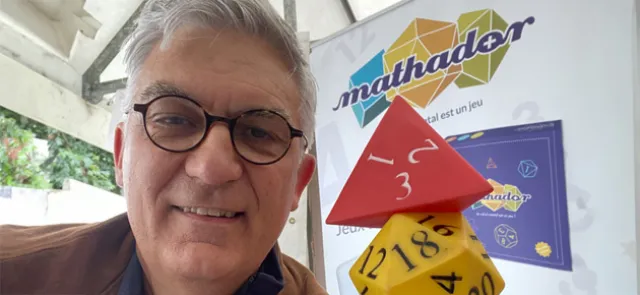
Éric Trouillot: Mental arithmetic, a path to jubilation | Tangente
The inventor of the calculation game Mathador, Éric Trouillot is one of those working to bring mental arithmetic back into teaching practice. In his view, far from being tricks performed by trained monkeys, techniques for calculating in one's head are an excellent gateway into the world of numbers, as well as an irreplaceable way to put mathematical properties — such as the distributivity of multiplication — into concrete practice.
Mental arithmetic: first steps | Tangente
A few tricks can make mental arithmetic more efficient