



All articles
Dive into the fascinating world of mathematics with our captivating articles, written by passionate experts. Whether you are a curious amateur or a seasoned mathematician, our articles cover a wide range of topics, from fundamental concepts to the latest discoveries, including practical applications and philosophical reflections.

A stamp bearing Grothendieck's likeness | Tangente
At the instigation of Éric Bouhier, who had already been behind four other stamps, mathematician Alexandre Grothendieck (1928–2014) was honoured with a stamp issued on 16 June 2025.

André Deledicq honoured | Tangente
On April 24, 2025, in the magnificent library of the Institut Henri-Poincaré, amid its historic collection of geometric solids, Gilles Hallout, education adviser to the Élysée, appointed André Deledicq a Knight of the Legion of Honour.

New developments in polynomial equations
Did you think the subject of polynomial equations had been more or less settled since Galois's work? Think again.
 Podcast
From bees to dyscalculia | Tangente
Catherine Thevenot studies the link between number and space, notably through bees' innate abilities. Her work sheds light on how mathematical skills develop in children, whether or not they are affected by dyscalculia.
 Podcast
The geometry of honeycomb cells
Bees do not shape their honeycomb cells into hexagons deliberately, but because of the viscoelasticity of wax: the cells, initially circular, compress against one another, the wax melts and angles begin to form; the circular shape becomes hexagonal.
 Podcast
Bees and the abstract sense of number | Tangente
Research into bees' cognitive abilities shows that they can count up to five, order numbers along a mental number line that includes zero, perform simple operations, and even associate a number with a symbol. This suggests the near-universal nature of mathematics.
 Podcast
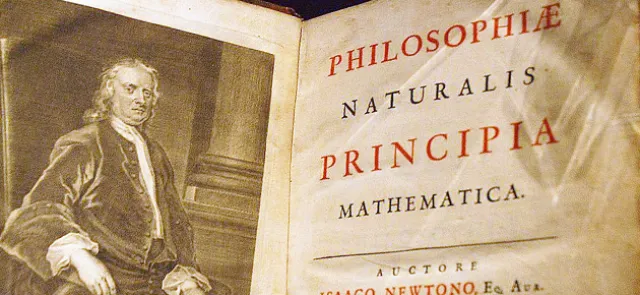
More than a translation of Newton | Tangente
Émilie du Châtelet is famous for having translated Isaac Newton's scientific work into French. Yet she did not simply reproduce the Latin text identically in French; she undertook an original rewriting of the proofs and concepts of Newtonian physics.
 Podcast
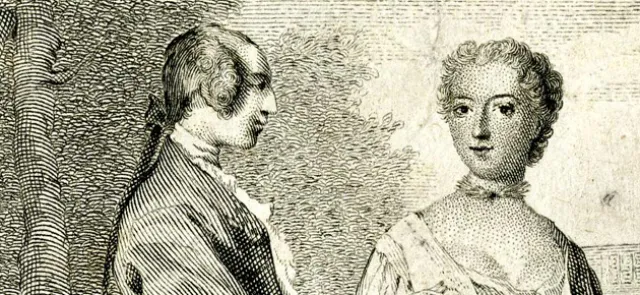
The marquise and the scholars of her time | Tangente
Among masters and peers alike, the marquise may have been unique for her sex, but she was not alone, as her many intellectual exchanges with the scholars of her time attest: Maupertuis, Clairaut, Euler, Kœnig, Johann II Bernoulli, Cramer, among many others.
 Podcast
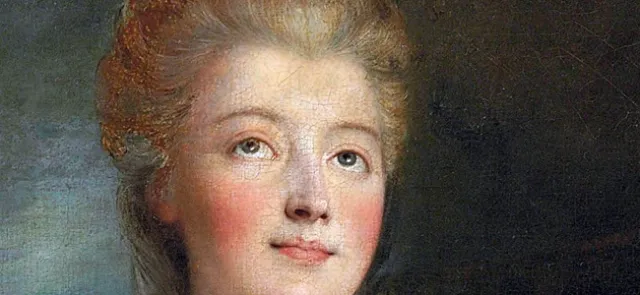
Émilie du Châtelet: From shadow to light | Tangente
As a learned woman, Émilie du Châtelet sometimes found herself overshadowed by men, beginning with Voltaire. Yet her intellectual freedom allowed her to shine and win genuine recognition.
 Podcast
Émilie du Châtelet, learned philosopher | Tangente
Émilie du Châtelet is often presented as the translator of Newton and the woman who introduced Leibniz's and Wolff's thought to France. On that view, she would be no more than a translator and a popularizer. In reality, she is far more than that: she is above all a scholar and a philosopher.
 Podcast
Order according to Ramsey
Ramsey theory is another field in which Erdős played a crucial role without being its originator. His use of the probabilistic method was essential to this theory, whose aim is to find the size of a set that guarantees the existence of a substructure possessing a given property.
 Podcast
Walks in the divisor graph — Erdős and Saias | Tangente
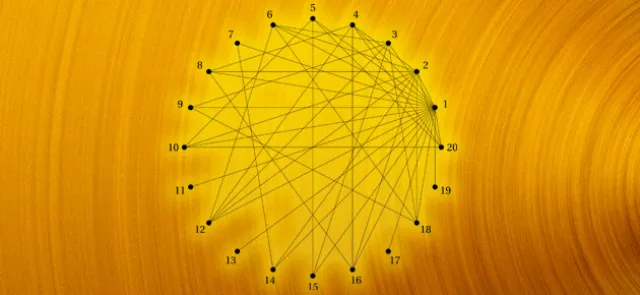
Among Paul Erdős's interests, two fields stand out more often than others: number theory and graph theory. It is therefore no surprise that he eventually became interested in the divisor graph, a mathematical object that lies precisely at the crossroads of these two subjects.
 Podcast
A happy ending
Behind this phrase lies a famous mathematical challenge that brought together two brilliant minds on a quest to uncover the hidden order within chaos. It was the birth of a beautiful love story — and of a new branch of mathematics!
 Podcast
Probabilities where you wouldn't expect them! | Tangente
The probabilistic method, which Paul Erdős introduced and used, makes it possible to prove the existence of a mathematical object. Despite the use of probability, what is remarkable — and all the more surprising — is that the result obtained is certain!
 Podcast
The Erdős-Rényi random graph
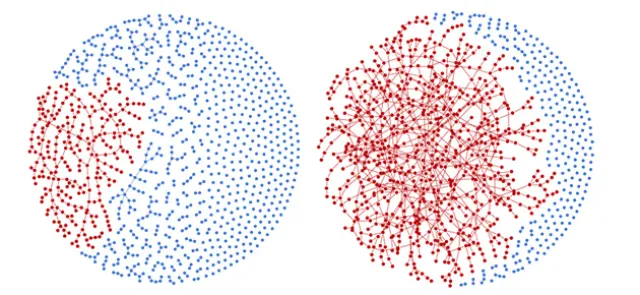
The Erdős and Rényi random graph model is so famous in mathematics that it has become a common noun: in probability theory, people routinely speak of "an Erdős-Rényi" the way one would speak of a Brillat-Savarin in gastronomy or a Stradivarius in music.
 Podcast
A cornucopia
Paul Erdős and Leonidas Alaoglu studied highly abundant and superabundant numbers, rediscovering along the way notions already studied, but not published, by the celebrated Indian mathematician Ramanujan.
 Podcast
Some of Erdős's work in number theory
Analytic and probabilistic number theory was one of Paul Erdős's favorite subjects. Here is a small selection of his contributions in this field, picked here and there from topics that can still be presented accessibly.
 Podcast
Trinity College and the dissection of the square | Tangente
In the 1930s, the problem of dissecting a square into smaller squares of different sizes gave rise to two conjectures by Erdős. They would be disproved by four Trinity College students who threw themselves into the research.

Two geometric jewels
Long after the 19th century, the golden age of geometry, Erdős took an interest in problems whose statements could appear in an elementary textbook. Among these are two jewels of elegance: the Erdős–Mordell theorem, which involves nothing more than a triangle, and the Erdős–de Bruijn theorem, which features only points defining lines.

Some conjectures in algebra
Here are a few conjectures proposed by Erdős that, despite some progress, remain unsolved...