



All articles
Dive into the fascinating world of mathematics with our captivating articles, written by passionate experts. Whether you are a curious amateur or a seasoned mathematician, our articles cover a wide range of topics, from fundamental concepts to the latest discoveries, including practical applications and philosophical reflections.

The mysteries of the Ishango bone | Tangente Magazine
The mysterious Ishango bone has not yet given up all its secrets

Paul Erdős and the probabilistic view of arithmetic
With the development of probability theory in the early 20th century, a new field of inquiry opened up in arithmetic: the statistical study of integers. Paul Erdős was among the first mathematicians to grasp the significance of this new approach.

Why not base 12? The advantages of the duodecimal system
If you talk to people about the history of arithmetic, whatever your specific subject, you can expect someone to ask this question at the end: why is our numeral system base 10 when base 12 would be so much more practical?
Applying the Chinese remainder theorem to RSA cryptography
The Chinese remainder theorem finds, among other things, applications in cryptography

Chinese remainder theorem: history and applications | Tangente
The Chinese remainder theorem owes its name to ancient Chinese mathematicians’ interest in the arrangement problems it describes. Originally a source of puzzles, it has since found more practical applications, particularly in cryptography.
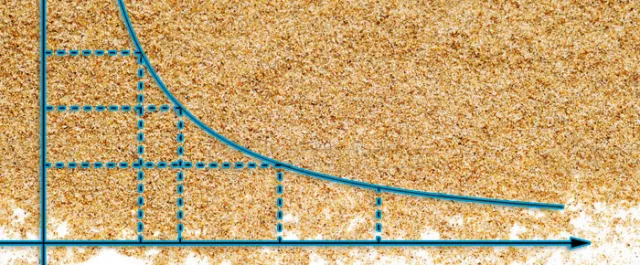
A logarithm beneath the hyperbola | Tangente Magazine
Although Napier introduced them purely as an aid to calculation, logarithms gradually permeated every branch of mathematics. Their fundamental nature emerged particularly clearly through their connections with geometry, trigonometry and the hyperbola.
Logarithms in everyday life | Tangente
Logarithms are also used to establish laws that attempt to account for human subjectivity.
Logarithms come to the table | Tangente Magazine
I'm speaking of a time that those under twenty cannot know...
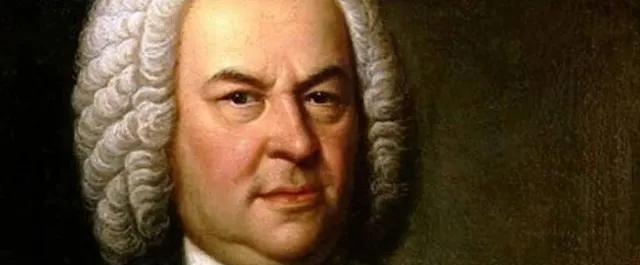
Goldberg Variations and Exercices de style: maths and music
Bach delighted in weaving combinatorial and geometric structures into his compositions. His famous Goldberg Variations are a masterpiece of the genre. Vincent Rouquès, a Paris-based choirmaster, drew on this richness by pairing them with Raymond Queneau's Exercices de style...

Jean-Pierre Kahane: A committed mathematician
Jean-Pierre Kahane, who passed away last June at the age of 90, left his mark on his era in many ways: through his work in analysis, which earned him international renown and election to the Académie des sciences; and through his commitment, both political and in the popularization of mathematics.
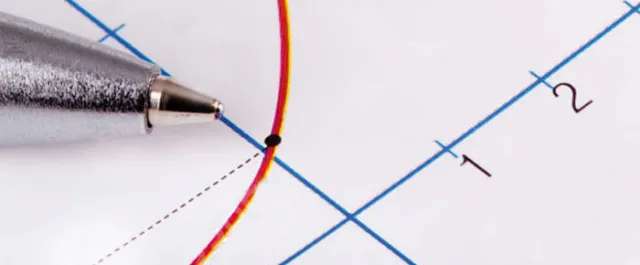
The inverse of the exponential function
The introduction of logarithms can be traced back to the Renaissance, when they were used to solve computational problems. They have since found more theoretical applications and today even lie at the heart of some cryptographic systems—and hence of our computers.
Logarithms: A whole vocabulary
Logarithmic derivative, logarithmic spiral, logarithmic scales... and a raccoon.

John Napier's astonishing inventions
John Napier of Merchiston, the Scottish gentleman whose death four centuries ago is being commemorated this year, was no revolutionary. Yet his wondrous invention of logarithms made him one, opening up a new world for mathematics far beyond computation.
A lovely transformation
An operation on complex numbers turns lines into circles and vice versa. A transformation worth keeping in mind when tackling problems involving lines and circles…
A detour through complex numbers
Taking a detour, part way through a proof, by way of complex numbers can lead to one of those redeeming "mathematical surprises".
A bit of etymology | Tangente
The vocabulary specific to complex numbers is the work of several mathematicians across the centuries

? as in comic
The classics of mathematical humor often borrow some of their gems from the vocabulary of complex numbers…

What names for the complex numbers? | Tangente
Imaginary numbers were already introduced by the Italian mathematician Girolamo Cardano in 1545, though they did not yet have a name at the time; their first formalization is due to his compatriot Rafaele Bombelli in 1572.
Teaching complex numbers in France
Complex numbers, though they may seem self-evident in the wording of today's school curricula, have not always been part of the high-school teaching corpus.
Complex numbers according to Adrien Douady | Tangente
The film Dimensions offers a look at a number of spectacular representations of complex numbers. Don't wait to rediscover it!