



MICHEL CRITON
38 articles published in Tangente
 History and CultureN°210Feb 21, 2023
Catalan's problem
In 1844, Franco-Belgian mathematician Eugène Catalan published his famous conjecture in Crelle's Journal.
Read →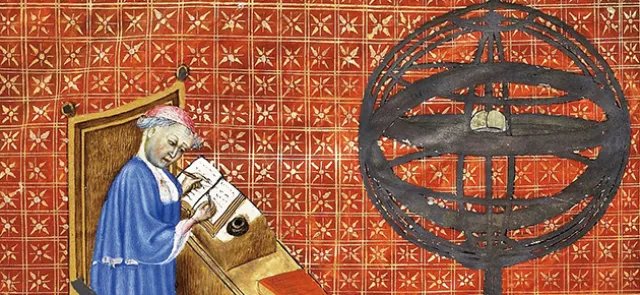 History and CultureN°210Feb 20, 2023
The fifth operation
Although the four operations—addition, subtraction, multiplication and division—are studied from elementary school onward, students must wait until their third year of secondary school to discover a fifth: raising a number to a power.
Read → History and CultureN°209Dec 22, 2022
Geometry theorems
With the country cut off almost entirely from the world during the Edo period, Japanese mathematics developed in isolation for more than a century and a half. It was during this period that highly distinctive geometric puzzles flourished and prospered.
Read → Games and ChallengesN°83Aug 18, 2022
Does symmetric play work?
In some two-player sequential games with complete information, one player may be tempted, when possible, to mirror the opponent's moves. When this gives one player a winning strategy, the game loses all interest unless the rules are changed to avoid this pitfall.
Read → Math for everyoneN°79Aug 26, 2021
Poincaré's sieve
Poincaré's sieve formula gives the cardinality of a finite union of finite sets in terms of the cardinalities of those sets and their intersections.
Read → Math for everyoneN°200Jun 16, 2021
The haberdasher's puzzle and Dudeney's puzzle
Any polygon can be cut into finitely many pieces and rearranged to form any other polygon of the same area. This property holds in the plane, but its three-dimensional counterpart is false. It was conjectured by the Hungarian mathematician Farkas Bolyai (1775–1856).
Read → History and CultureN°200Jun 16, 2021
The thirty-six officers problem
In 1779, while the Swiss mathematician Leonhard Euler was at the court of Catherine of Russia, she asked him to investigate a problem that had been circulating in Saint Petersburg for some time, but that no one had managed to solve.
Read → History and CultureN°200Jun 16, 2021
Sylvester's problem
In 1893, the British mathematician James Joseph Sylvester (1814–1897) posed the following question in the Educational Times.
Read →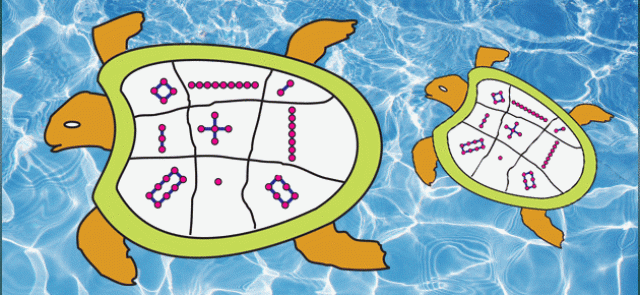 Math for everyoneN°200Jun 10, 2021
Timeless puzzles!
Puzzles have been part of human culture since earliest antiquity. At first, inventing puzzles was bound up with mythology or religion; gradually, it became a purely intellectual game, independent of any purpose or practical application.
Read → Math for everyoneN°198Feb 02, 2021
Penrose and the Kleenex affair
In the 1970s, Roger Penrose filed patent applications for several of his aperiodic tilings (!) and founded a company, Pentaflex, to manage the patent rights.
Read → Math for everyoneN°198Feb 02, 2021
Penrose's impossible figures
Penrose's name is associated with several "impossible objects."
Read →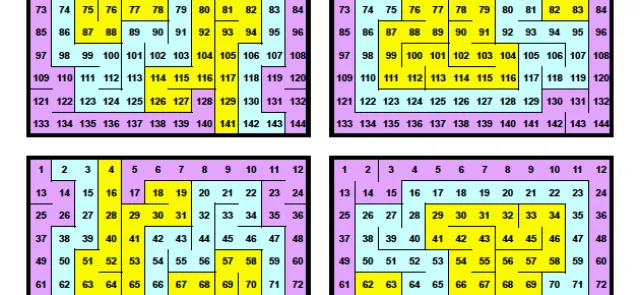 History and CultureN°196Oct 19, 2020
Magic every which way
Magic squares have inspired wonder since antiquity. Mathematicians, artists and enthusiasts of every stripe have racked their brains to find forms of magic within a square beyond the "ordinary" classical arithmetic variety.
Read →