



Curiosity
Patterns, crafts, magic squares and fun mathematical content not part of the school curriculum

So far, so near…
What is the distance between Paris and Rome? Faced with this question, one may legitimately wonder whether this means "as the crow flies," "by train," "by car," or "in the Euclidean sense." Ultrametric distances even reveal a world in which every triangle is isosceles.

The point farthest from France's borders
Where is the "true" center of France? The question sometimes crops up among fans of recreational mathematics and divides enthusiasts of geographical curiosities. Depending on the criterion used to define this center, it may lie in the Cher, the Indre or… the Finistère!
Solving Molière’s equations | Tangente
While we wait for the "Maths and theatre" feature in our next issue, here is a short sketch that solves some equations posed by Molière, with incomplete information but under constraints. A teacher (of maths?) and an actor meet by chance...

Doing maths is good for the brain... it’s proven! | Tangente
A brain trained in maths during youth is better equipped to reason correctly and guard against misinformation and stereotypes.
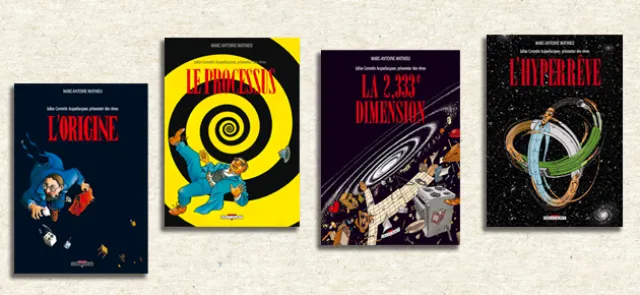
Marc-Antoine Mathieu: comics and dimensions | Tangente
Julius Corentin Acquefacques, prisoner of dreams, is perhaps the comic-book hero most often drawn into the world of mathematical ideas. Let's venture into the extraordinary world of his creator, Marc-Antoine Mathieu.
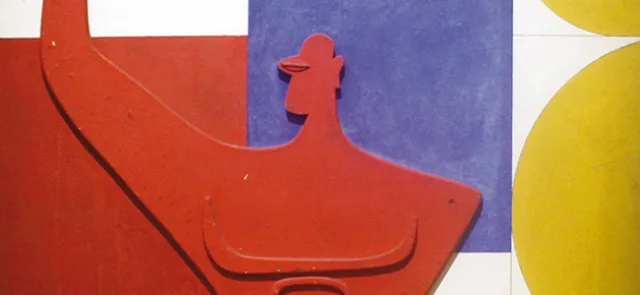
An architect's dream?
The golden ratio, as everyone knows, crops up everywhere in art... provided, that is, you are determined to find it and willing to overlook (!) a few approximations or anachronistic units of measurement. Let's trace the writings that linked it to architecture and brought it to public attention.
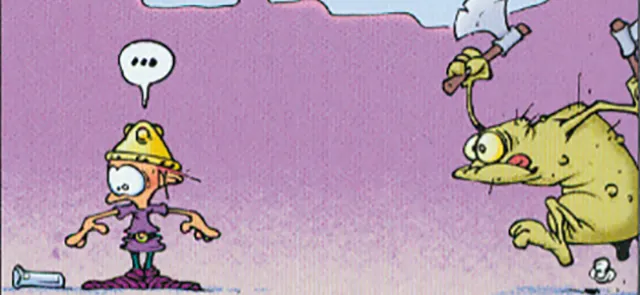
Midam and Kid Paddle’s mathematical models | Tangente
Welcome to the world of Michel Ledent, better known as Midam. For thirty years, his characters have appeared in two comic-book series, each carving out a distinctive place of its own. Let's explore the mathematics hidden behind their hilarious adventures.
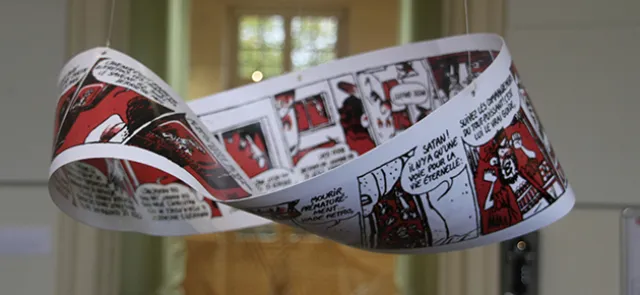
An interview with Étienne Lécroart: mathematics and creative comics | Tangente
Mathematics and its history can both become the subject of comics. Some authors draw inspiration from these subjects to devise the very structure of their pages. We spoke with one of them, the iconic Étienne Lécroart, who believes that "all mathematics stems from the same thing: logic."
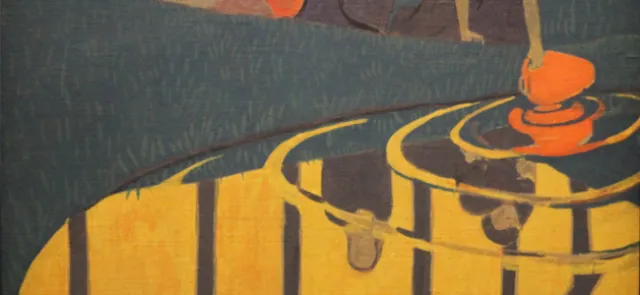
Golden ratio in art: between myths and realities | Tangente
However you look at the paintings, it is hard to substantiate the idea that the golden ratio's presence in art gives a work some decisive aesthetic quality. Let's see where φ really lurks...

When mathematics meets comics | Tangente
Mathematics may not be the first thing that springs to mind for comic-book enthusiasts. Yet the two fields are far from as separate as one might think; when they come together, the results can be real gems.
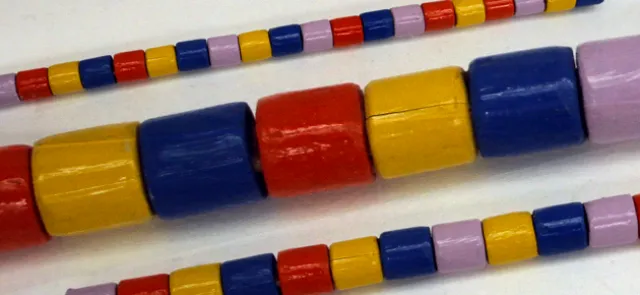
Combinations and permutations in modern art | Tangente
Permutations appear in many works of conceptual art. Let's look at a few iconic examples to see how artists have readily embraced the concept of a group.

Cryptology revisited
Groups were first used in cryptography in the 1920s and 1930s. The best-known example is the breaking of the Enigma machine. In the 1970s, groups opened the way to new encryption methods, including RSA and elliptic-curve cryptography.

The Klein group and its many guises
When we first start working with groups, we patiently draw up the tables for those with only a few elements. A one-element group consists solely of the identity element and is therefore unique. Similarly, groups with two or three elements are unambiguously determined. The surprises begin with four elements...
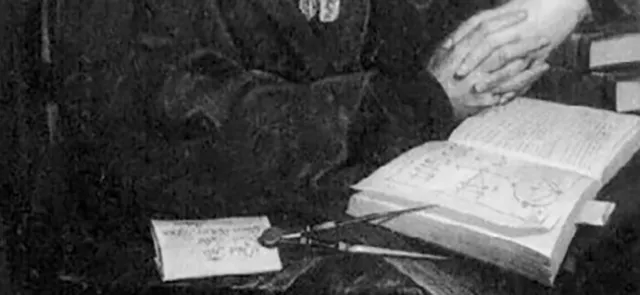
Early formalizations
Évariste Galois's tragic death lent an epic quality to the introduction of the group concept in mathematics. What followed is less familiar but fascinating, culminating in brilliant theorems that are still taught today. Sixty years later, the notion of a group was finally established.
The classification of finite simple groups
Are finite groups simple? Not so fast: although the classification of finite simple groups began more than a century ago, a complete proof is still being written! Work on this proof began in the late 1980s and should be completed in 2025. But the task is daunting…
Mathematical groups, even in literature | Tangente
Formal structures, particularly groups, are a major focus of constrained literature that emerged from the Ouvroir de littérature potentielle (Oulipo), the literary movement founded by Raymond Queneau and François Le Lionnais in 1960.
Quotient structures
A detailed analysis of the internal structure of finite groups is a formidable challenge. What can be said about an arbitrary group? The idea is to look within G for subgroups from which the whole of G can be reconstructed. Quotient structures are an unfailingly effective tool for this purpose.
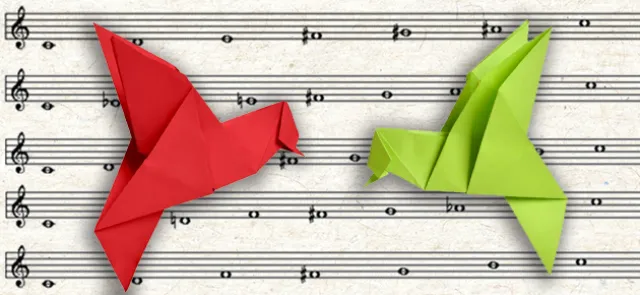
Olivier Messiaen: music and congruences
Mathematics and music were intertwined for centuries before gradually going their separate ways. Yet many composers remain attached to the language of numbers. Olivier Messiaen is a notable example: congruences play a part in the construction of his modes.

The Chinese remainder theorem
The periodic nature of planetary revolutions naturally gives rise to the notion of congruence. The earliest surviving written problem on this theme is known as the Chinese remainder theorem. Its universality has led to many fundamental applications in the theory of numbers and polynomials.

An incongruous little tour through the world of congruences
Cooks have long known that making the most of leftovers is an art. The same is true in mathematics, where congruence is a remarkably rich concept. This notion has applications ranging from everyday life to highly theoretical settings.