



History and Culture
History of mathematics and cultural connections
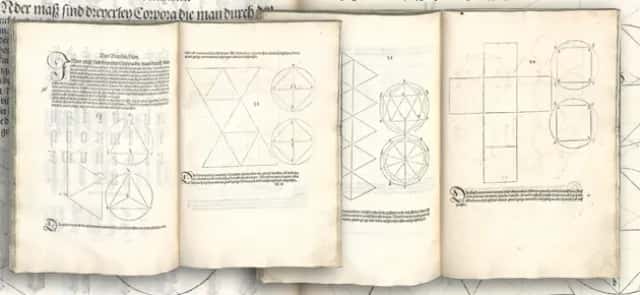
Three unsolved problems in geometry | Tangente
Geometry abounds in problems that remain unsolved. Some date back to the Renaissance! In tribute to Richard Kenneth Guy (1916–2020), here are three, gleaned from his book Unsolved Problems in Geometry (with Hallard Croft and Kenneth John Falconer, Springer, 1991).

2020 Tangente Awards winners | Tangente
Promoting the interdisciplinary role of mathematics, bringing it to the attention of young people—and the not so young—and fostering creativity: these core Tangente goals find expression in the Tangente Trophies, whose 2020 winners are presented here.

Proof desperately wanted | Tangente
One hundred thousand results are stated worldwide each year—but how many of them are proved? In number theory, for example, many problems remain unsolved. Some are well known to enthusiasts, others less so...
Lean: a new library of Alexandria | Tangente
Building a digital repository of mathematics—a new "Library of Alexandria for mathematics"—is the wildly ambitious collaborative undertaking on which many mathematicians have embarked.
Toward new practices | Tangente
Mathematical research and teaching increasingly rely on software that supports collaboration. As this software grows more complex, its development requires large-scale collaboration.

Famous partnerships in research | Tangente
Compound theorem names offer a clue as to which pair of mathematicians worked on the subject... or perhaps not.
Penrose takes center stage to kick off 2021 | Tangente
To mark the award of the 2020 Nobel Prize in Physics to Sir Roger Penrose—a mathematician well known for his work in cosmology, differential geometry, tilings and science communication—Tangente is shaking up its schedule!
A century of conjectures
Mathematics has always advanced through the curiosity of people seeking to answer new questions and pose new problems. Once solved, these give rise to others, creating an endless chain of advances in knowledge.
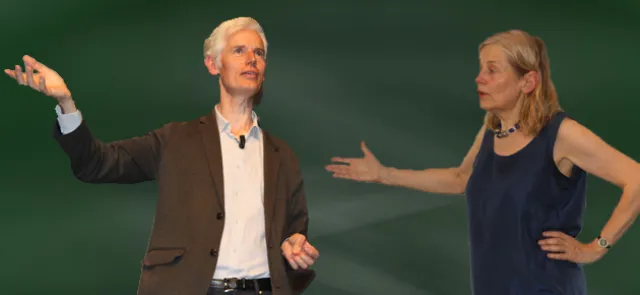
Toward open science | Tangente
Mathematical practice is undergoing profound change. Researchers are organizing, established ways of working are being questioned, and bringing knowledge to the general public has become a key concern. A new model—"open science"—is emerging.
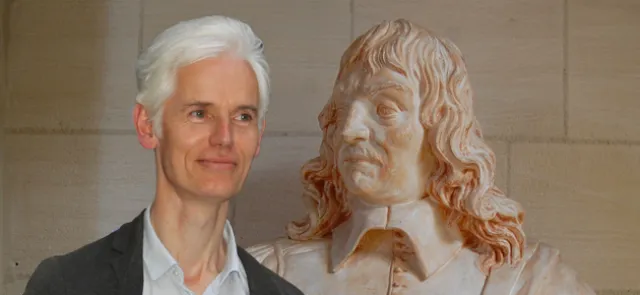
The beginnings of collaborative research | Tangente
Until very recently, mathematicians worked and published alone. Now, thanks in part to the development of modern communication tools, it is not uncommon to find research papers co-authored by more than four people. At Tim Gowers's instigation, several websites have enabled collaborative research.
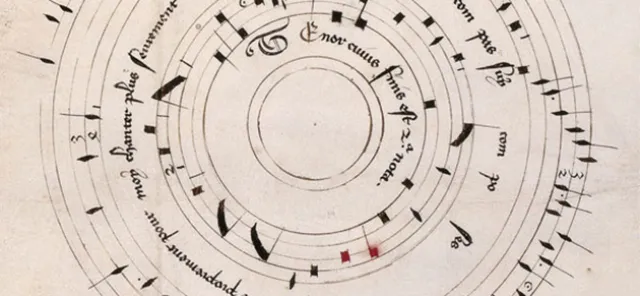
Musical iterations | Tangente
The first iterative process in music gave rise to the Pythagorean scale. Since then, recursive processes have been widely used in musical composition, from Johann Sebastian Bach to contemporary music. Their use is limited only by composers’ imaginations!
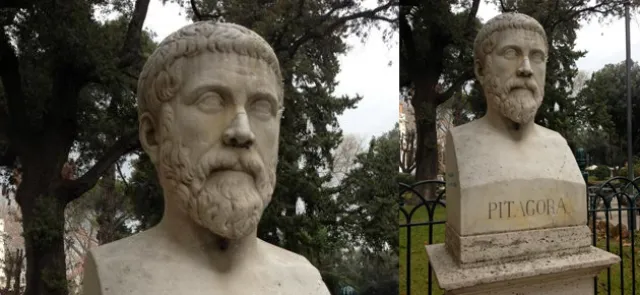
The Pythagorean scale
Pythagoras is often credited with the idea that everything is number. Less well known is that his view of mathematics was closely bound up with musical harmony—not only the "harmony of the spheres," but the actual construction of a musical scale using numbers.
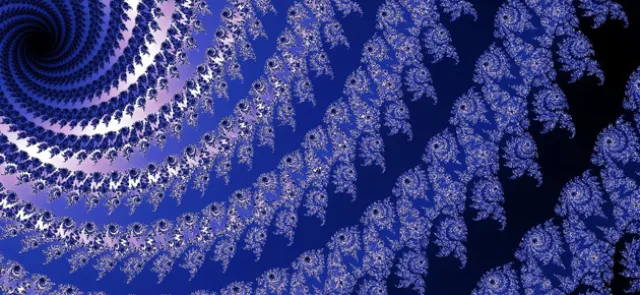
Fractals: the aesthetics of iteration
Repeating a geometric transformation at different scales produces fascinating figures whose aesthetic appeal is far from their only attraction. Let's (re)discover the most iconic fractals!
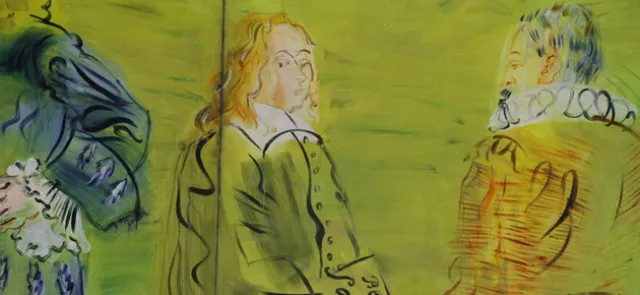
Blaise Pascal takes on induction
Although specialists still debate the origins of proof by induction, they often agree that Blaise Pascal's Traité du triangle arithmétique (Treatise on the Arithmetical Triangle) was the first work to set it out explicitly. A guided tour of a landmark in the history of proof.
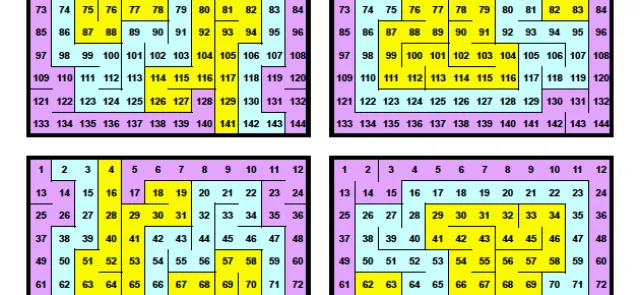
Magic every which way | Tangente
Magic squares have inspired wonder since antiquity. Mathematicians, artists and enthusiasts of every stripe have racked their brains to find forms of magic within a square beyond the "ordinary" classical arithmetic variety.
When an error bears fruit
Many mathematicians have made mistakes, whether through inadvertence, a miscalculation, a flaw in a proof, or a temporarily mistaken belief.
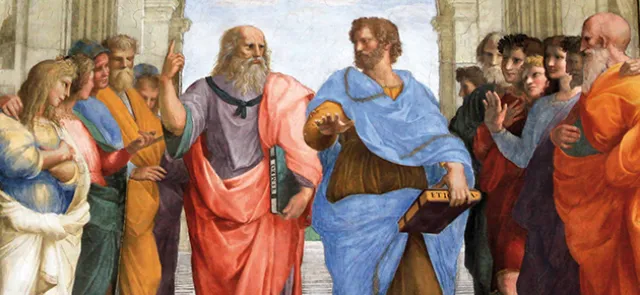
The unreasonable effectiveness of mathematics
In the latest physical theories, mathematical models have achieved such descriptive and predictive power that the question inevitably arises: is this mysterious fit a miracle, or does it have a deeper meaning?
Little square puzzles | Tangente
Square-grid number puzzles appeal to enthusiasts of recreational mathematics. This selection comes from the "Affaire de logique" column in the newspaper Le Monde.
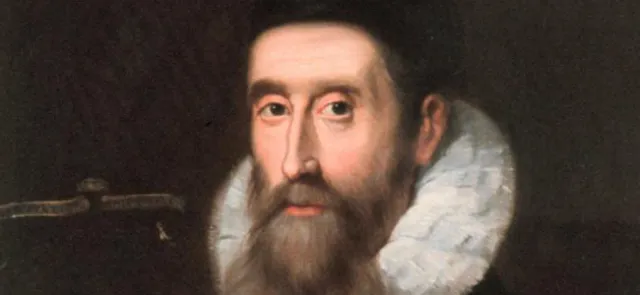
Marvelous logarithms
Logarithms emerged at the very beginning of the 17th century, thanks to the eccentric Scottish mathematician and theologian John Napier. By dramatically speeding up calculations, they paved the way for extraordinary scientific advances, particularly in astronomy.
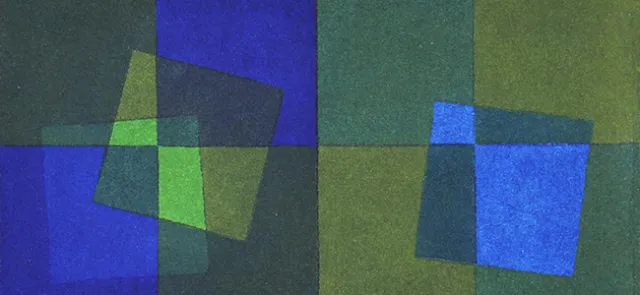
Albert Ayme | Tangente
Albert Ayme left his engineering post in 1960 to devote himself to painting and sculpture. His scientific training led him to devise a combinatorial system of variations on the square, combining visual pleasure with mathematical rigor. He made the square magical!