



History and Culture
History of mathematics and cultural connections

Viète's new algebra | Tangente
François Viète ranks among those scholars celebrated for their considerable contribution to mathematics. He did not invent algebra, but his work propelled the discipline forward spectacularly.
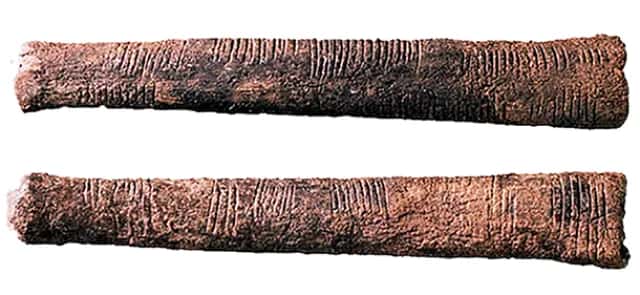
Ishango bones finally deciphered | Tangente
The earliest mathematical object is more than twenty thousand years old. It was discovered by chance in the heart of Africa by a Belgian geologist. Its interpretation remains a matter of debate to this day.

Conway and quantum free will | Tangente
John Conway joined forces with Simon Kochen to prove the free will theorem. This result calls for a reassessment of quantum mechanics, without necessarily tying it to probability. It casts new light on a paradox highlighted by Einstein.

Mind-boggling surreal numbers!
By combining Dedekind cuts with von Neumann's construction of the natural numbers, John Conway constructed the largest possible collection of numbers: the class of surreal numbers, which he endowed with the structure of a field.
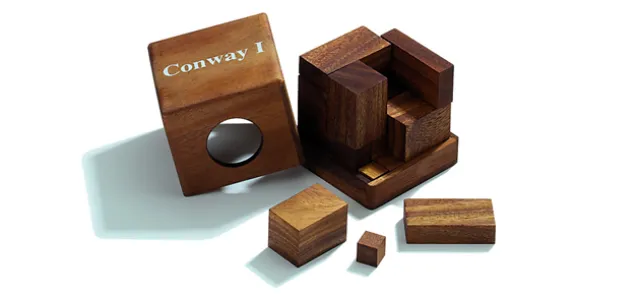
An irresistible geometer
Finding fruitful connections between two mathematical objects that, at first sight, have no reason to meet: this was the essence of Conway's approach. How did he uncover such connections? By playing around, as these examples from geometry show!

Wonders of Conway's Game of Life | Tangente
One of John Conway's best-known creations is the Game of Life, which he devised in 1970. It is a particular kind of cellular automaton, made up of virtual beings that develop in the cells of a regular grid, living, dying and being born according to predetermined rules.
Conway, the game-playing mathematician | Tangente
John Conway advanced finite group theory, number theory, topology, theoretical physics, combinatorial game theory and geometry. His originality, creativity and extraordinary personality made him popular with mathematical game enthusiasts everywhere, especially after he created the Game of Life in the 1970s.

Conway and group theory | Tangente
Conway developed a passion for groups—and sporadic groups in particular—at an early age.
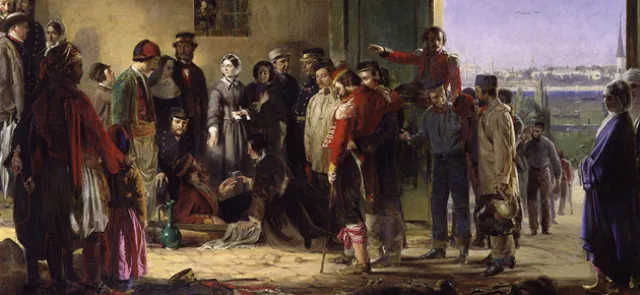
The birth of epidemiology | Tangente
For more than three centuries, major pandemics have prompted statisticians to quantify mortality data and produce death forecasts. How has this helped reduce the impact of such disasters?

Essential mathematics references | Tangente
The Mathcurve website is essential reading for anyone interested in curves. Several major authors are also closely associated with the subject.
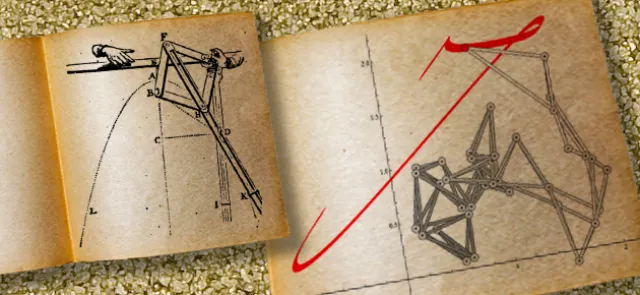
Drawing machines: building mathematical curves | Tangente
Viewed as geometric loci, curves have always been drawn on a physical surface using instruments—or even machines. The mechanical linkages devised for this purpose can faithfully reproduce the curve under study.
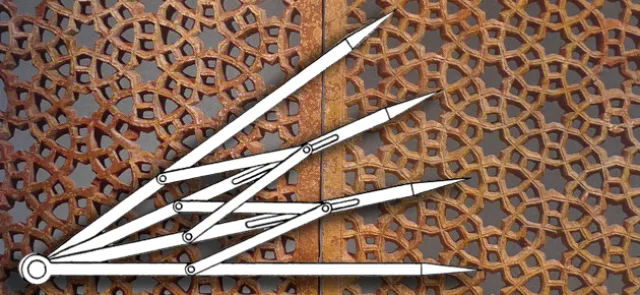
Curves that go beyond the compass
Even when some "natural" problems prove impossible to solve, mathematicians have found ways around them, producing approximations of varying accuracy. To do so, they have sometimes had to draw on a host of geometric tricks and devise ingenious mechanisms.

An algebraic stroll
Algebraic curves come in every degree and every variety. They can be represented in the real plane, the complex plane or even the projective plane. How can we find our way around? Learn to recognize them and navigate this rich geometric universe!
Curves that leave the plane
Not all curves in space are confined to a plane. To study these "space curves," several new concepts—curvature and torsion—are introduced using a carefully chosen frame of reference. Get to grips with them and learn how to use them!

The early history of the cycloid
It took decades to uncover the geometric properties of cycloids and trochoids. The scholars who studied them began with physical or practical questions before turning to these remarkable curves themselves.
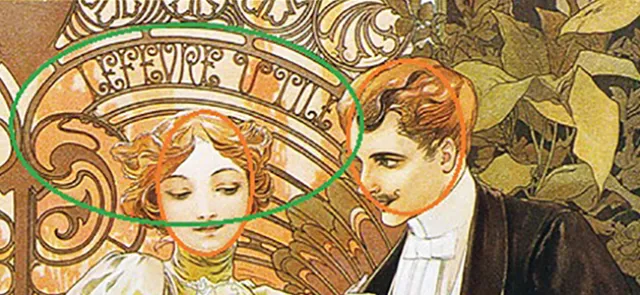
Art Nouveau: a movement of curves | Tangente
Art Nouveau was a total art movement that flourished across several European countries in the late 19th century. Never before had an artistic movement placed such emphasis on the beauty and variety of curves.

The emergence of probability theory
In the second half of the 17th century, Blaise Pascal and Pierre de Fermat exchanged letters on the development of a mathematical theory of probability that went beyond the elementary observations one might make about rolling a die. Christian Huygens would take their ideas further.

Degree 45: François Viète rises to the challenge! | Tangente
Reconstructing a historic mathematical challenge.

Leonardo da Vinci and mathematics | Tangente
Everything you need to know about Leonardo da Vinci
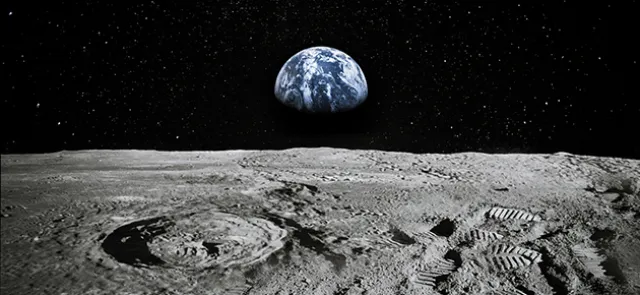
Katherine Johnson, NASA mathematician | Tangente
Mathematician Katherine Johnson died at the age of 101. She was one of the scientists who helped derive the equations describing the trajectory of an orbital spaceflight—essential to bringing the first astronauts to land on the Moon back to Earth!