



History and Culture
History of mathematics and cultural connections
Translating concepts: yes, but how?
The names of new concepts and abbreviations often take very different paths as they pass from one language to another, enriching mathematical writing.
Adelard of Bath | Tangente
Adelard of Bath was one of the translators of Euclid into Latin. He also translated many other mathematical texts from Arabic
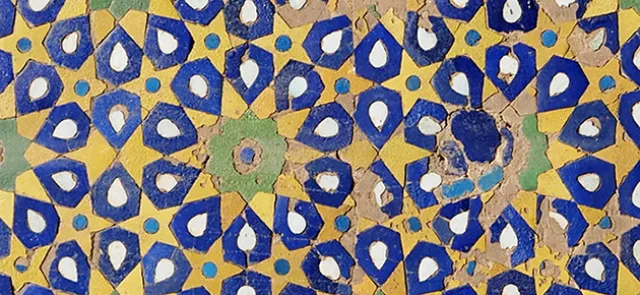
Persian tilings and Islamic geometry | Tangente
A highly debatable approach to Persian pentagonal patterns has been repeated so indiscriminately in scientific journals that it has become received wisdom. It is high time to offer another perspective.
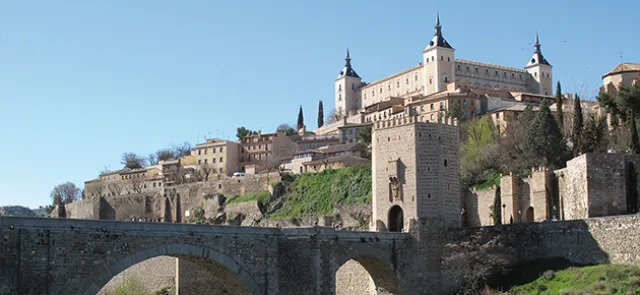
From Baghdad to Toledo: legendary places | Tangente
A great many works from ancient Greece survived and reached a wider audience thanks to their translation into Arabic or Latin. This legacy was made possible by the determination of a handful of rulers who understood the universality of knowledge and the importance of passing it on.
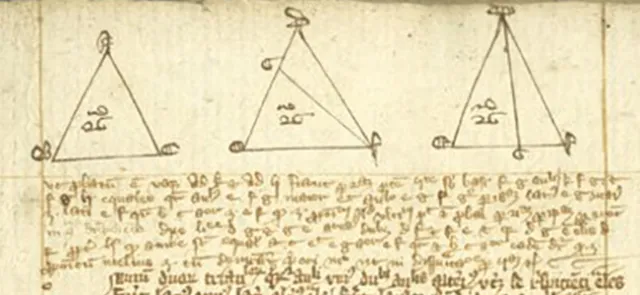
Greek mathematical texts in translation | Tangente
Greek mathematical texts influenced the entire history of mathematics around the Mediterranean. Yet Greek was not always spoken by every scholar. Ancient texts therefore had to be translated to make them accessible to as many people as possible.
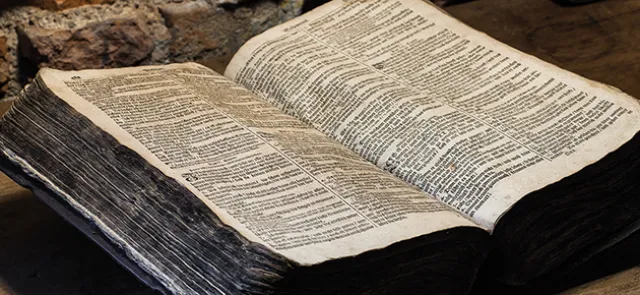
How Europe made Arabic mathematics its own | Tangente
With a passion for mathematics and history, Marc Moyon studies how scientific knowledge and practices travelled from the Greco-Roman world and the lands of Islam to Europe. A skilled translator of mathematical texts, he shares his experience with us.
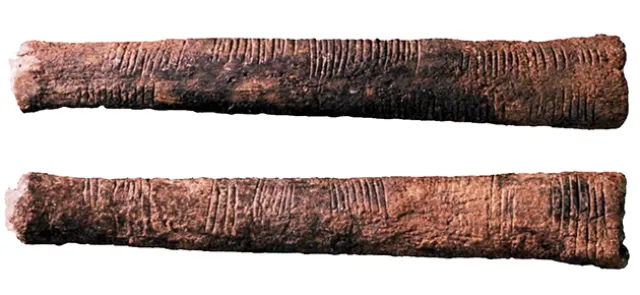
When numbers awoke to wonder
Ancient peoples used numbers for purely practical purposes: to count and enumerate. Five centuries before the Common Era, after travelling the world, a Greek scholar named Pythagoras returned certain that the original order of the World was Number, thereby turning it into a philosophical concept.
Wanted: a missing abacus | Tangente
An ancient Roman ivory abacus has been missing for several years.
Laure Saint-Raymond: 2020 Bôcher Prize | Tangente
The American Mathematical Society (AMS) has just awarded the 2020 Bôcher Prize to French mathematician Laure Saint-Raymond, a professor at ENS Lyon and a member of the Académie des sciences, for her "transformative contributions to kinetic theory, fluid dynamics and Hilbert's sixth problem."
Pure and impure self-reference | Tangente
Self-reference is not "pure". It must be tied to an object, a situation or a concept—here, for instance, artistic creation, and photography in particular.
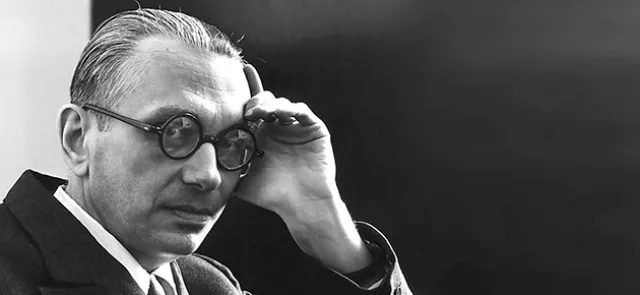
Gödel's incompleteness theorems
In mathematics, although there are many conjectures and hypotheses, it is generally assumed that any well-formed statement must have either a proof or a refutation. Kurt Gödel showed that this is not so. His proof uses self-reference.
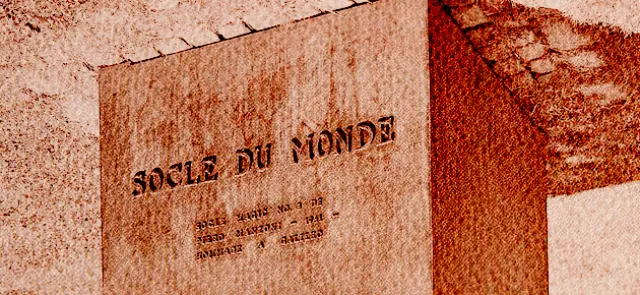
When works speak for themselves | Tangente
Advertising regularly makes use of it, as do graphic designers and artists. Self-reference has become a genre in its own right, appealing not only to our eyes but to all our senses! Let's take a wild tour of this seemingly limitless creativity.
Disputes and paradoxes | Tangente
Even the greatest mathematicians have fallen into the traps laid by logic and its paradoxes.
The paradoxes that shook mathematics
What a devilish theory Georg Cantor created with set theory! So thought some mathematicians at the turn of the 20th century, when a series of paradoxes seemed to threaten the foundations of mathematics. This prompted a reassessment of the role of logic.
The emergence of discontinuous functions
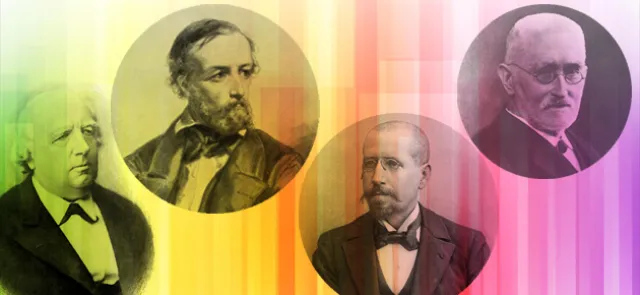
Until the early 19th century, everything seemed continuous. Trigonometric series brought discontinuous functions onto the scene. They prompted Riemann to generalize the notion of the integral, led Weierstrass to clarify the notion of continuity, and spurred Darboux to study derivatives.
Blockchain in all its mathematical forms | Tangente
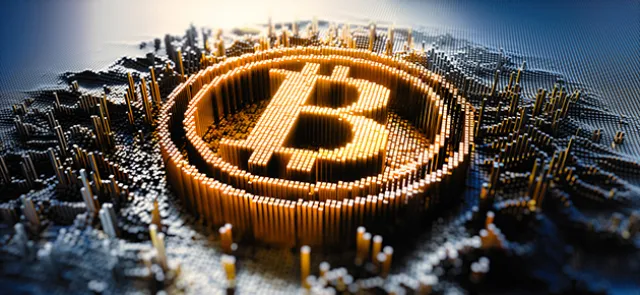
Blockchain technology is among the technologies to watch in the years ahead, as it could revolutionize several sectors of the economy. It draws on recent mathematical developments through increasingly sophisticated processes.

Matrices and graphs in accounting
Accountants are not known for using sophisticated mathematical tools. Yet modern techniques enable them to handle many situations arising in what is known as "complex accounting".

Anticipating change
A company operates in an uncertain environment. A range of mathematical tools can help us better understand the uncertainties that must be taken into account when anticipating the future. After all, to govern is to foresee!

Michel Serres: scientist and philosopher | Tangente
Did Michel Serres, who moved from mathematics to philosophy, truly leave the "queen of the sciences" behind? Throughout his career, at any rate, he never missed an opportunity to refer to the subject. Explore the mathematical landscape of this unconventional philosopher.
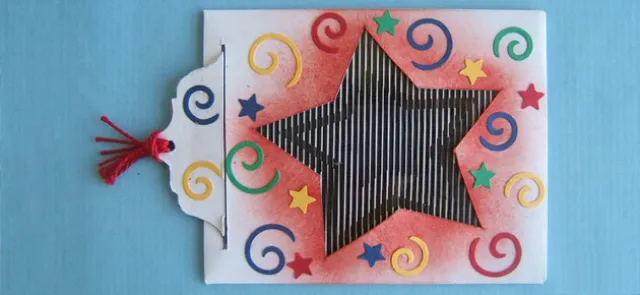
The mathematics of pop-up cards
A sheet of paper offers endless opportunities for mathematical play. Origami and paper folding immediately spring to mind. But allowing yourself to cut the paper produces equally interesting results, as pop-up cards show.