



History and Culture
History of mathematics and cultural connections

The luthiers' secret code decrypted | Tangente
The luthiers of the Parisian house Gand & Bernardel, a famous dynasty of violin makers from 1795 to the Second World War, had a code that let them work on their slips with complete discretion.

Betting on the presidential election: readers vs. the polls
Many of you took part in the challenge of coming as close as possible to the presidential election result. The winner is Élisabeth Pietravalle. Far behind, Ipsos proves to be the best polling institute.
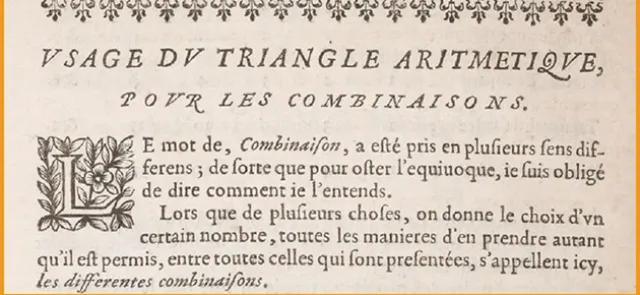
Journey into the heart of a mathematical classic
If you know how to fill in Pascal's triangle, you may be less aware of the treasures it contains. Arithmetic, geometric, combinatorial: it has no shortage of astonishing mathematical properties! And there are undoubtedly many more still to be discovered…
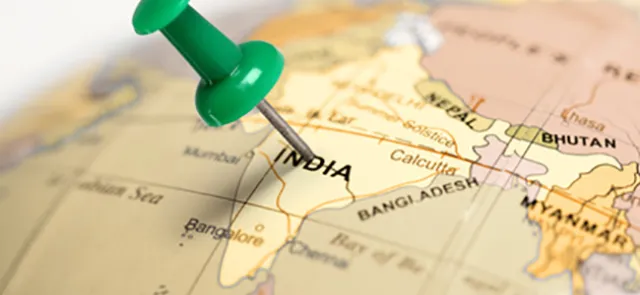
Pascal's triangle: a thousand-year history | Tangente
"Pascal's triangle" may have been discovered by Indians more than two thousand years ago. It reached the Arab-Muslim world and China as early as the 11th century. It did not appear in Europe until the 16th century, when Blaise Pascal began to study it rigorously.
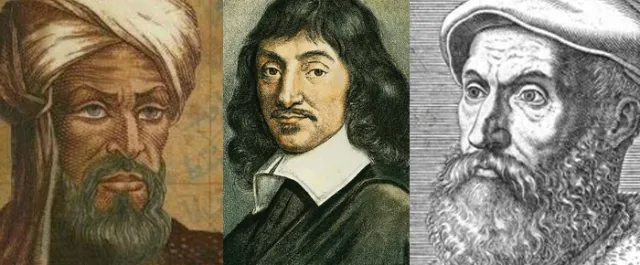
Those equation fanatics who created imaginary numbers
Complex numbers, initially termed "imaginary," were not conceived as we study them today. Above all, they were introduced as tools for solving polynomial equations—and tackling the mathematical challenges that raged across Renaissance Europe.
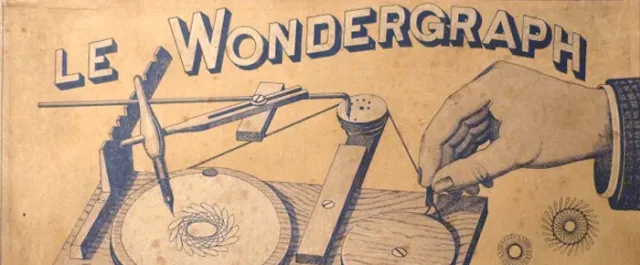
Astounding strophoids: curves and loci
Studied for nearly two centuries before acquiring their final name, strophoids have many interesting properties arising from their similarity under a particular type of transformation. They therefore appear as loci in several classic problems.
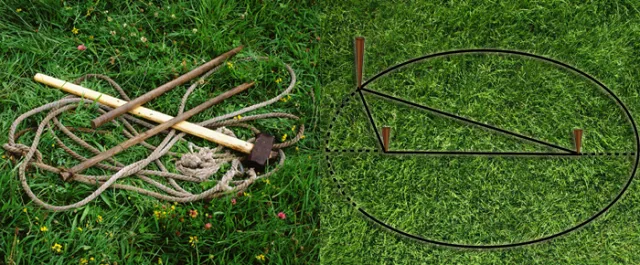
Curva ex machina: mechanisms and curves | Tangente
Do you know Kempe's universality theorem? This 19th-century result states that any algebraic curve can be drawn by a linkage. Today, computers and robotics have replaced the ingenious mechanisms devised by scientists of the past.

The circles of Apollonius of Perga: harmonic ratios
The set of points whose ratio of distances to two fixed points A and B is constant is called the Circle of Apollonius. Three ways to approach it: classical geometry, analytic geometry, and electricity
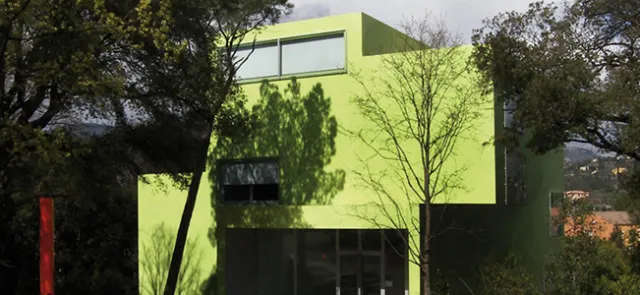
Espace de l'art concret: maths and geometry | Tangente
In Mouans-Sartoux, in the Alpes-Maritimes, a strange apple-green cubic building catches the traveller's eye. Dedicated to concrete art, it gives pride of place to geometric abstraction. In particular, works by François Morellet and Josef Albers can be found there.

Sociologists and mathematicians: Condorcet, Quételet | Tangente
Throughout the 20th century, mathematicians drew on their knowledge and developed statistical methods to gain a better understanding of sociology.
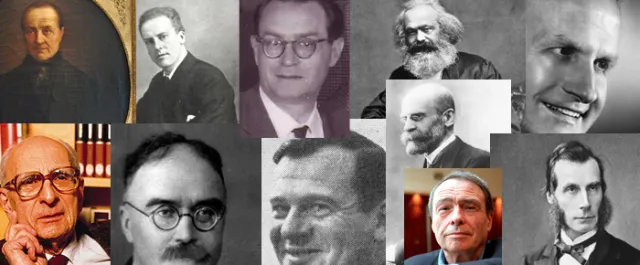
Christian de Montlibert: Sociology is a science | Tangente
Emeritus professor at Marc Bloch University in Strasbourg, Christian de Montlibert is a passionate advocate of using statistical methods in sociology. He stresses the importance of grounding sociology in mathematical methods.
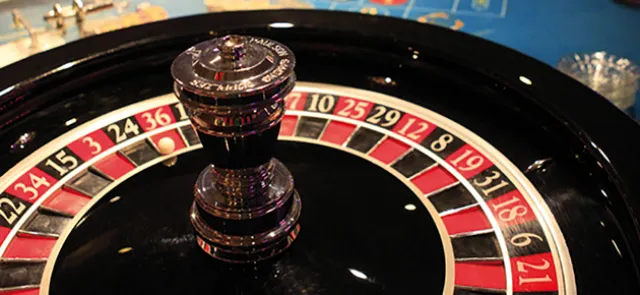
Pascal's wager applied to presidential elections | Tangente
Throughout history and across civilizations, chance has fascinated people. Although betting was not conceptualized until the 15th and 16th centuries, it had already attracted many enthusiasts. Strategies were devised. But can they be adapted to presidential elections?

Famous paradoxes: Pascal's wager & St. Petersburg | Tangente
Let's rediscover the famous Pascal's wager, a line of reasoning as questionable mathematically as it is theologically!
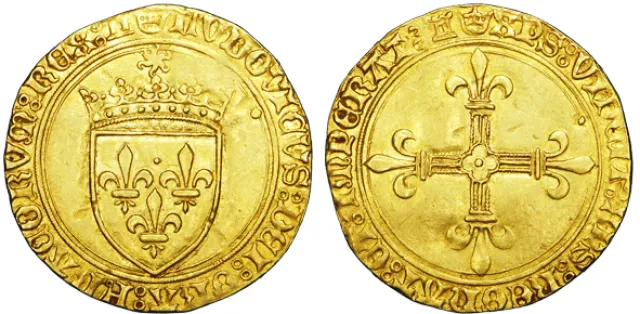
D'Alembert's heads-or-tails dispute | Tangente
A coin tossed twice has a one-in-four chance of landing heads both times. D'Alembert had his doubts. Why? To say he was wrong is to challenge a law formulated by Laplace. Yet Laplace failed to see that his own rule lent credence to D'Alembert's doubts!

Newton's formula
What a legacy! Newton's binomial formula finds applications in both trigonometry and probability…

The kimono, a geometer's art: symmetry and motifs | Tangente
"Kimono painter" is how Kunihiko Moriguchi (born in 1941) describes himself.

Penrose designer: aperiodic tilings & quasicrystals | Tangente
Roger Penrose's non-periodic tilings are inspiring designers too!
Women mathematicians at NASA: the film Hidden Figures | Tangente
They were employed almost as "human computers" at Langley, the American research center in Hampton, Virginia.

Mathematics of the human body: symmetry & proportions | Tangente
Mathematics inspires choreographers. Two works to see right now.

Jean Brette: A life devoted to sharing math | Tangente
Jean Brette worked for forty years at the Palais de la Découverte. His passing deprives mathematics of one of its finest popularizers.