



History and Culture
History of mathematics and cultural connections

The saga of economic indicators 3
Between 1909 and 1914, Corrado Gini carried out work aiming to calibrate the distribution of a nation's income.
The saga of the Nobel Prizes 2 | Tangente
Let's discover three prize-winning economists whose work drew heavily on other fields
The Nobel Prize saga, part 1 | Tangente
Contrary to popular belief, there is no Nobel Prize in Economics! Discover the truth about this prize...
The saga of economic indicators 1 | Tangente
What do these economic indicators we hear so much about in the media actually mean?
Unemployment and energy supply: prob... | Tangente
Discover mathematician Hermann Laurent's proposal for putting unemployed people to work.

Markov chains and workforce management
Markov chains are used to model memoryless probabilistic processes. By modelling internal promotions, they can help analyse and develop workforce management policies in very large companies.
When maths divides economists | Tangente
Over the past few decades, several disputes have punctuated relations between economists and mathematicians.

When economics illustrates matrix algebra
Economists' data can often be arranged in rectangular tables that can be manipulated according to precise rules tied to the mathematical concept of linearity. Matrix algebra can thus be illustrated with concrete examples drawn from economics.
The Bauhaus between art and science: geometry and creation | Tangente
Right now, several exhibitions in Paris and elsewhere in France are not to be missed
Imre Lakatos and mathematics education | Tangente
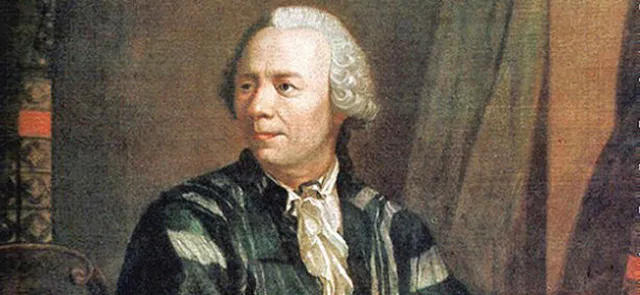
The Hungarian mathematician Imre Lakatos set out his perspective in his best-known work, Proofs and Refutations. He illustrated his argument using Euler's formula.
Following in Euler's footsteps
Euler's formula has led to many further developments, including its use in the study of polytopes.
OuLiPo: Mathematics inspires literature | Tangente
On November 24, 1960, Raymond Queneau, a writer with a passion for mathematics, and François Le Lionnais, a mathematician with a love of literature, founded Oulipo (the Workshop of Potential Literature), together with mathematicians such as Paul Braffort and Claude Berge, as well as Jacques Bens, Jean Lescure and Marcel Duchamp. They would later be joined by Georges Perec, Luc Étienne, Jacques Roubaud, Italo Calvino and others.
The mathematical geometry of Turkish | Tangente
Turkish is an agglutinative language, using suffixes to form its various grammatical features: declension, possession and conjugation. Projections onto a cube determine which suffix to use.
The pursuit of Euler's formula for polyhedra | Tangente
In a polyhedron, the number of vertices, S, plus the number of faces, F, equals the number of edges, A, plus 2. In other words, S + F = A + 2. For many mathematicians, Euler's formula is the most beautiful formula of all! Above all, it has had an eventful history, to say the least...
Speaking, seeing, comparing: Five historical texts
Mathematical writings contain words, but also signs, symbols and figures. Texts are therefore meant to be looked at as much as read, as works of geometry from antiquity to the present day attest.
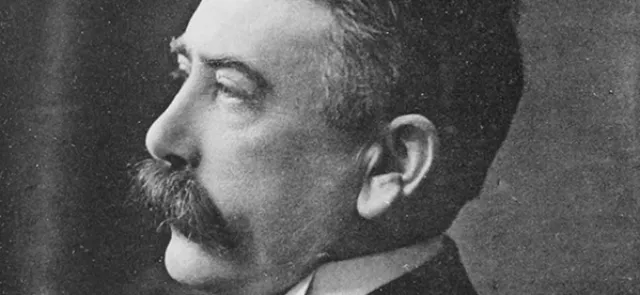
The structures of language
Inspired by formal logic, the study of language as a structure developed under the influence first of Saussure and then of Chomsky. Statistics, meanwhile, can be used to analyze texts and are an indispensable tool for machine translation.

From sentence to formula
Before the 20th century, everyday language played a prominent role in mathematical writing. Did that necessarily make it easier to read? How did the balance between descriptive sentences and concise formulas emerge?
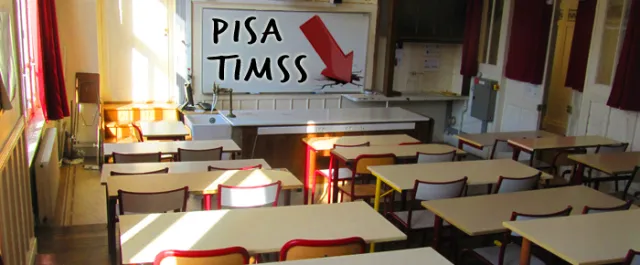
TIMSS and PISA: The latest developments in mathematics assessments
The recent publication of the PISA and TIMSS results unleashed a media storm, so poor were the scores of young people in France. But rather than settling for a few simplistic figures and reductive statistics, what if we took a closer look at what these assessments actually measure?
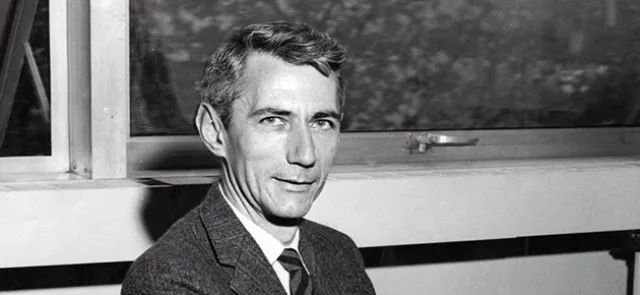
Claude Shannon and the dawn of the digital age
The year 2016 marks the centenary of Claude Shannon's birth. He was one of the driving forces behind today's digital revolution. John von Neumann, Alan Turing and other visionaries gave us computers, but Shannon introduced the modern concept of information.

A “little” theorem for major advances
Fermat's “little” theorem is surely one of the most fruitful results in arithmetic. Ever since it was first stated in 1640, mathematicians have made constant use of it. Euler even proposed a sweeping generalization. Let's take a closer look…