



Interview
Interviews with mathematicians and personalities from the scientific world
So far, so near…
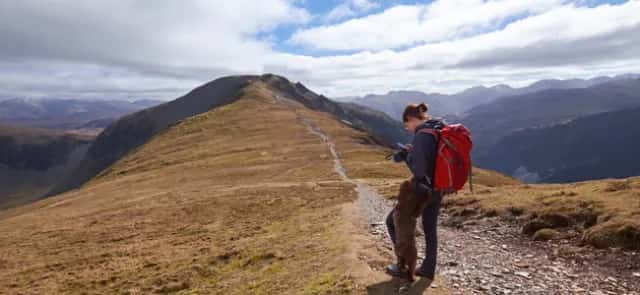
What is the distance between Paris and Rome? Faced with this question, one may legitimately wonder whether this means "as the crow flies," "by train," "by car," or "in the Euclidean sense." Ultrametric distances even reveal a world in which every triangle is isosceles.

The point farthest from France's borders
Where is the "true" center of France? The question sometimes crops up among fans of recreational mathematics and divides enthusiasts of geographical curiosities. Depending on the criterion used to define this center, it may lie in the Cher, the Indre or… the Finistère!

Exceptional documentaries on Arte.tv | Tangente
Arte.tv recently released a series of documentaries about mathematics. Not to be missed.

Solving Molière’s equations | Tangente
While we wait for the "Maths and theatre" feature in our next issue, here is a short sketch that solves some equations posed by Molière, with incomplete information but under constraints. A teacher (of maths?) and an actor meet by chance...
The Cayley diagram
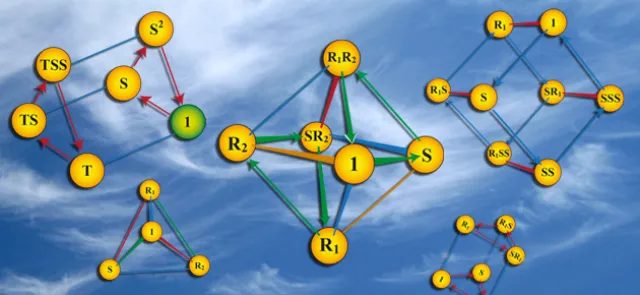
How can we grasp the structure of a finite group at a glance? The Cayley diagram provides the answer!

Groups: a matter of relationships
The concept of a group emerged in the early 19th century to solve polynomial equations and very quickly spread to other fields, including those outside mathematics: it allows us to focus on relationships between objects rather than on the objects themselves.

Groups of geometric transformations
The notion of a group—abstract and purely algebraic? Not at all! In geometry, it keeps us from being overwhelmed by the apparent profusion and diversity of transformations, and helps us understand the different kinds of symmetry we may encounter.
Galois's brilliant contribution
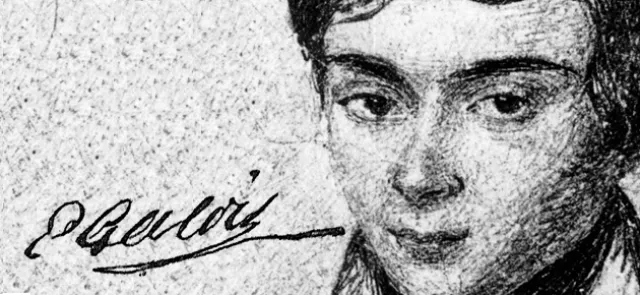
Following his work on solving fourth-degree equations, Lagrange turned to the fifth-degree case. It was not until Abel that these equations were shown not to be solvable by radicals. Galois would provide a necessary and sufficient condition for an equation of any degree to be so solvable. In doing so, he founded group theory.

With a straightedge alone... or almost
According to the Poncelet–Steiner theorem, every straightedge-and-compass construction can be carried out with a straightedge alone, provided that a fixed circle and its center are given. But how is this done in practice? Though the question may seem playful or even pointless, it has in fact attracted the attention of several mathematicians.

Penrose interview: 2020 Nobel laureate | Tangente
Three books to finish. Hundreds of journalists on the lookout since the Nobel Prize in Physics was announced on October 6, 2020. Yet Sir Roger Penrose, aged 89, agreed to give your favourite magazine more than three hours of his time in a video interview. With generosity, passion and enthusiasm, he tells us the story behind some of his geometric discoveries.

2020 Tangente Awards winners | Tangente
Promoting the interdisciplinary role of mathematics, bringing it to the attention of young people—and the not so young—and fostering creativity: these core Tangente goals find expression in the Tangente Trophies, whose 2020 winners are presented here.

Writing a Wikipedia article—why not… | Tangente
Whenever people have a question or want to check a concept, Wikipedia has become the first port of call for many. But who writes these articles? Can they be trusted? Above all, how can you write one yourself?

"Winter is coming" | Tangente
In France, the annual influenza epidemic generally occurs between November and April. Timing therefore appears crucial to understanding how the influenza virus spreads: this pathogen has a period during which it is transmitted more readily through the population.

A century of conjectures
Mathematics has always advanced through the curiosity of people seeking to answer new questions and pose new problems. Once solved, these give rise to others, creating an endless chain of advances in knowledge.
Toward open science | Tangente
Mathematical practice is undergoing profound change. Researchers are organizing, established ways of working are being questioned, and bringing knowledge to the general public has become a key concern. A new model—"open science"—is emerging.

Loops in programming | Tangente
The various types of loops are fundamental programming constructs. Although using them often comes naturally, they nevertheless raise a number of issues, such as whether the program will ever stop. Recursion offers useful solutions.

The online encyclopedia of integer sequences | Tangente
Founded in 1995 by British-American Neil Sloane, the OEIS (On-Line Encyclopedia of Integer Sequences) is a collaborative website where anyone can add a new way of generating a sequence of numbers, together with its known properties and the questions it raises. Nearly 400,000 sequences can be browsed there!

Computational geometry: key challenges | Tangente
It is easy to overlook, but many geometric problems can be solved by iterative methods or, more broadly, algorithms. These questions are the subject of computational geometry! This is a vibrant, highly active field in which many seemingly elementary questions still await solutions.

Iterative processes at the heart of mathematics | Tangente
Repeating computational or logical procedures is one of the defining features of mathematical activity. The advent of computing gave fresh impetus to this technique, which has been used since antiquity.
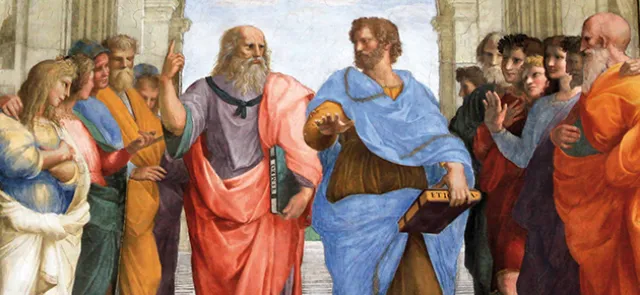
The unreasonable effectiveness of mathematics
In the latest physical theories, mathematical models have achieved such descriptive and predictive power that the question inevitably arises: is this mysterious fit a miracle, or does it have a deeper meaning?