



Interview
Interviews with mathematicians and personalities from the scientific world
 Podcast
CubeHarmonic: the Rubik's Cube that makes algebra audible
Invented by Maria Mannone, the CubeHarmonic uses a Rubik's Cube to create musical harmonies and teach algebra intuitively.
 Podcast
Cédric Aubouy, math clown and author of “Je ne sais pas”
Cédric Aubouy, a mathematical clown and founder of the L’île logique company, agreed to meet us to mark the publication of his first novel, Je ne sais pas ou la disparition des mathématiciens.
 Podcast
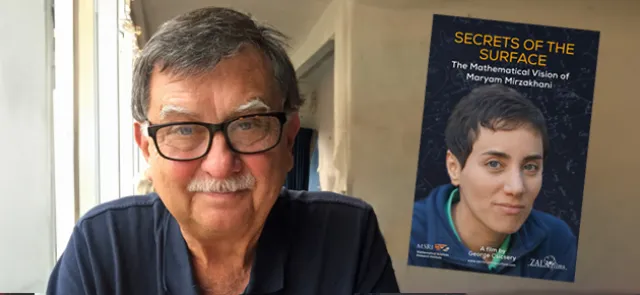
Mirzakhani's mathematical vision | Tangente
In 2020, George Csicsery directed a documentary about Maryam Mirzakhani titled Secrets of the Surface: The Mathematical Vision of Maryam Mirzakhani. Through numerous firsthand accounts, it reveals the life, personality and work of the Iranian mathematician.
 Podcast
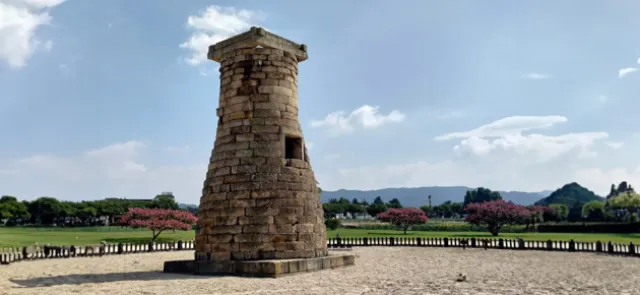
Algebraic tradition and innovation in Korea | Tangente
The tradition of examinations helped develop a culture blending tradition and innovation in 18th-century Korea. Thus, a Euler square was created even before Euler took an interest in the subject, while the Chinese method corresponding to Gauss-Jordan elimination was widely mastered.
 Podcast
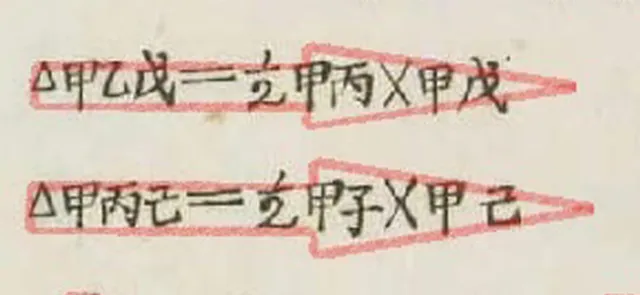
Wasan to yōsan: Japan's Meiji math revolution | Tangente
The opening of Japan during the Meiji era brought changes in the way mathematics was done and written. Questions of method, but also of language, arose. Kikuchi Dairoku, the future Minister of Education of Japan, overhauled mathematics textbooks accordingly.
 Podcast
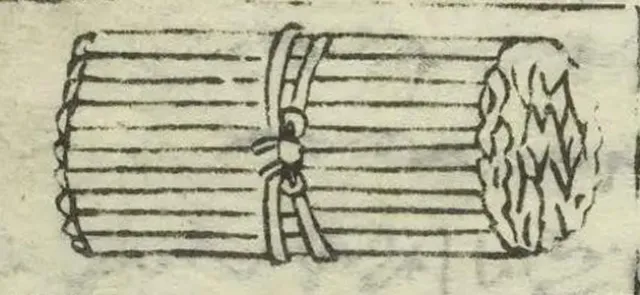
Wasan: Japanese mathematics of the Edo period | Tangente
Rooted in the tradition of Chinese-language treatises, the Japanese mathematics of the Edo period (wasan) is far from a pale copy: the problems and methods developed at the time display remarkable originality in the history of mathematics.
 Podcast
Chinese science history: an awakening interest | Tangente
At the end of the sixteenth century, contact with knowledge and practices from Europe changed the way mathematics was perceived in China, both from a technical and a historical point of view, around two major questions: how should it be practiced, and who invented it first?
 Podcast
Tangents and the parabola: gems galore
Behind its sleek appearance, the parabola brims with fascinating properties. Thus, the study of its tangents reveals remarkable angular properties and offers a playground of astonishing richness, where classical geometry meets luminous reflections.
 Podcast
Napier's bones: multiply without tables | Tangente
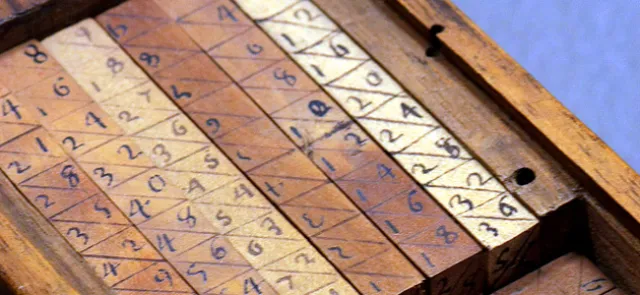
With the advent of calculators and, later, smartphones, people have become less and less likely to work out a multiplication, division or square root by hand. Yet for centuries this was a problem, inspiring a host of ingenious ways to streamline calculations. One such invention was Napier's bones, which effectively automated multiplication.
 Podcast
Heron's method for approximating square roots
What is the square root of 50? Since 50 is not a perfect square, the best we can give is an approximation. Put away our pencils and smartphones, and let's try to work it out in our heads.
 Podcast
Peano by his great-niece | Tangente
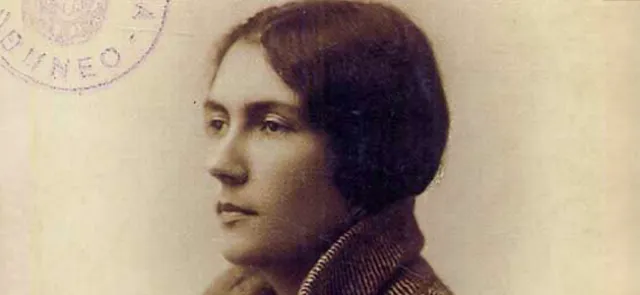
Alongside official biographies, family accounts offer other glimpses into figures known mainly through their work. Lalla Romano, the celebrated Italian author, bears witness to her intellectual closeness with her great-uncle, Giuseppe Peano.
 Podcast
Biology of aging and telomeres | Tangente
Can aging be modeled? That is the challenge taken up by DyLT (short for "Dynamics of Telomere Lengths"), a targeted project within the PEPR Maths-Vives program. It tackles a central question: how do telomeres—the caps at the ends of our chromosomes—shorten over time, and how can mathematics help model this complex process?
 Podcast
Mathematics in Interaction | Tangente
The Mathematics in Interaction program, launched in 2024, aims to foster interaction between mathematics and other disciplines around the themes of life sciences, the environment and society. Backed by funding of €50 million, it brings together nineteen scientific projects led by multidisciplinary teams.
 Podcast
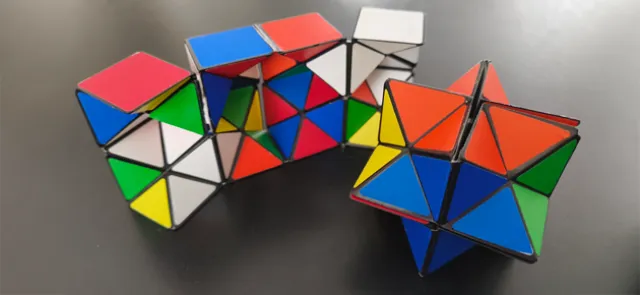
Flexible in three dimensions | Tangente
The flexacube and a more sophisticated form, the Yoshimoto cube, are three-dimensional versions of flexagons. Beyond their construction, these astonishing objects raise questions about the flexibility of polyhedra and formalize that question: under what condition does a solid remain rigid?
Tangente middle school prize | Tangente
Given the annual success of the Tangente High School Prize, the Littéramath association (litteramath.fr), in partnership with the APMEP and Tangente magazine, has decided to launch the Tangente Middle School Prize, which aims to promote mathematical culture through storytelling.
 Podcast
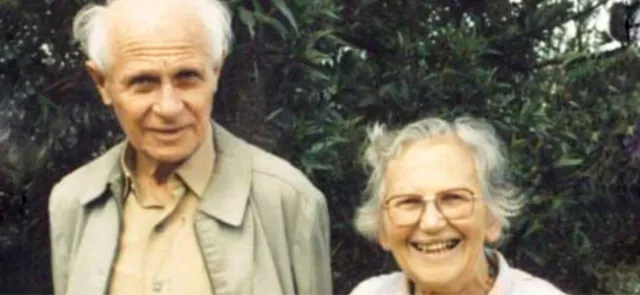
A happy ending
Behind this phrase lies a famous mathematical challenge that brought together two brilliant minds on a quest to uncover the hidden order within chaos. It was the birth of a beautiful love story — and of a new branch of mathematics!
Paul Erdős: Biographies and a film | Tangente
Two books in particular, both published in 1998, offer a glimpse into Erdős's life through anecdotes and accounts by other mathematicians.
 Podcast
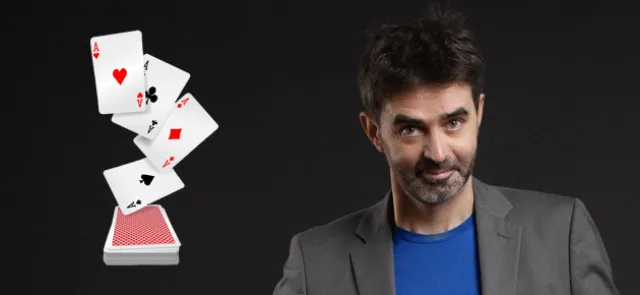
Mathemagical interview with Yves Meret | Tangente
Yves Meret teaches mathematics at Lycée Blaise Pascal in Rouen, but he is also a magician. Here he tells us how he lives out these two passions, which he has turned into his profession.
 Podcast
Yvonne Choquet-Bruhat and relativity | Tangente
Yvonne Choquet-Bruhat, who died on 11 February 2025, is known as the first woman to become a member of the Académie des sciences. Dwelling on this fact risks overshadowing the importance of her work. Her colleague Piotr Chruściel takes us through her research, which is little known to the general public.
Al-Zanjānī: teaching algebra in the 13th century
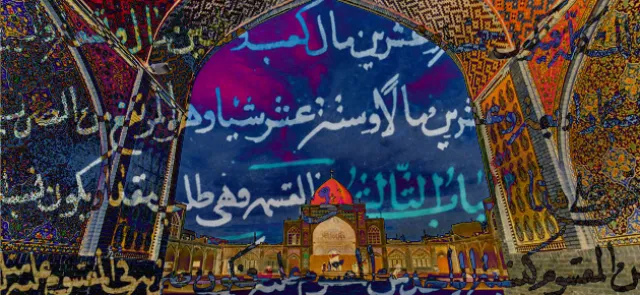
What we now group under the term "algebra" took time to develop into a discipline in its own right. Al-Zanjānī, the author of a 13th-century educational treatise, provides valuable evidence of the algebraic methods used in his day.