



Interview
Interviews with mathematicians and personalities from the scientific world

Wittgenstein and the philosophy of mathematics | Tangente
The relationship between language and reality lies at the heart of Wittgenstein's thought. The issue takes on its full significance when it comes to mathematical entities. What if philosophers speculating about the rigorous logical foundations of these abstractions were on the wrong track?

Aperiodic tiling: the ein stein tile | Tangente
Some craftspeople have become masters of the art of tiling, such as those who were commissioned to decorate the Alhambra palace in Granada, Spain. This inevitably raises geometric questions. Which tiles can cover the plane? What symmetries emerge?

Optimal control and Zermelo problems | Tangente
A particularly important class of optimal control problems consists of Zermelo-type problems: their applications have proved rich and fruitful in mathematics… and beyond. They are studied using a combination of geometric and numerical methods.

Links and graphs: a two-way connection | Tangente
What do links and planar graphs have in common? They are connected by a relationship that associates a graph with any given link and, conversely, provides a simple way to encode—and therefore draw—any link using a graph.
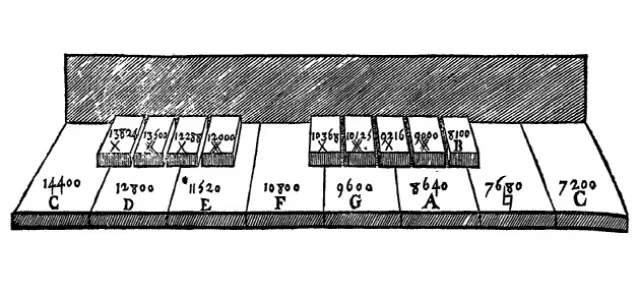
Writing a treatise on sound at the age of 11 | Tangente
The links between music and mathematics are well established. There was a time when it was not unusual for the most learned minds to pursue both with equal delight. Pascal, too, is said to have explored questions relating to sound, further evidence of his astonishing precocity.

The art of fair division
Blaise Pascal had a gift for illuminating all manner of situations through sound, precise analysis, pinpointing the difficulties and explaining himself with unsurpassable clarity. One of the most famous questions in probability—the problem of points—was a case in point.

Sidon sets
Number theory is a branch of mathematics that still contains questions that are easy to state yet remain unsolved. Sidon sets, in which the differences between pairs of terms are all distinct, are a case in point.
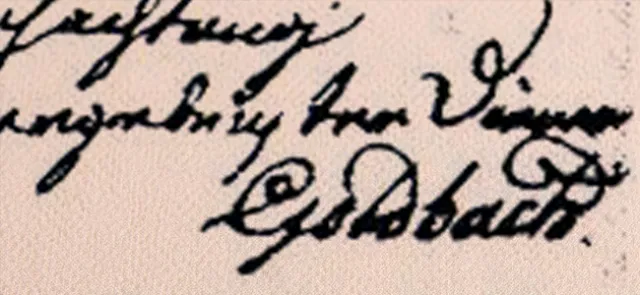
A passion for Goldbach's conjecture | Tangente
In set theory, which Cantor founded, intuition has little place. Yet his approach to open mathematical problems relied more on intuition than on rigorous reasoning. His interest in Goldbach's conjecture is a case in point.

Cantor−Bernstein:
Georg Cantor left his mark on the history of mathematics through his study of infinite sets. The Cantor–Bernstein theorem shows how a few results that are obvious for finite sets generalize to infinite sets… provided one takes a serious look at the question.

When waves go off on a tangent
Whether reflecting sound or waves, parabolic reflectors rely on the properties of tangents to conic sections. Let's fully dissect the underlying geometric phenomenon exploited in the making of antennas of every kind.

Tangent or asymptote?
Confusing "tangent" and "asymptote" is a very common mistake: what student has never made it? Yet the distinction between the two notions is perfectly clear. An exploration of certain constructions in projective geometry will nonetheless force us to call our certainties into question.
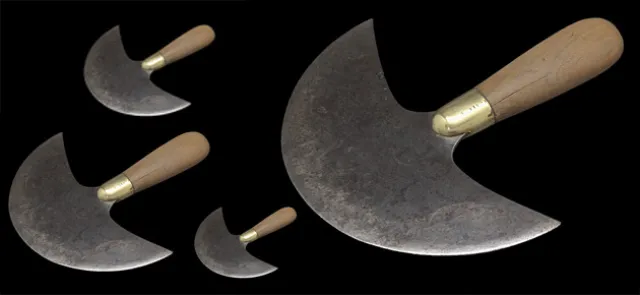
The arbelos
The properties of the arbelos, this fascinating geometric object studied since antiquity, are countless. How did the Greeks go about establishing such results? Let's look at a few clues, drawing on the texts handed down to us by Archimedes and Pappus.
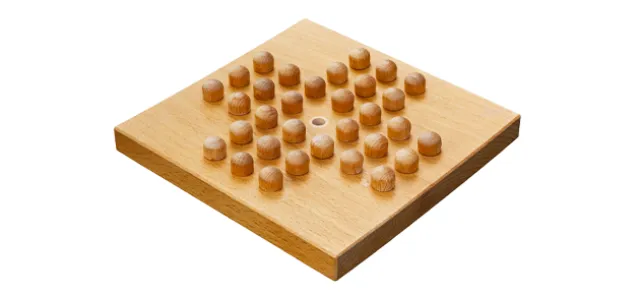
Solitaire on a line
Are solitaire games board games? Whatever answer you give to that question, this article and the next show that their mathematical treatment is in no way inferior to that of multiplayer games.

Hilbert's thirteenth problem
At the second Congress of Mathematicians, held in Paris in the summer of 1900, David Hilbert presented a list of research questions that he considered important. The list contains twenty-three problems spanning every field: algebra, geometry and analysis.

The entrance examination for the École préparatoire…
As a young student, Galois is known to have failed the École polytechnique entrance examination twice. Yet this was not the only entrance examination he sat: he was even admitted to the École préparatoire. Let's see how he tackled the first problem on the mathematics paper.
Before Abel and Galois
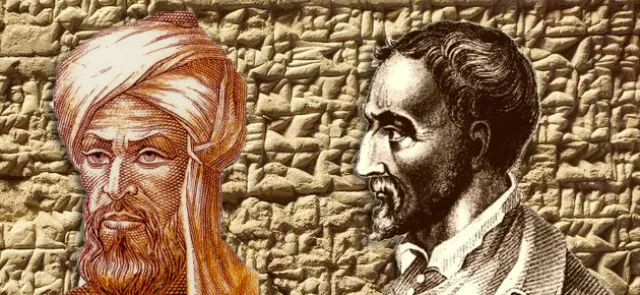
Until the end of the 18th century, algebra was essentially about solving algebraic equations. That chapter in the history of algebra closed with the work of Abel and Galois. Before them, what questions occupied mathematicians? What problems could they hope to solve?
Models for biology
Historically, differential equations emerged in response to geometrical questions and problems in physics, particularly the study of planetary motion, pendulums and, later, heat diffusion. Yet they have plenty of applications in biology too!

Squaring the circle: new advances! | Tangente
Squaring the circle is so well known that it is commonly invoked to describe an impossible problem. Yet the many problems derived from it continue to inspire researchers.
Dramatic twists! | Tangente
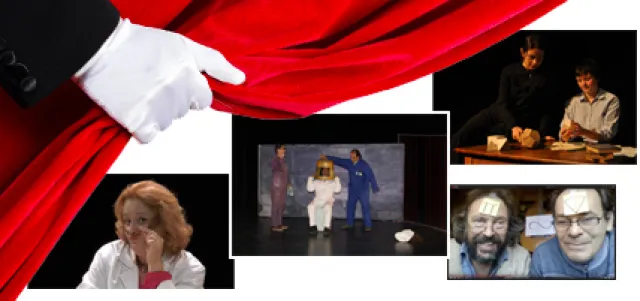
Mathematics and theatre—together? But to what end? What is at stake, what makes such a partnership work, and what does it require? The editors of Tangente put these questions to four enthusiasts who dared to take the plunge.

Convex geometry
Convex geometry lies at the crossroads of optimization, analysis, topology, combinatorics and, of course, geometry. The graphical and visual interpretations it affords are powerful aids to intuition. Yet fundamental questions remain open.