



Math for everyone
Mathematical content accessible to everyone
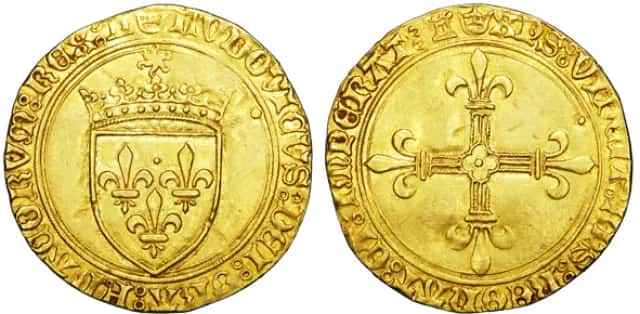
D'Alembert's heads-or-tails dispute | Tangente
A coin tossed twice has a one-in-four chance of landing heads both times. D'Alembert had his doubts. Why? To say he was wrong is to challenge a law formulated by Laplace. Yet Laplace failed to see that his own rule lent credence to D'Alembert's doubts!

Dans le 1000: Weekly logic contest | Tangente
The Affaire de Logique column, published every week in Le Monde by Élisabeth Busser and Gilles Cohen, has just passed the milestone of issue 1,000! To mark the occasion, a major competition, Dans le 1000 (Bullseye at 1,000), is being held over twenty-five weeks (covering problems 1001 to 1025), with prizes to be awarded in November 2017, during Tangente's 30th-anniversary celebrations.

Sociology briefs: math meets social science | Tangente
Did you know?

Newton's formula
What a legacy! Newton's binomial formula finds applications in both trigonometry and probability…
Algebraic identities in series
What happens if we try to calculate sums containing an ever-increasing number of terms? That is the challenge tackled by the study of sequences and series.
What is an algebraic identity? | Tangente
Algebraic identities are a great classic of the high-school curriculum. Here's a quick refresher, in pictures…
The kimono, a geometer's art: symmetry and motifs | Tangente
"Kimono painter" is how Kunihiko Moriguchi (born in 1941) describes himself.

Penrose designer: aperiodic tilings & quasicrystals | Tangente
Roger Penrose's non-periodic tilings are inspiring designers too!

Algebraic topology applied to the internet | Tangente
A different approach to mathematics, using algebraic topology, is available online.
Magic square: a new world record | Tangente
Magic squares still fire the imagination… and keep their designers racking their brains (see Tangente 161).
Women mathematicians at NASA: the film Hidden Figures | Tangente
They were employed almost as "human computers" at Langley, the American research center in Hampton, Virginia.

Mathematics of the human body: symmetry & proportions | Tangente
Mathematics inspires choreographers. Two works to see right now.

Jean Brette: A life devoted to sharing math | Tangente
Jean Brette worked for forty years at the Palais de la Découverte. His passing deprives mathematics of one of its finest popularizers.

The saga of the Nobel Prizes 3 | Tangente
When the collaboration between mathematics and economics results in Nobel Prizes being won...

The economist's toolbox: probability | Tangente
Collecting data only makes sense if the information is sorted, classified, and studied for useful purposes. Some data collections involve numerical data and can be processed statistically without manipulation. But this is not always the case.
The economist's toolkit: integral calculus
The concept of an integral can be useful in economics, for example to define an expected cost (see the article "Inventory management in a random environment")

The economist's toolkit: analysis | Tangente
Economics draws on several tools from mathematical analysis, including the derivative.
The saga of economic indicators 2 | Tangente
What does the consumer price index—the famous "housewife's shopping basket"—really measure?

The Nobel Prize saga, part 4 | Tangente
The Nobel Prize in Economic Sciences saga concludes with the economists honored for their research in finance.

The Nobel Prize saga, part 1 | Tangente
Contrary to popular belief, there is no Nobel Prize in Economics! Discover the truth about this prize...