



Math for everyone
Mathematical content accessible to everyone

Pascal's triangle, programming and Fourier | Tangente
Rich in countless combinatorial and numerical properties, Pascal's triangle is ubiquitous in mathematics. Some of its applications in analysis, however, remain little known. The capabilities of the fx-CP400+E computer algebra calculator suggest a signal-processing activity.
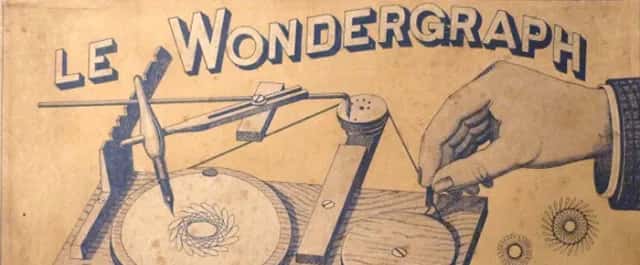
Astounding strophoids: curves and loci
Studied for nearly two centuries before acquiring their final name, strophoids have many interesting properties arising from their similarity under a particular type of transformation. They therefore appear as loci in several classic problems.
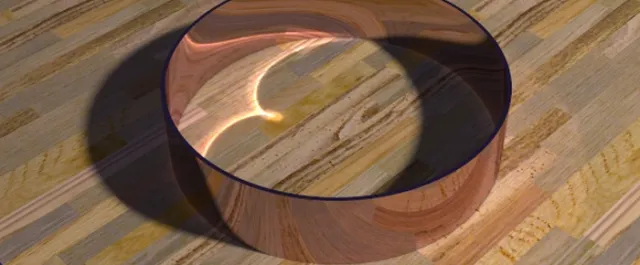
Caustics: curves of light and geometry | Tangente
In optics, the caustic of a curve is the envelope of the light rays emanating from the sun or another source. One appears in your breakfast cup every morning, illuminated by your kitchen or conservatory lights…
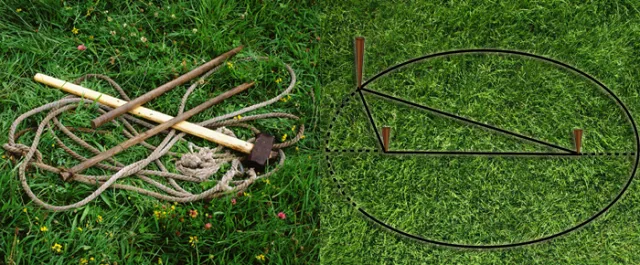
Curva ex machina: mechanisms and curves | Tangente
Do you know Kempe's universality theorem? This 19th-century result states that any algebraic curve can be drawn by a linkage. Today, computers and robotics have replaced the ingenious mechanisms devised by scientists of the past.
The circles of Apollonius of Perga: harmonic ratios
The set of points whose ratio of distances to two fixed points A and B is constant is called the Circle of Apollonius. Three ways to approach it: classical geometry, analytic geometry, and electricity
Finding geometric loci: methods | Tangente
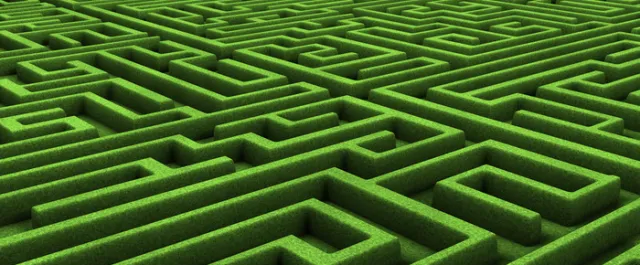
Geometric loci: the term has a whiff of grandfather's geometry about it. Nowadays we'd talk about the set of points satisfying a given property. The old terminology gives the problem a more spatial, physical feel. How have the mathematical tools for studying loci evolved?
Wavelets and file compression | Tangente
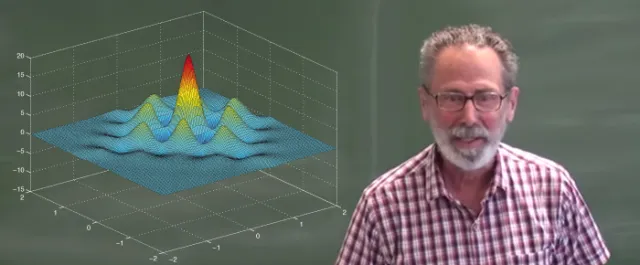
In March, Yves Meyer received the Abel Prize for "his pivotal role in the development of the mathematical theory of wavelets." Emerging in the early 1980s, the field quickly became indispensable to image processing. The JPEG 2000 compression standard is based on it.
Betting on the presidential election: probability and polls | Tangente
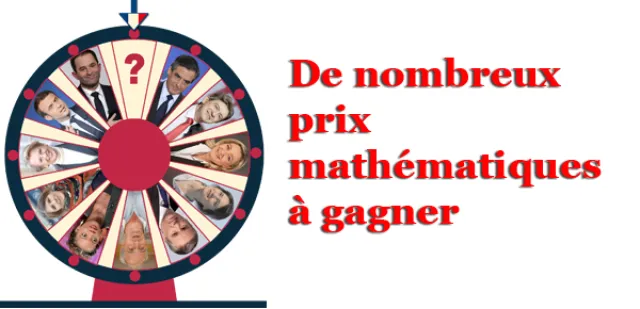
To mark the French presidential election, which coincides with Tangente's feature on betting, we are inviting our readers to bet… on the candidates' shares of the vote! It is free to enter, with thousands of euros in vouchers to be won.
Espace de l'art concret: maths and geometry | Tangente
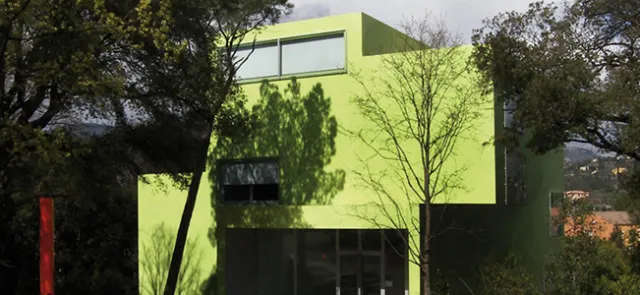
In Mouans-Sartoux, in the Alpes-Maritimes, a strange apple-green cubic building catches the traveller's eye. Dedicated to concrete art, it gives pride of place to geometric abstraction. In particular, works by François Morellet and Josef Albers can be found there.
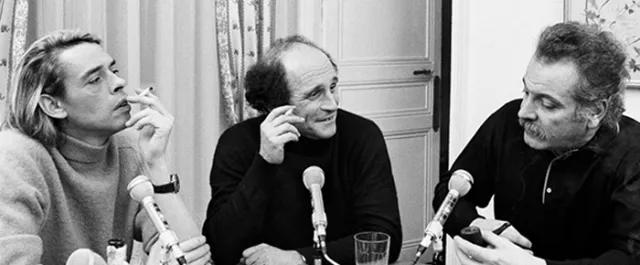
Correspondence analysis
How can social data be examined without falling prey to preconceived ideas or stereotypes? Correspondence analysis, though now losing ground to other techniques, is a method that makes it possible to replace common sense and preconceptions with neutral, objective factors.
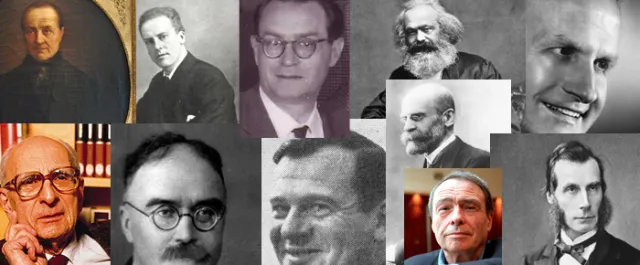
Sociologists and mathematicians: Condorcet, Quételet | Tangente
Throughout the 20th century, mathematicians drew on their knowledge and developed statistical methods to gain a better understanding of sociology.
Christian de Montlibert: Sociology is a science | Tangente
Emeritus professor at Marc Bloch University in Strasbourg, Christian de Montlibert is a passionate advocate of using statistical methods in sociology. He stresses the importance of grounding sociology in mathematical methods.

Preference modelling: voting and social choice | Tangente
We are all constantly called upon to make choices based on our preferences. Modelling them is a crucial step in decision support and is therefore of interest to the social sciences, particularly sociology.

Social networks
Long before the term "social network" became widely used for online platforms that enable social interaction, researchers had studied networks of interpersonal relationships and defined concepts describing their main properties.
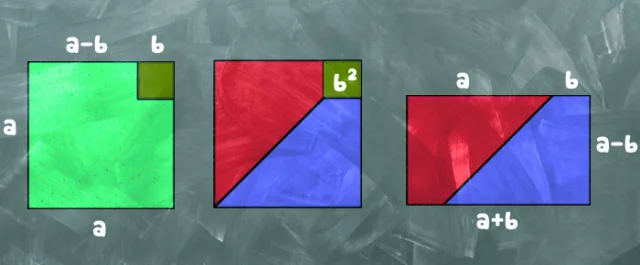
Algebraic identities in the classroom
"Find two numbers given their sum and product." This problem, already posed by the Babylonians four thousand years ago, marked a milestone in the history of mathematics and paved the way for an entire teaching tradition: that of algebraic identities.
Pascal's wager applied to presidential elections | Tangente
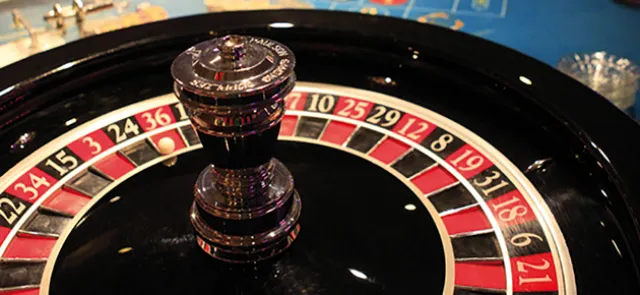
Throughout history and across civilizations, chance has fascinated people. Although betting was not conceptualized until the 15th and 16th centuries, it had already attracted many enthusiasts. Strategies were devised. But can they be adapted to presidential elections?
From algebraic identities to useful applications
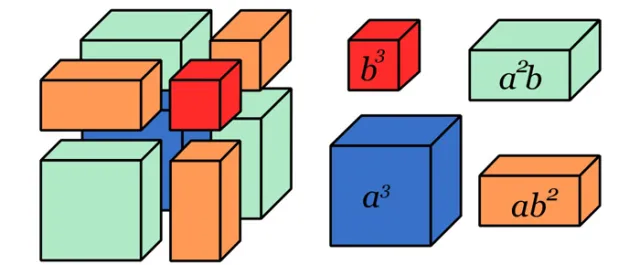
The standard identities studied in middle school (and now at the start of high school…) can prove very useful in finding the solutions to certain equations, including quadratics. The trick is knowing where these mysterious identities are hiding!
Bets settled by geometry
Some winning probabilities can be determined through geometric considerations, thus avoiding lengthy calculations.
Bookmakers don't like probabilities
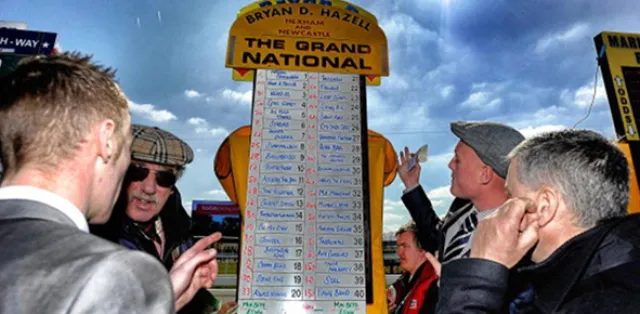
Since bookmakers try to assess the outcomes of horse races, it is easy to imagine that they rely on probability. Rather surprisingly, they do not! This paradox can be explained by a mathematical property of probabilities.
Famous paradoxes: Pascal's wager & St. Petersburg | Tangente
Let's rediscover the famous Pascal's wager, a line of reasoning as questionable mathematically as it is theologically!