



Math for everyone
Mathematical content accessible to everyone
Following in Euler's footsteps
Euler's formula has led to many further developments, including its use in the study of polytopes.
OuLiPo: Mathematics inspires literature | Tangente
On November 24, 1960, Raymond Queneau, a writer with a passion for mathematics, and François Le Lionnais, a mathematician with a love of literature, founded Oulipo (the Workshop of Potential Literature), together with mathematicians such as Paul Braffort and Claude Berge, as well as Jacques Bens, Jean Lescure and Marcel Duchamp. They would later be joined by Georges Perec, Luc Étienne, Jacques Roubaud, Italo Calvino and others.
Analyzing an alien language: mathematics | Tangente
Extraterrestrial spacecraft hover above Earth. A linguist (played by Amy Adams) and a scientist (Jeremy Renner) are tasked with asking the aliens about their intentions.
The mathematical geometry of Turkish | Tangente
Turkish is an agglutinative language, using suffixes to form its various grammatical features: declension, possession and conjugation. Projections onto a cube determine which suffix to use.
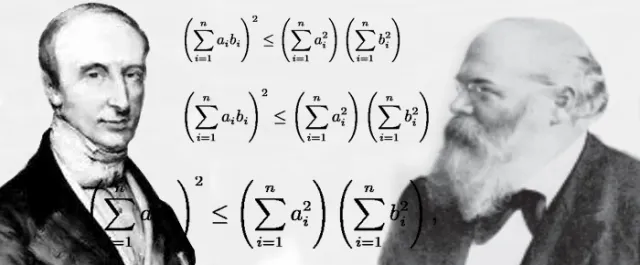
No derivatives required: optimization for everyone!
Optimization and differentiation are linked—but in both algebra and geometry, derivatives can sometimes be avoided. A few elementary algebraic examples will show us that quadratics are often subtler than they look…
An illustrious line of descendants
It all began with a football to which Euler's formula was applied. Why does the constant 2 appear on the right-hand side? To find out, we follow in the footsteps of Henri Poincaré, André Weil and… Alexander Grothendieck.
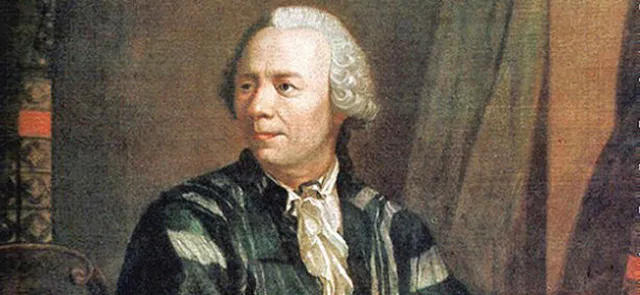
The pursuit of Euler's formula for polyhedra | Tangente
In a polyhedron, the number of vertices, S, plus the number of faces, F, equals the number of edges, A, plus 2. In other words, S + F = A + 2. For many mathematicians, Euler's formula is the most beautiful formula of all! Above all, it has had an eventful history, to say the least...
Formal languages and automata
What do a dictionary, a computer program and the DNA in our cells have in common? Language! A deterministic finite automaton is a useful practical tool for working with this concept. But the limitations of these abstract machines soon become apparent…
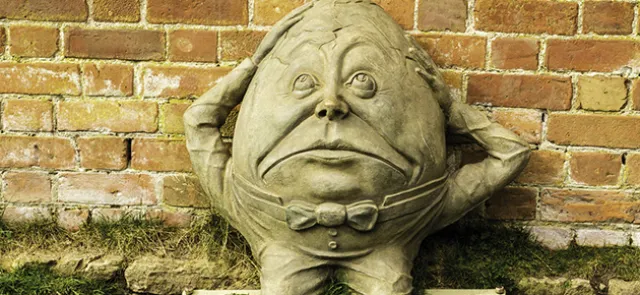
Meta-comprehension: an insidious effect in maths | Tangente
How do mathematicians choose names for new concepts? They draw inspiration from the world around them and from the mental images these new objects evoke. In the process, everyday words take on new meanings, sometimes causing confusion...
Speaking, seeing, comparing: Five historical texts
Mathematical writings contain words, but also signs, symbols and figures. Texts are therefore meant to be looked at as much as read, as works of geometry from antiquity to the present day attest.
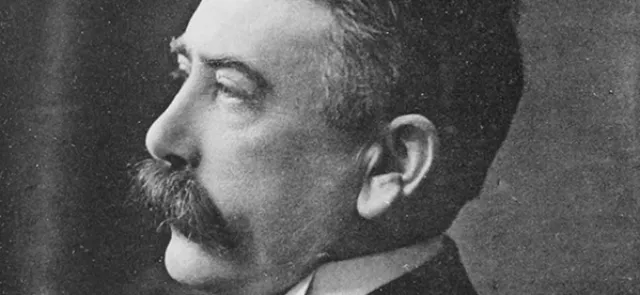
The structures of language
Inspired by formal logic, the study of language as a structure developed under the influence first of Saussure and then of Chomsky. Statistics, meanwhile, can be used to analyze texts and are an indispensable tool for machine translation.
From sentence to formula
Before the 20th century, everyday language played a prominent role in mathematical writing. Did that necessarily make it easier to read? How did the balance between descriptive sentences and concise formulas emerge?
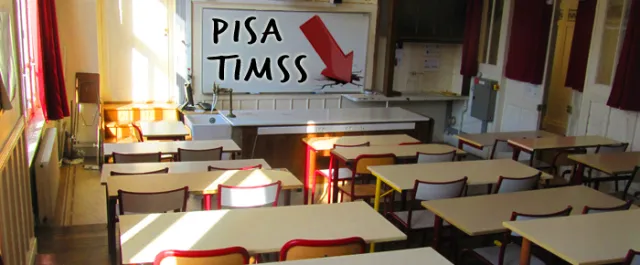
TIMSS and PISA: The latest developments in mathematics assessments
The recent publication of the PISA and TIMSS results unleashed a media storm, so poor were the scores of young people in France. But rather than settling for a few simplistic figures and reductive statistics, what if we took a closer look at what these assessments actually measure?
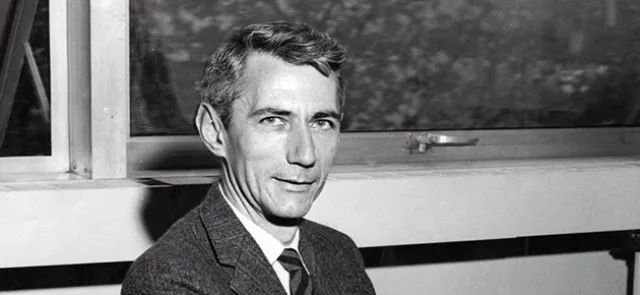
Claude Shannon and the dawn of the digital age
The year 2016 marks the centenary of Claude Shannon's birth. He was one of the driving forces behind today's digital revolution. John von Neumann, Alan Turing and other visionaries gave us computers, but Shannon introduced the modern concept of information.
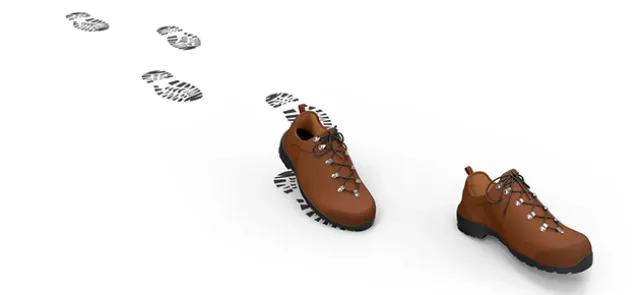
A “little” theorem for major advances
Fermat's “little” theorem is surely one of the most fruitful results in arithmetic. Ever since it was first stated in 1640, mathematicians have made constant use of it. Euler even proposed a sweeping generalization. Let's take a closer look…
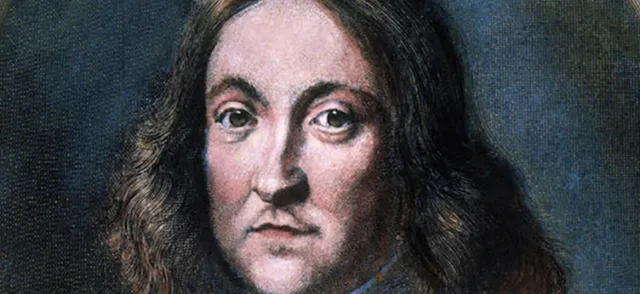
Fermat and his little theorem: history | Tangente
In the 17th century, Pierre de Fermat, though not a professional mathematician, was one of the pioneers of number theory. Less famous than his "last" theorem, whose proof has yielded more applications than the statement alone, his "little" theorem is immensely useful to us.
Marcel Berger: a life devoted to geometry | Tangente
Everyone who met Marcel Berger (1927–2016) will remember this tall, athletic, resolute man with a strikingly intelligent gaze vividly.
DGF: the fifth-power formula finally scrapped | Tangente
Did Tangente help bring about the abolition of the formula for distributing France's general operating grant among municipalities?
2016 Nobel Prize in physics: topology wins | Tangente
On October 4 in Stockholm, no one expected the 2016 Nobel Prize in Physics to go to this trio of British researchers. Still less did anyone expect their research to be explained… with pastries!
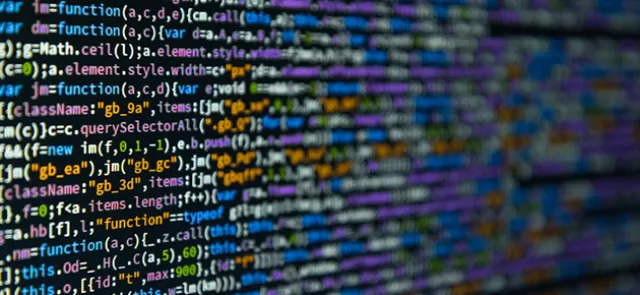
Recursion: to program is to prove!
Recursion may seem like an arcane method to the uninitiated, but it makes programs easier to prove correct, and therefore safer. The key principle is that, with recursion, to program is to prove! Sorting a deck of cards illustrates this perfectly…