



Maths and art
Intersections between mathematics and artistic expressions: music, painting, architecture, design
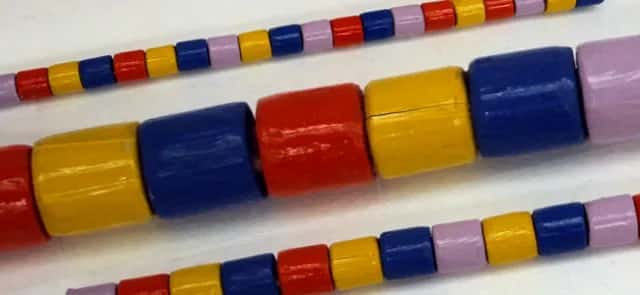
Combinations and permutations in modern art | Tangente
Permutations appear in many works of conceptual art. Let's look at a few iconic examples to see how artists have readily embraced the concept of a group.

An example of a group in the social sciences
A simple, classic, real-world application of the mathematical concept of a group can be found in social anthropology. It was brought to light by the anthropologist and ethnologist Claude Lévi-Strauss, working with the mathematician André Weil.
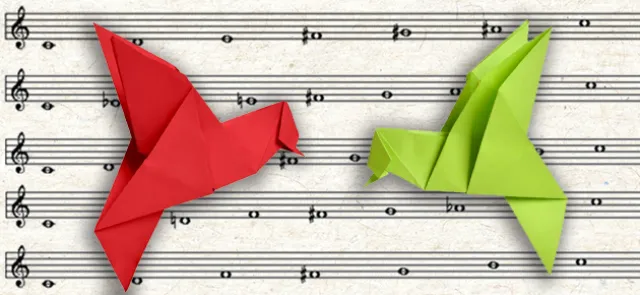
Olivier Messiaen: music and congruences
Mathematics and music were intertwined for centuries before gradually going their separate ways. Yet many composers remain attached to the language of numbers. Olivier Messiaen is a notable example: congruences play a part in the construction of his modes.

Are the French averse to assessment? | Tangente
An attempt to analyze young French people's poor performance in international assessments.

Littéramath: the mathematical literature site | Tangente
A project highlighting the links between mathematics and literature
Constant mean curvature surfaces
The study of surfaces still holds plenty of surprises! Anyone who enjoys making bubbles with soapy water will be familiar with minimal surfaces. Constant mean curvature surfaces, such as catenoids and unduloids, are less well known.
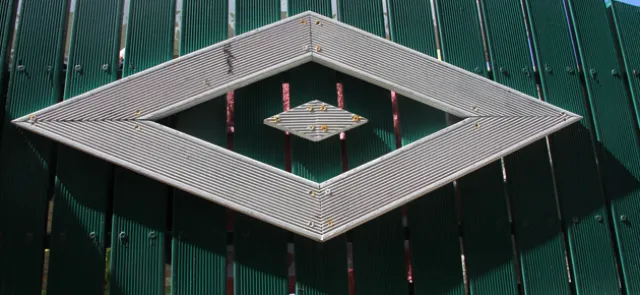
The exception that does not prove the rule
A persistent belief holds that counterexamples are primarily a source of amusement. Yet they play a fundamental role in several areas, both as mathematical proofs and as teaching tools—not to mention their entertaining, or even artistic, side, depending on how one looks at them.

Poincaré and his heirs: the documentary | Tangente
Henri Poincaré, l'harmonie et le chaos (Henri Poincaré: Harmony and Chaos) is a 53-minute documentary made by Philippe Worms in 2012 and available online. Its unusual premise: the director brought six scientists together in a manor house for a weekend and filmed their informal conversations about Henri Poincaré.
Poincaré and analytical Cubism: geometry and art | Tangente
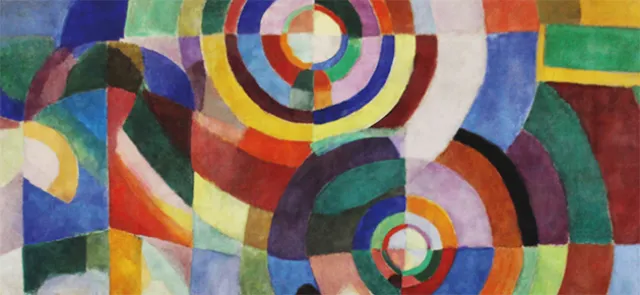
As an artistic movement, Cubism grew out of a fundamentally mathematical approach to space, shortly after the publication of La Science et l’Hypothèse. In it, Henri Poincaré discusses the nature of space, and artists would strive to "turn his words into paintings."
Beyond the white dimension | Tangente
A Tale of Synapse is a video game that immerses players in a mathematical universe.
Jacques Dominioni, painter of geometry | Tangente
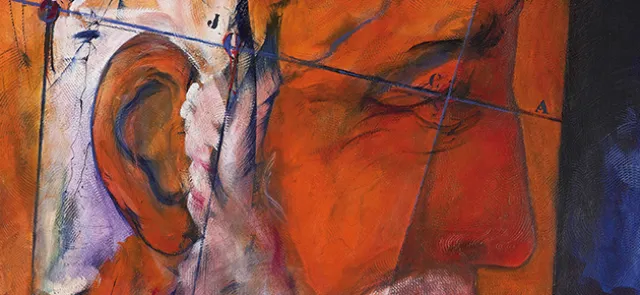
The work of the painter Jacques Dominioni (1934–2014) belongs primarily to lyrical abstraction. Yet his mastery of basic geometric forms—lines, circles and the grid structure underlying his paintings—is thought-provoking... and moving. Let's explore the different periods of his artistic output.
The mathematics of chance at the heart of physics
The idea of introducing probability measures into models of physical phenomena dates back to the 19th century and runs through the work of Josiah Gibbs. The approach can be illustrated quite simply using... two magnets.

Elegant problem-solving methods (2) | Tangente
The beauty of mathematical problems often lies in an imaginative method—a "haha," as Martin Gardner called it—that makes the solution seem obvious, provided we can find a fresh perspective.
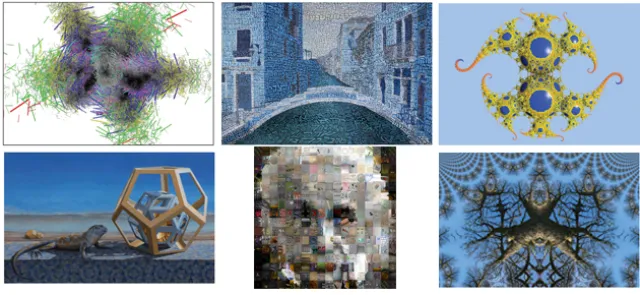
Artworks from Tangente's central insert | Tangente
Don't wait any longer—buy issue 200 of Tangente to get the magnificent artworks below in A3 format and display them in your home!
Jacques Dominioni
The work shown on the cover of this special issue of Tangente is a painting by Jacques Dominioni.
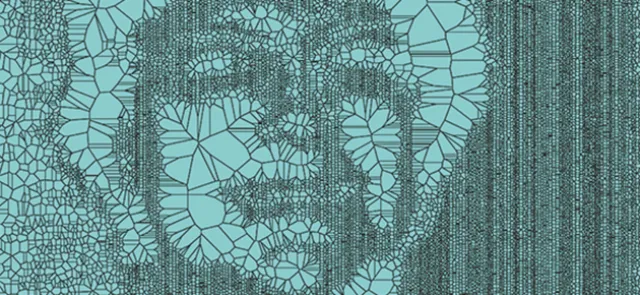
Bernard Cornet's geometric art and Voronoi | Tangente
In art, mathematical tools can help artists develop and create their work. The Nantes painter Bernard Cornet (born in 1952) has brought Voronoi diagrams and Delaunay triangulation into his artistic practice.
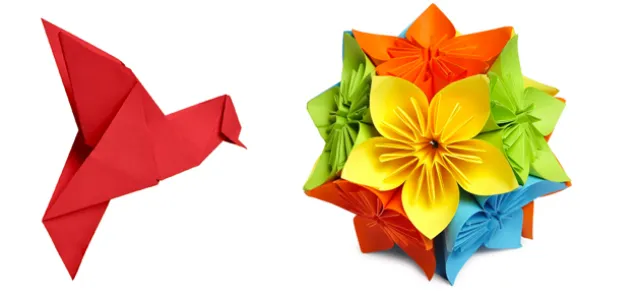
Origami and folds for geometric constructions
Greek geometers regarded only straightedge-and-compass constructions as acceptable. Some problems that defeated their ingenuity—for reasons that would not be understood until the advent of algebra—can nevertheless be solved using origami.
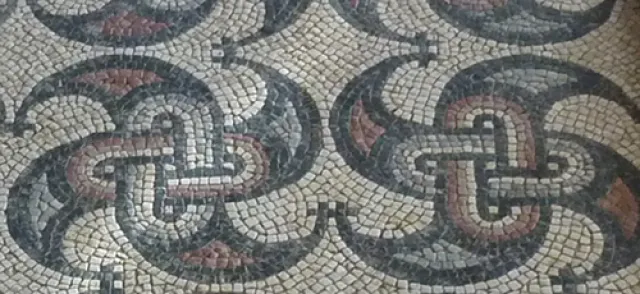
Circles in ancient Roman mosaics | Tangente
Besides their undeniable aesthetic appeal, mosaics and other archaeological remains from our past often hold wonderful mathematical surprises. These geometric examples from Gallo-Roman sites offer ample proof.
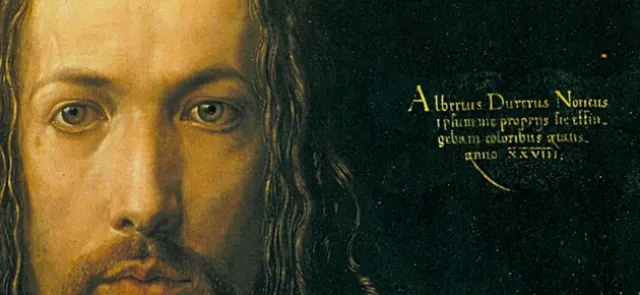
Albrecht Dürer and technical drawing | Tangente
Albrecht Dürer (1471–1528) devised a fascinating straightedge-and-compass construction of the ellipse. It foreshadowed descriptive geometry, which Gaspard Monge (1746–1818) would formalize almost three centuries later.
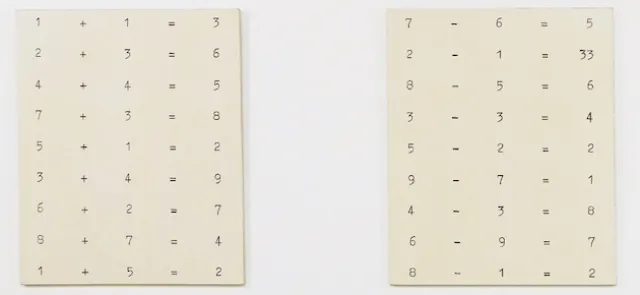
The artist and the number: art and maths | Tangente
Mathematics in general, and numbers in particular, have inspired many artists, including Dalí and Picabia. Some are drawn to the magic of numbers. Others find beauty in number sequences, which they bring to life in graphic art or painting.