



Maths and art
Intersections between mathematics and artistic expressions: music, painting, architecture, design
 Podcast
Mathematical code - Sagrada Família: Gaudí's secret finally revealed
A Barcelona mathematician discovers that the Sagrada Família is built on a 7.5-metre module and the proportions of the divisors of 12. Here's how.
 Podcast
CubeHarmonic: the Rubik's Cube that makes algebra audible
Invented by Maria Mannone, the CubeHarmonic uses a Rubik's Cube to create musical harmonies and teach algebra intuitively.
 Podcast
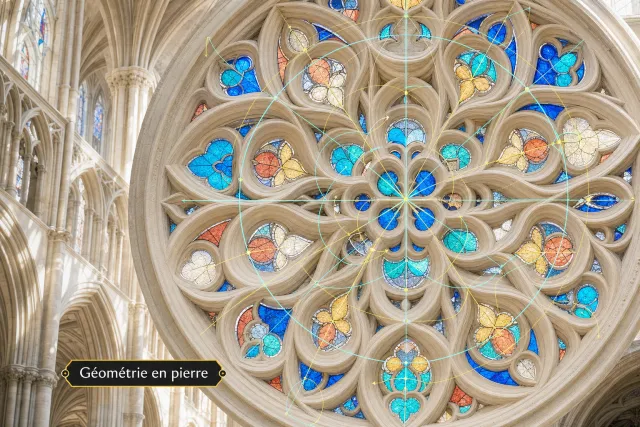
Gothic cathedral symmetries: the mathematics of the Middle Ages
Discover how Gothic architects mastered symmetry to create geometric masterpieces in cathedrals, with orders of symmetry as high as 8.
 Podcast
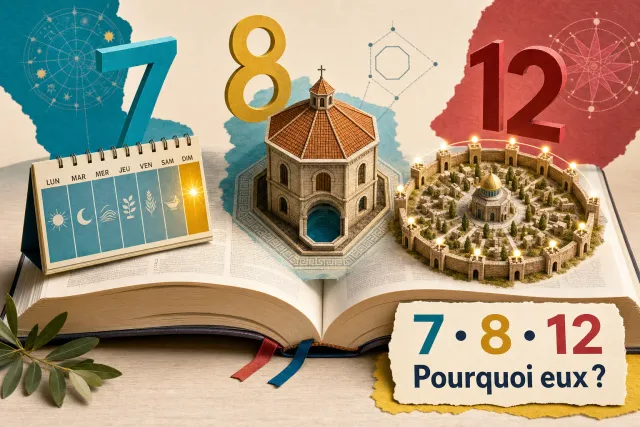
The Bible’s sacred numbers: 7, 8 and 12
Discover the symbolic meaning of the numbers 7, 8 and 12 in the Bible and their impact on culture, architecture and the Christian faith.
 Podcast
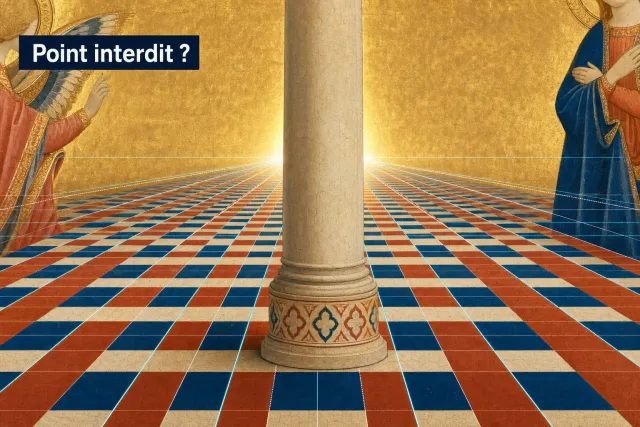
The divine perspective: geometry and art in the Renaissance
How did Renaissance painters work around the vanishing point—a profane image of divine infinity—before projective geometry formalized their intuitions?
 Podcast
Michèle Audin: mathematician, writer and Oulipian
Michèle Audin's life brought together several forms of commitment. Professional mathematician, writer, social and political activist: every strand was intertwined with and enriched the others.
Patrice Jeener: the mathematical engraver who turned equations into art
Patrice Jeener (1944–2026) passed away on March 3 in his village of La Motte-Chalancon, in the Drôme.
 Podcast
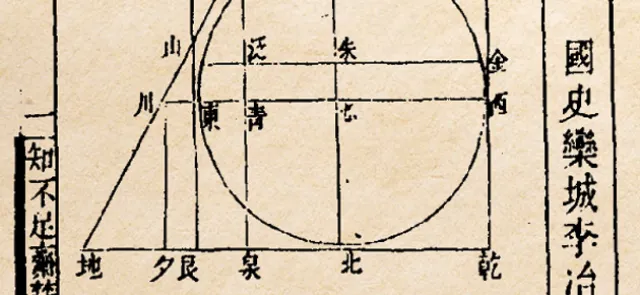
The math quartet of the Song-Yuan dynasties | Tangente
The period covered by the two Song dynasties and the early Yuan dynasty was particularly conducive to mathematics. Indeed, four great names emerged during this time: Li Ye, Zhu Shijie, Qin Jiushao, and Yang Hui. Their works share common influences but sometimes very different approaches.
 Podcast
Why study Chinese mathematics? | Tangente
The history of mathematics in Asia is marked by the central place occupied by China, as a producer of both knowledge and institutions for teaching the sciences. Both were, in the past, taken up by other countries in East Asia. Several of the mathematical classics developed in China were studied elsewhere and inspired the mathematical knowledge and practices implemented there.
 Podcast
Making art with the Conway knot | Tangente
An artist passionate about mathematics, Michel Delaunay creates works that plunge the eye into the infinity of geometric and topological aesthetics. He notably combines the potentialities of the cube with those of the Conway knot.
In real life | Tangente
In physics as in architecture, parabolas often appear, whether to model phenomena or provide inspiration.
 Podcast
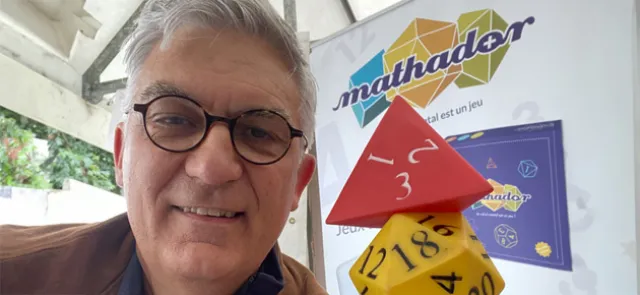
Éric Trouillot: Mental arithmetic, a path to jubilation | Tangente
The inventor of the calculation game Mathador, Éric Trouillot is one of those working to bring mental arithmetic back into teaching practice. In his view, far from being tricks performed by trained monkeys, techniques for calculating in one's head are an excellent gateway into the world of numbers, as well as an irreplaceable way to put mathematical properties — such as the distributivity of multiplication — into concrete practice.
 Podcast
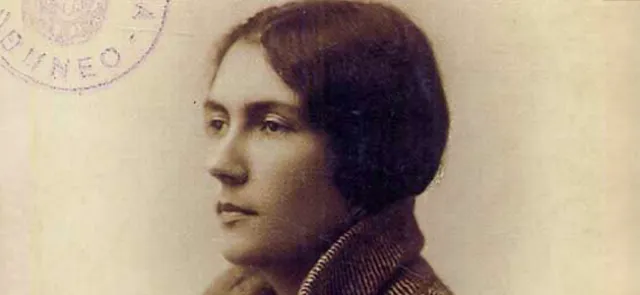
Peano by his great-niece | Tangente
Alongside official biographies, family accounts offer other glimpses into figures known mainly through their work. Lalla Romano, the celebrated Italian author, bears witness to her intellectual closeness with her great-uncle, Giuseppe Peano.
 Podcast
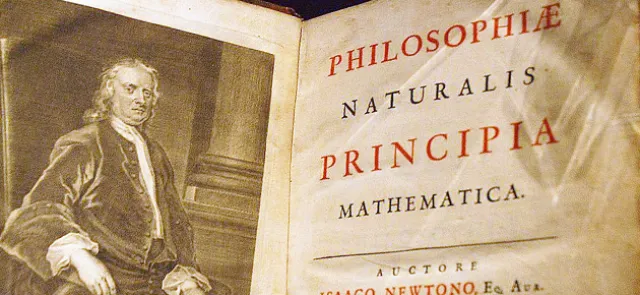
More than a translation of Newton | Tangente
Émilie du Châtelet is famous for having translated Isaac Newton's scientific work into French. Yet she did not simply reproduce the Latin text identically in French; she undertook an original rewriting of the proofs and concepts of Newtonian physics.
 Podcast
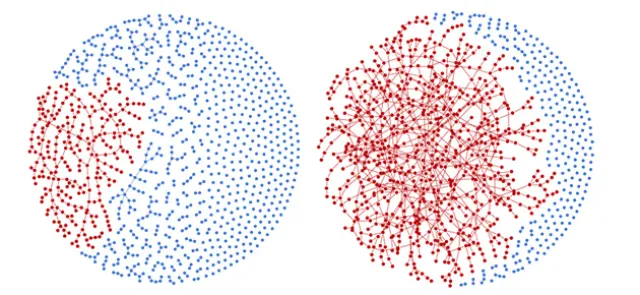
The Erdős-Rényi random graph
The Erdős and Rényi random graph model is so famous in mathematics that it has become a common noun: in probability theory, people routinely speak of "an Erdős-Rényi" the way one would speak of a Brillat-Savarin in gastronomy or a Stradivarius in music.
 Podcast
Maths on France Musique: a podcast | Tangente
Many mathematicians enjoy or play music, and the two disciplines have long been far more closely connected than we might imagine today.
 Podcast
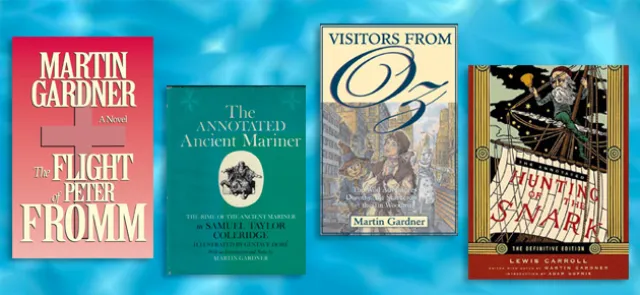
Martin Gardner's literary work | Tangente
Martin Gardner left behind, in literature and literary criticism, a rich, profoundly original body of work that, unfortunately, remains little known in its entirety. This article offers an overview.
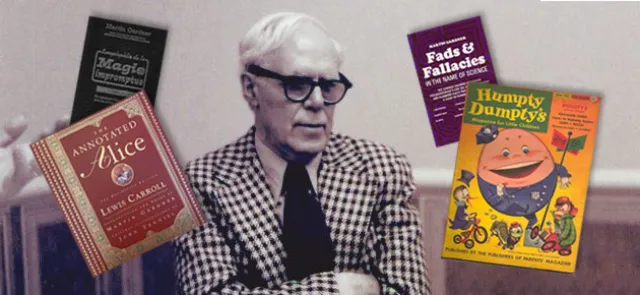
Martin Gardner: Itinerary of a genius | Tangente
Although he is known for his recreational mathematics and his work as a popularizer, Martin Gardner strangely never pursued a course of study in the discipline. Here are the surprising stages of his unusual path.

The flat torus saga: a documentary | Tangente
Have you heard of smooth fractals? The story began in the early 1950s, when John Nash astonished everyone by proving that a square could be gently warped into a torus without folding, creasing, stretching or contracting it in ways that alter lengths.
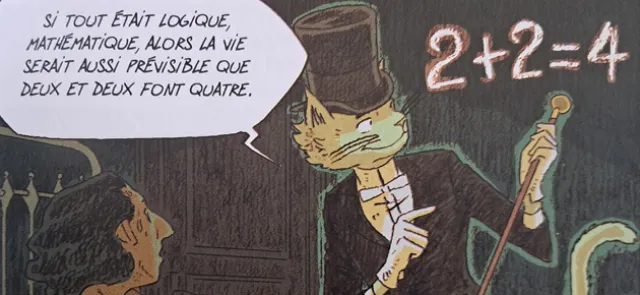
Cyril Bonin's universe: comics and mathematics | Tangente
Mathematics can hold a special place in an artist's thinking. Cyril Bonin explains how: he is the sole creator—writer, artist and colorist—of a distinctive body of graphic novels.