



Maths and art
Intersections between mathematics and artistic expressions: music, painting, architecture, design

Clairaut.com: a complete online biography | Tangente
As its name suggests, clairaut.com is devoted entirely to Alexis Clairaut. It provides a comprehensive inventory of his works, with links to them, along with his correspondence, academic reports, and the principal tributes and portraits devoted to him by his contemporaries.
Jacques Roubaud: tribute to a poet-mathematician | Tangente
Following Oulipo's time-honored formula, Jacques Roubaud is now excused from its meetings on account of his death, which occurred this past December 5, his 92nd birthday.
Regular polygons
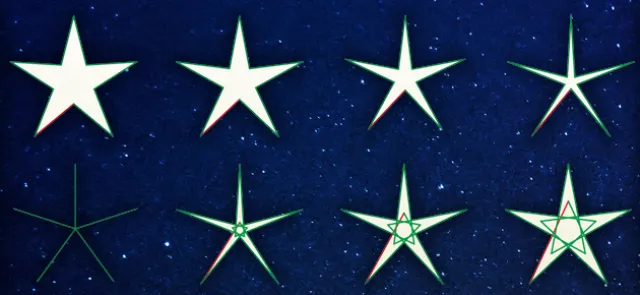
Regular polygons are particularly harmonious, thanks to their symmetries. At first glance, one might think they had long since yielded all their secrets. Yet the notion of duality reveals a wealth of surprises.
The mathematicians of Père-Lachaise | Tangente
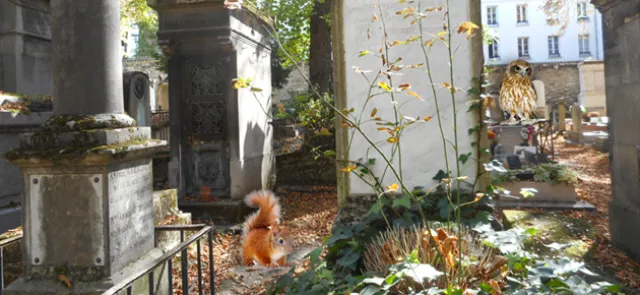
At this time of year, around All Saints’ Day, tradition calls for visits to cemeteries. So let's take the opportunity to visit the graves of mathematicians in the most iconic cemetery of all: Père-Lachaise.
Italo Calvino's mathematical writing | Tangente
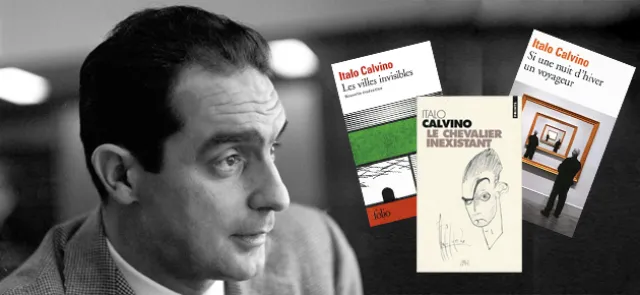
Widely read in Italian schools and universities, Italo Calvino is a major author, renowned for the literary quality of his work. He was also an avid lover of mathematics and readily drew on it in his writing, particularly to structure his texts, as one would expect of a committed Oulipian.
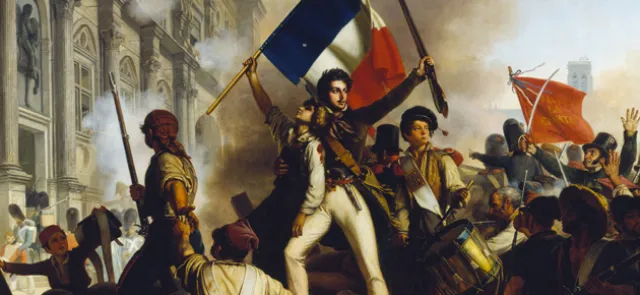
Cauchy: A man of contradictions | Tangente
Cauchy's teaching and research left a profound mark on the history of mathematics. Yet both his work and personality were full of contradictions and did not always meet with universal approval.
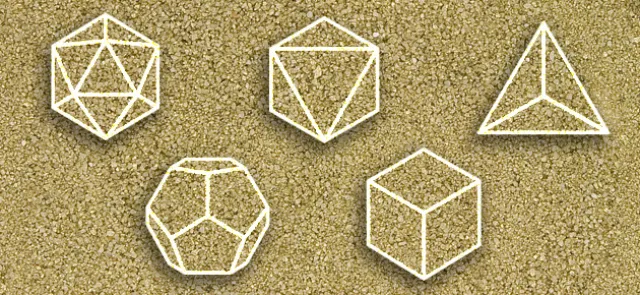
Cauchy’s first discoveries: polyhedra | Tangente
Although Cauchy is widely regarded as a highly abstract thinker, the first chapter of his work is, by contrast, strikingly visual. His study of regular polyhedra marked his entry into the world of mathematical research.
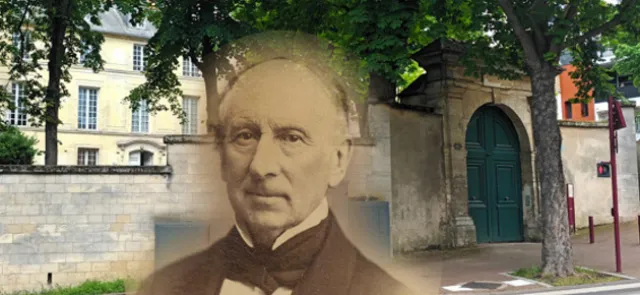
From Arcueil to Sceaux: in Cauchy's footsteps | Tangente
Cauchy had close ties to the southern suburbs of Paris. After growing up in Arcueil, he spent his holidays in Sceaux, where he produced some of his mathematical work. He also died and was buried there.
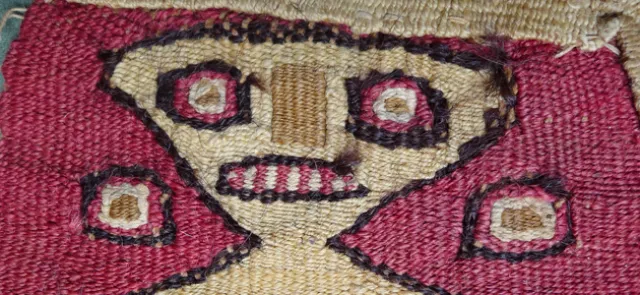
Geometry of Andean textiles | Tangente
In the Andes, weavers from periods sometimes lost in the distant past produced an immense variety of patterns that nevertheless bear a clear family resemblance. Mathematics can help us understand part of the visual language these textiles share.
Combinatorics on words and music | Tangente
Combinatorics on words is an area of mathematics that has proved particularly fruitful for studying certain musical phenomena, especially the rhythmic features of African and Malagasy music—so much so that a computer can even recreate them!
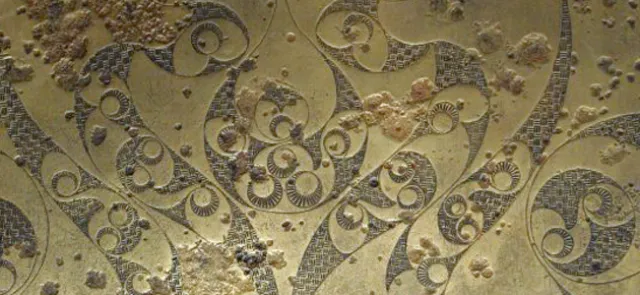
Geometry in Celtic art | Tangente
Celtic art is constructed according to mathematical and geometric principles. Ethnomathematics helps us identify and analyze the geometry that underpins this symbolic art.

Beyond Gauss in finance | Tangente
Gaussian curves are unsuitable for modelling risky financial assets such as stocks. To overcome this problem, Benoît Mandelbrot introduced the concept of a multifractal measure and generalized Brownian motion.
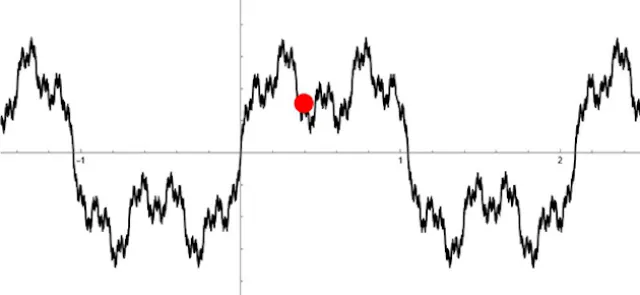
Fractal dimension
The construction of fractal objects called for new definitions of distance.
The Mandelbrot–Zipf–Estoup law
The polymath Benoît Mandelbrot took an interest in many subjects before becoming famous for his research on fractals.
Mandelbrot, a free spirit | Tangente
In the centenary year of his birth, we look back at the life of Benoît Mandelbrot, the "father of fractals": those strange geometric entities with which he adorned mathematics and which he managed to uncover even in nature.
Philippe Leblanc,
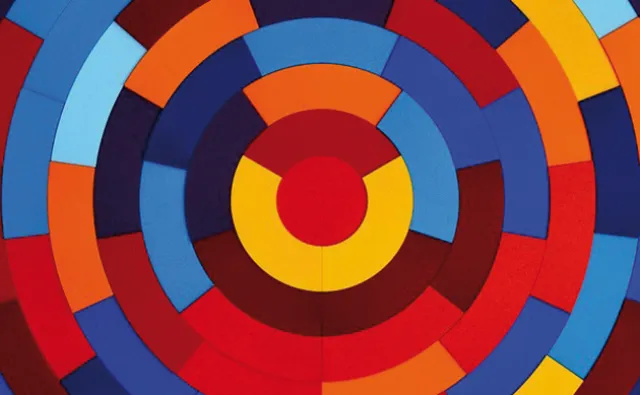
Visual artist Philippe Leblanc describes his artistic development this way: "Discovering Op Art, kinetic art and the abstract geometry of the 1960s and 1970s had a decisive influence on my artistic direction." Mathematical concepts and emblematic numbers are recurring features of his work.

The first irrational numbers
The square root of 2 and the golden ratio are algebraic numbers that are relatively easy to define. Yet they have gone down in history as the first known irrational numbers, with perhaps, in the latter's case, a touch of the "divine."
My thesis in Tangente
Geometric shapes can be associated with different pieces of music to shed light on their structure. This can be done by defining a distance between musical events using the discrete Fourier transform applied to the bars of a score.
Descartes' way
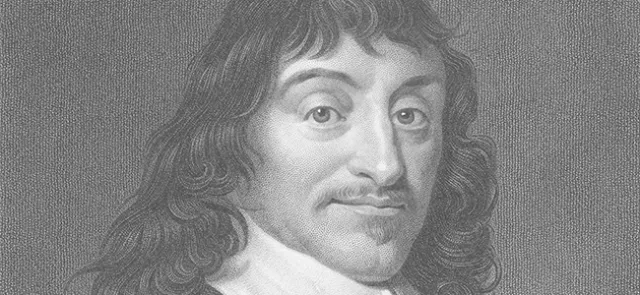
How can fractions be handled geometrically? At the beginning of his most famous work, Descartes shows us how.
Fractions and music: when 3/4 is not equivalent to 6/8
Octaves, fifths, triplets… The rhythms and pitches of Western music were built on fractions.