



Maths and History
Historical episodes of mathematics, mainly before the 20th century
 Podcast
Measuring infinity: how Borel and Lebesgue went beyond Newton
Explore Lebesgue measure, Borel's normal numbers and the foundations of probability theory through the history of mathematics.
 Podcast
Émile Borel: probability at the cradle of quantum theory
Émile Borel's notebook on Paul Langevin's course at the Collège de France: a unique testimony to the scientific ferment surrounding quanta.
 Podcast
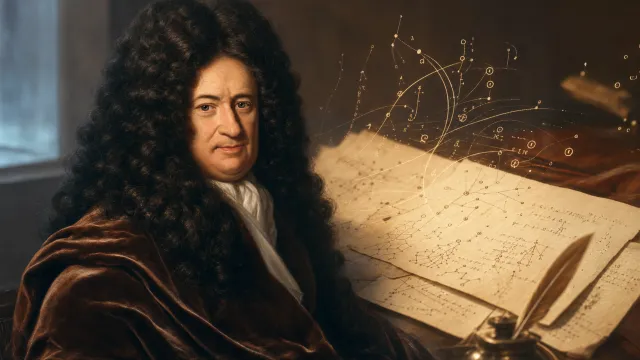
Did Leibniz really invent the ancestor of the computer?
The article dispels the myth of Leibniz as a forerunner of the computer by examining the historical reality of his universal-language project.
 Podcast
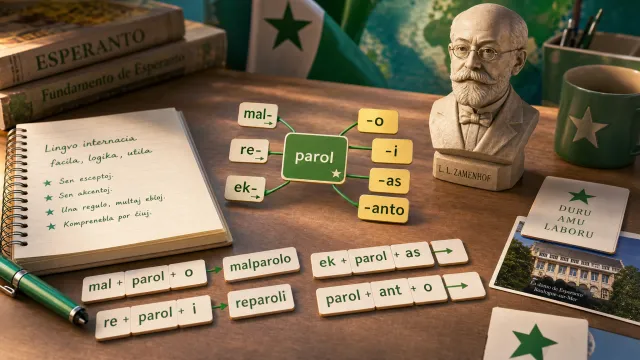
Esperanto and mathematics: a coherent universal language
Esperanto, created by Zamenhof in 1887, shares mathematics’ ideal of perfect coherence. Discover why this constructed language fascinates logicians and mathematicians.
 Podcast
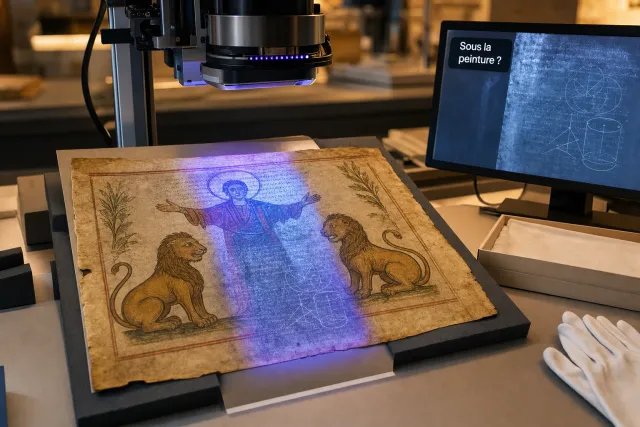
Archimedes page found at Blois museum: palimpsest and ancient geometry
Victor Gysembergh has found a leaf from the Archimedes palimpsest, missing since 1906, hidden beneath an illumination of the prophet Daniel at the Musée des Beaux-Arts in Blois.
 Podcast
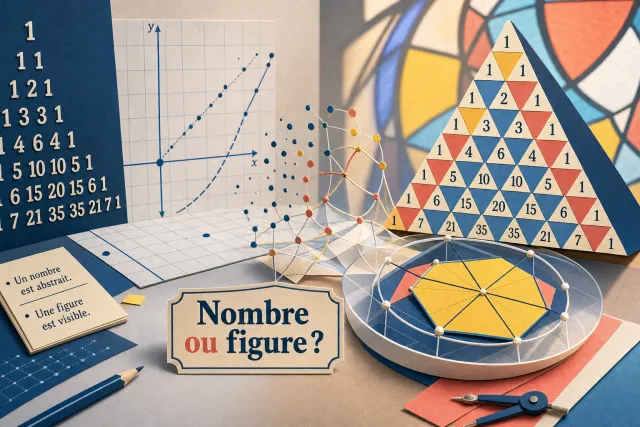
Geometry as incarnation: Pascal and the primacy of figures
How Blaise Pascal favored figures over numbers, even solving combinatorial problems through the geometry of the arithmetic triangle.
 Podcast
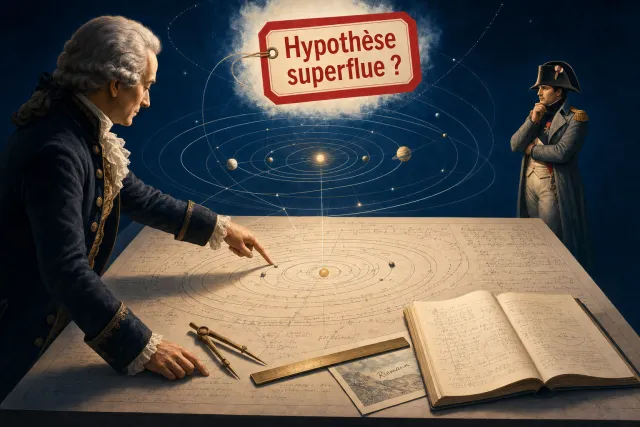
Mathematicians and atheism: Laplace, Erdős and Hardy defy God
Laplace, Erdős and Hardy: three anecdotes about mathematicians who used logic and mathematics to question the existence of God.
 Podcast
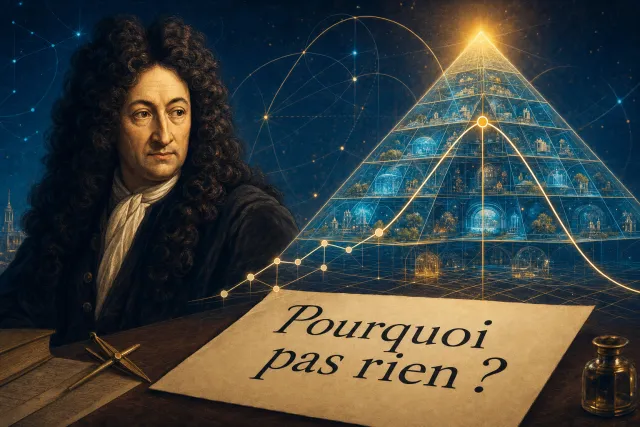
Leibniz and the best of all possible worlds: mathematics and philosophy
How Leibniz uses mathematics to justify the existence of the best of all possible worlds through infinitesimal calculus, symmetry, and philosophy.
 Podcast
Number symbolism in the Bible: the spiritual meaning of 2, 3 and 4
Explore the spiritual meaning of the numbers 2, 3 and 4 in the Bible: the divine covenant, the Trinity and the whole of creation.
 Podcast
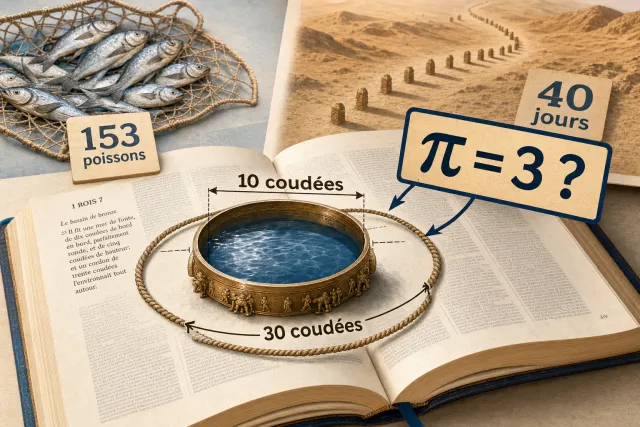
Biblical numbers: 40, 153 and π—meanings and mathematics
An exploration of the symbolic and mathematical meanings of 40, 153 and π in Scripture, from spiritual trials to calculating a circle's circumference.
 Podcast
Pascal's Wager: probability and faith in mathematical analysis
An explanation of Blaise Pascal's famous argument about the wager of faith, applying probability theory to the question of God's existence.
 Podcast
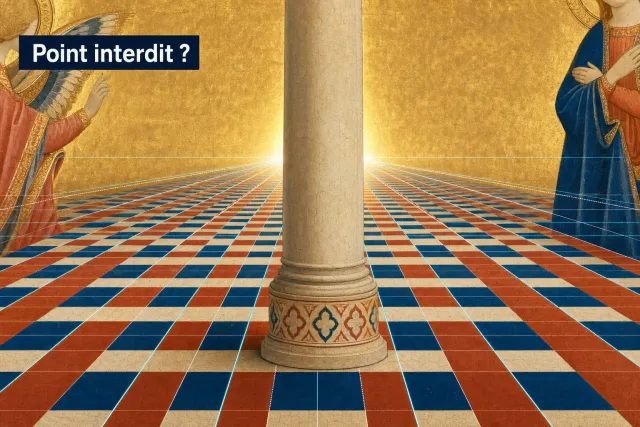
The divine perspective: geometry and art in the Renaissance
How did Renaissance painters work around the vanishing point—a profane image of divine infinity—before projective geometry formalized their intuitions?
 Podcast
Ackermann-Péter function: recursion without bounds
With a surprisingly simple definition, the Ackermann–Péter function generates numbers of a staggering size. This mathematical construction, born out of research into computability, shows how quickly a recursive procedure can exceed all the usual bounds.
 Podcast
Michèle Audin: mathematician, writer and Oulipian
Michèle Audin's life brought together several forms of commitment. Professional mathematician, writer, social and political activist: every strand was intertwined with and enriched the others.
 Podcast
The Boltzmann equation: from molecular chaos to macroscopic equilibrium
Formulated in 1872 by the Austrian physicist Ludwig Boltzmann (1844–1906), this equation describes how a gas or fluid evolves toward equilibrium. It bridges molecular collisions at microscopic scales and the macroscopic world.
 Podcast
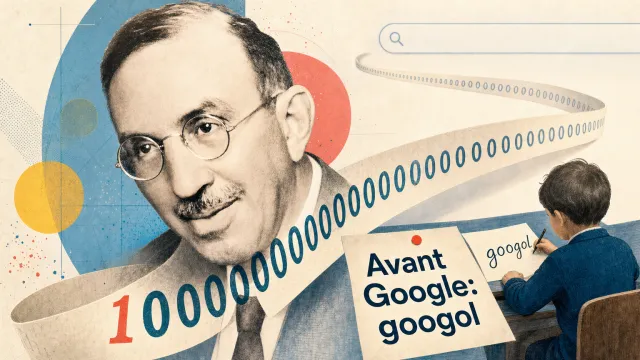
Edward Kasner: the man behind googol and googolplex
Staggeringly large numbers invented by an eccentric mathematician that would inspire an iconic domain name...
 Podcast
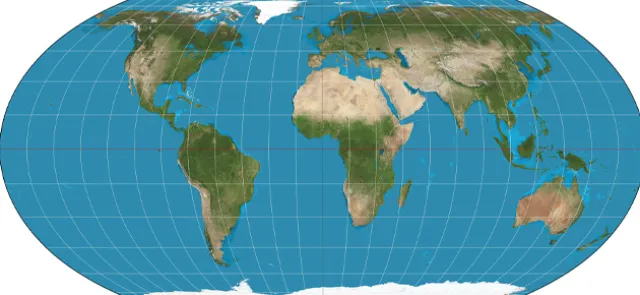
Mercator projection: anatomy of a geopolitical map
We tend to think of mathematics as a perfectly neutral science. Yet, like any human construct, its uses can prove more political than they appear. That is how an age-old geometry problem found its way into diplomatic debates in recent months.
 Podcast
Knuth and Conway notations for mind-boggling numbers
When it comes to representing extremely large numbers, the standard operations, including exponentiation, are no longer enough. With considerable imagination, Donald Knuth and John Conway devised notations to overcome this limitation.
Skewes's numbers: enormous bounds in number theory
Skewes's numbers are among the large numbers encountered in arithmetic.
 Podcast
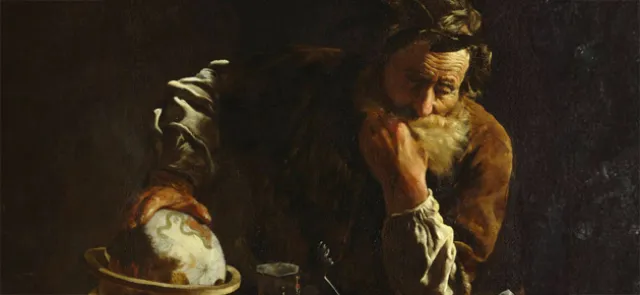
Archimedes' Sand Reckoner: counting the grains of sand in the universe
If the universe is finite, then it can be filled with grains of sand. Yes, it would take a great many, but the quantity required would still be a finite number—one that can be expressed. Drawing on the most advanced astronomical knowledge of his time, Archimedes set out to do just that.