Folders
Discover how great mathematicians shaped our world, explore the links between math and other fields like art, music, or even philosophy, and relive the key moments that marked its evolution.
Infinity: should we believe in it?
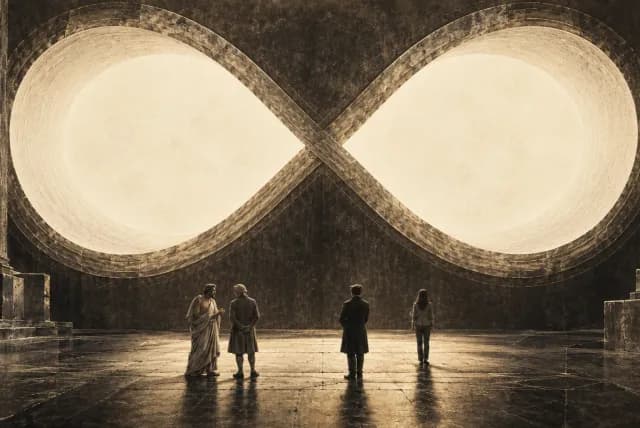
If it is indeed to Georg Cantor that we owe, at the end of the 19th century, having definitively made infinity a branch of mathematics rather than of theology or philosophy, the "paradise" thus offered was the culmination of two millennia of hesitations, back-and-forths and controversies against a backdrop of paradoxes. Zeno had presented the lurking contradictions. Aristotle had set up a reasonable compromise. Reflections were refined on the infinitely small until giving birth to differential calculus… Today, infinity has so triumphed that it is now from it that the finite is defined, in an extraordinary reversal that we owe to Bolzano and Dedekind.
Iterative processes and induction
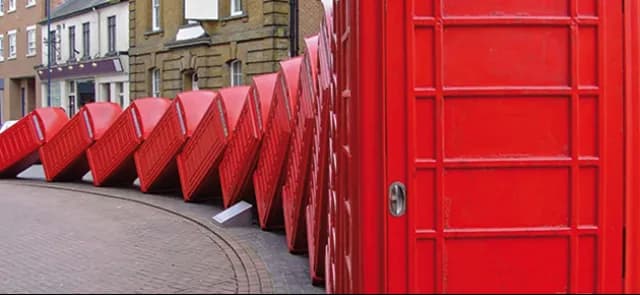
Clearly appearing in Pascal's writings on arithmetic and combinatorial questions (including Pascal's triangle), reasoning by induction finds a natural place in the study of sequences, making it possible to formalize, generalize and then improve approximate methods for solving equations known for centuries. Henri Poincaré will say that it is "mathematical reasoning par excellence". Induction allows for some of the most memorable constructions, from the Fibonacci sequence to Heron's algorithm (to approximate the square root of a positive number). While the iteration of a computational process addresses practical problems since Antiquity (often to improve the accuracy of a result or concretely solve a problem), iterating a reasoning makes it possible to access more theoretical considerations.
Leverage the models
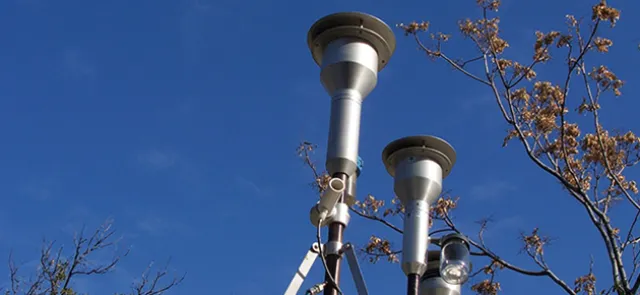
Questions related to the exploitation, management and redistribution of resources are among the most important that have been posed to our societies. These resources also generate pollution, the effects of which on our health it is important to understand. Whether it is water management or energy production, it has become imperative to mobilize all skills to optimize access for the greatest number. Mathematics is at the forefront by proposing methodologies and models, which will be the source of scientists' measurements, interpretations and conclusions.
Living as a mathematician
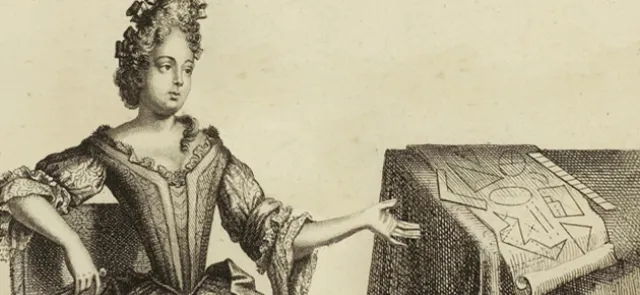
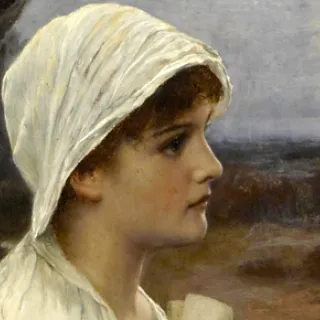
Hypatia leaves her name to no text even though she is certainly the author of many passages in scholarly works. Émilie du Châtelet is a woman who wants to live fully without having to choose between love and science. Mary Somerville experiences a first marriage to a man who has no esteem for the intellectual abilities of her sex. Sofia Kovalevskaïa dreams only of poetry. By diving into the intimacy of the multifaceted life of female mathematicians, we perceive the countless ways in which they integrate mathematics into it.
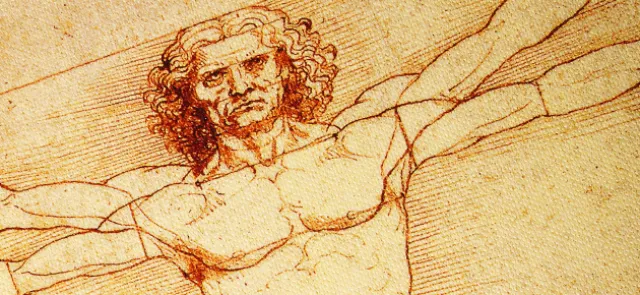
Léonard de Vinci
Exactly five hundred years after his death, Léonard de Vinci still fascinates. For the French, it is through the Mona Lisa at the Louvre, and the spectacular inventions presented at the Clos Lucé castle in Amboise. Artist, engineer, scientist, this brilliant Italian scholar crossed the Alps to end his days in the Loire Valley. His close connection with Luca Pacioli, a mathematician who founded accounting, led Léonard toward a mathematical approach. His drawings of polyhedra transform geometric figures into works of art. In a world emerging from the Middle Ages, well before René Descartes, his mastery both theoretical and practical of perspective led him to understand, through the close connection that exists between painting and mathematics, the importance of the scientific approach.
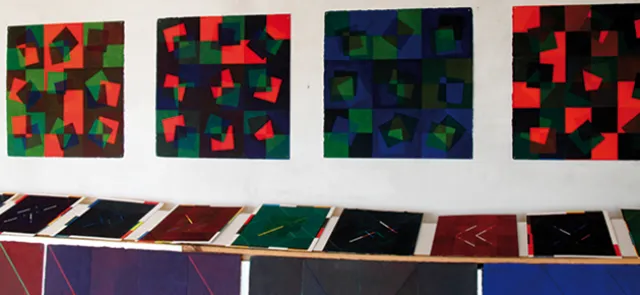
Magic squares
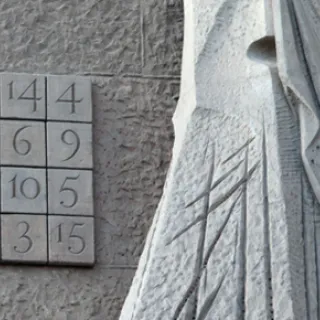
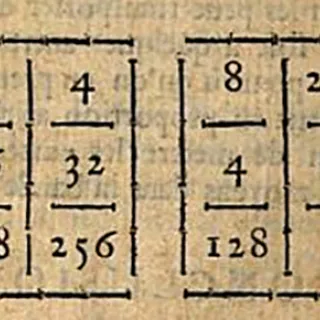
For centuries, enthusiasts of elegant arithmetic have vied with each other in ingenuity to propose ever more astonishing magic squares, with increasingly numerous properties. One of the experts in the field, René Descombes, shares some of his construction methods. While computer tools allow enthusiasts to expand their collection of achievements, variants continue to increase. Let us rediscover multiplicative magic squares, pandigital magic squares and other "magic" constructions. The arithmetic treasures they contain seem limitless and are even found in figurative art.
Making math... at any age!
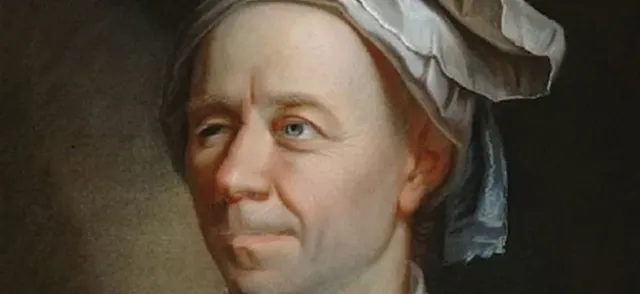
We generally like to highlight "genius" mathematicians, those who, very early on, showed undeniable predispositions for the queen of the sciences. Less is said about those, just as deserving, who continue their activity beyond a canonical or even venerable age! It must indeed be remembered: if mathematics wonderfully lends itself to the boldness of youth, it can appeal to all audiences, at all ages. Neuroscience confirms this today! This is what explains the extraordinary longevity of certain researchers, who have always followed their curiosity and never stopped trying to unravel the deepest mysteries of mathematical science.
Manufacturing
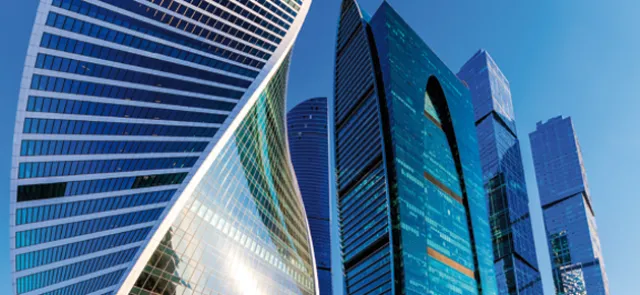
Whether we build them, arrange them, knit them, whether it is a matter of making roofs or simply beautiful forms, the manufacturing of surfaces is an extraordinary bridge between mathematics and applications. Let us think of the making of a football. It is often practical questions that pose challenges to theorists, but sometimes, conversely, the abstract beauty of geometry that inspires creators or architects. The properties of surfaces have not finished surprising and raising new mathematical challenges.

Many applications
What do vectors and vector spaces bring us beyond a presence, like all mathematical structures, a little everywhere around us? An opening and an enrichment of our approach to many fields, illustrated by some striking examples, where this change has operated a real revolution, accentuated by the advent of powerful calculation tools! Vector drawing in graphics, the enormous amounts of texts or corpora in literature… And Yannis Xenakis in person even opened the way to interesting vector techniques in musical composition…

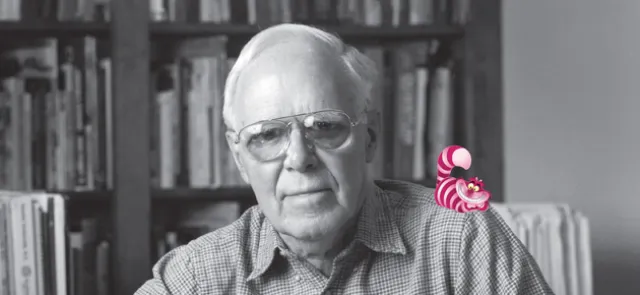
Martin Gardner's Wonderland
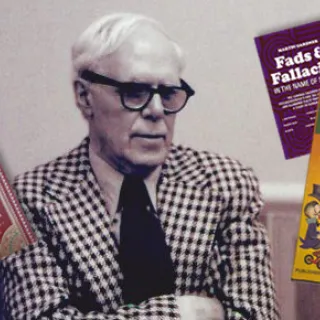
In France, Martin Gardner is best known for his mathematical recreations written as a science communicator. He who, strangely, never studied mathematics at university, but was a magician, philosopher, writer and publisher, left a much vaster work resulting from his multiple interests. Thus, new facets are discovered through his very original philosophical development of scientific skepticism or through his amazing and prolific literary production ranging from science fiction to poetry, including novels. And one will not fail to be amazed by exploring his mathemagic tricks.