Folders
Discover how great mathematicians shaped our world, explore the links between math and other fields like art, music, or even philosophy, and relive the key moments that marked its evolution.

Graph Problems
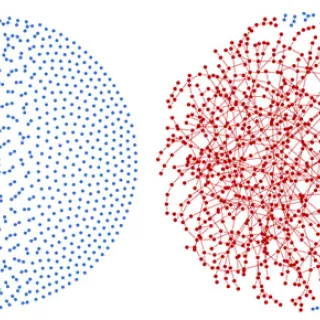
In the field of combinatorics, Paul Erdős's contributions have been fundamental. They enabled this discipline to reach its full scope. Much current research is based on his work to study graphs in all areas in order to, for example, model number divisors, Internet infrastructure, or epidemics. One of his innovations was to rely on probability to prove results about large sets. He was also interested in random graphs in which edges are added randomly until a certain property appears.


Graphs and strategies
In games of perfect information, graphs play a fundamental role: in theory, by working backwards from the final positions, they make it possible to know whether a position is winning or losing for the player who inherits it. Reality is more complicated, particularly when the number of positions, like in the game of Go, is too large. But elaborate theories make it possible to know one's lead or lag behind the opponent or to bring together games that, a priori, had no common points. The famous game of Nim is part of these references.



Great solved problems
Some large optimization problems have an efficient algorithmic solution. This is the case when it comes to finding the shortest path among an immense number of possibilities, to make a flow (of electricity, water, information…) transit through a network or to solve a "linear" program, not requiring enumerating all potential solutions. These questions have the good taste of belonging to the P class of problems that can be solved in "reasonable" time (sometimes polynomial). The associated algorithms, some of which, like the simplex, are ranked among the ten most important of the 20th century, have engraved the name of their discoverer in the history of computer science: Dijkstra, Ford and Fulkerson, Bellman…

Heron's formula
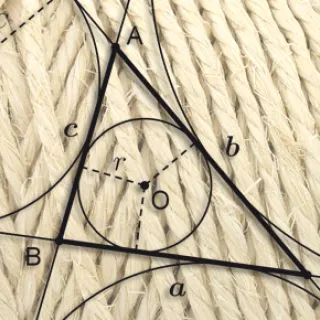
It comes to us from Antiquity and is a jewel of plane geometry. Much more recent and lesser-known than the theorems of Thales and Pythagoras, Heron's formula makes it possible to determine the area of a triangle using only the knowledge of the length of its sides. This is only the tip of the iceberg because this geometric nugget generalizes greatly beyond the triangle. Thus, the brilliant Euler found a stunning version for the tetrahedron. Brahmagupta and then Bretschneider proposed a variant for quadrilaterals. Finally, like its illustrious predecessor the Pythagorean theorem, Heron's formula can give rise to astonishing arithmetic research, such as that of "Heronian triplets". Welcome to geometry!

Human geography and biodiversity
Understanding the complexity of biodiversity requires reliable and realistic modeling of ecosystems. Mathematics offers several types of tools, such as dynamical systems for predator–prey models, or linear algebra to understand population evolution dynamics. It is important to master these techniques that are extremely sensitive to initial conditions, parameter precision and calculation errors, under penalty of predicting the extinction of a non-threatened population… or the opposite.


Imagine
Inventing the nonexistent, exploring unknown worlds, moving "differently"... Surfaces allow theorists to let their imagination run free, to build, for example, objects of a new kind that help understand the trajectory of a billiard ball. Nothing stops creativity, which even goes so far as to explain, with "smooth fractals", how to fit the Earth inside a balloon or a thimble... Mathematics today leads to real miracles!

In geometry
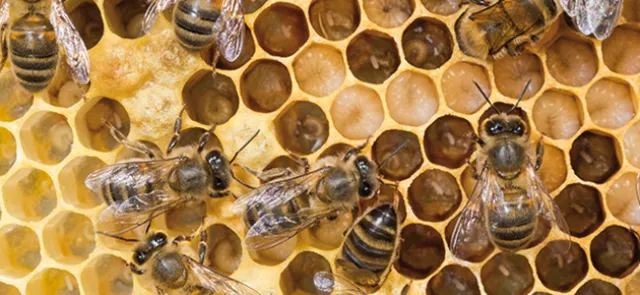
Optimization also applies to geometric contexts. Nature was the first to seek it, whether in the shape of honeycomb cells or in that of certain landforms shaped by water or wind. Mathematicians, too, have devoted themselves to it, now using the tools of differential calculus, which have supplanted the ancient methods to the point of making geometry unrecognizable. The very questions themselves have been transformed by the increased efficiency offered by these methods. But not everything reduces to differential calculus. When combinatorial aspects intrude, problems can prove arduous, to the point that certain seemingly simple statements, like that of the Heilbronn triangles, still resist the sagacity of researchers.


In the mind of a genius
In addition to some of his mathematical works, we have received several documents that inform us about the thinking of young Galois: fragments of texts found in his notes, protest articles that denounce the functioning of the school institution, notebooks that present his first research… This is also the case with his school work: some have only been studied recently, and others remain unpublished!



Indispensable counterexamples
Just as a small drawing is worth more than a long speech, in the realm of mathematics, nothing beats a counterexample to refute a false intuition or an erroneous conjecture. While it is fascinating (or sometimes amusing) for enthusiasts, the search for counterexamples is not a mere distraction. It is fundamental, both in the reasoning process and as a pedagogical tool. It has punctuated the development of mathematics, allowing for example the theory of functions to take shape. More recently, programs using artificial intelligence have highlighted sophisticated counterexamples, refuting numerous conjectures, particularly in graph theory.


Infinity, axiomatic and paradoxes
As simple and fruitful as it may be, the notion of set reveals, once subjected to the merciless analysis of the logician, formidable technical problems. Paradoxes emerge: can we consider the set of all sets? Can a set be an element of itself? Infinite sets raise other questions. How many fundamentally different types of infinity exist? Infinity, self-reference, the paradoxes, lying in ambush, hold quite a few surprises for the imprudent traveler…