Folders
Discover how great mathematicians shaped our world, explore the links between math and other fields like art, music, or even philosophy, and relive the key moments that marked its evolution.

Everyday polynomials
In the unforgiving universe of continuous functions, where objects sometimes so anarchic that they cannot be faithfully represented graphically evolve, the family of polynomials is reassuring. What could be simpler, a priori, than these combinations of monomials 1, X, X², X³…? Besides, from Viète to today's mathematical competitions, they are often called upon in challenges that feature them. Polynomials also make it possible to approach, as closely as desired, the majority of functions we encounter in everyday life. But this effective approximation sometimes comes at the expense of intuition, and therefore of the requirements!

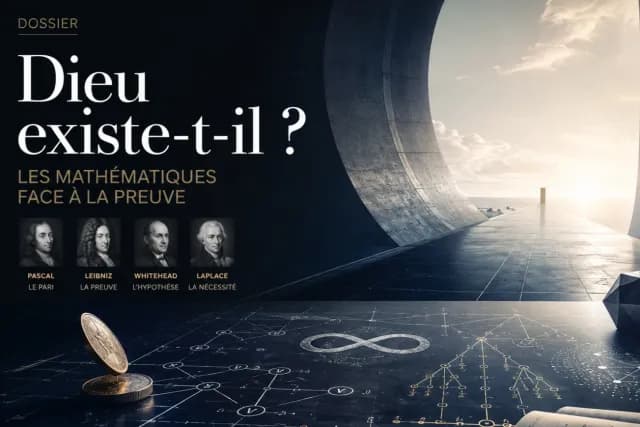
Feature: Does God exist? Mathematics facing proof
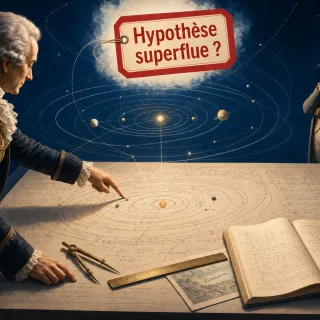
Can we prove God? Can we even reason about its existence? Between Pascal's wager, Leibniz's logical optimism, Whitehead's metaphysics and Laplace's famous refusal to add an unnecessary hypothesis, this feature explores the tense relationship between proof, belief and uncertainty. Mathematics does not necessarily provide an answer, but it shifts the question with rare power.
Feature: From Sacred Texts to Great Mathematical Ideas
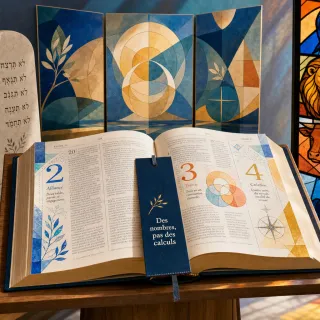
Sacred texts are not only about faith: they manipulate numbers, symbols, worldviews, sometimes genuine thought structures. From the Bible to Descartes, from Newton to Leibniz, this feature follows the unexpected paths through which beliefs, spiritual readings and ancient traditions have inspired mathematical, logical or scientific concepts. A dive into the long history of ideas, where calculation dialogues with meaning.
Fermat's little theorem
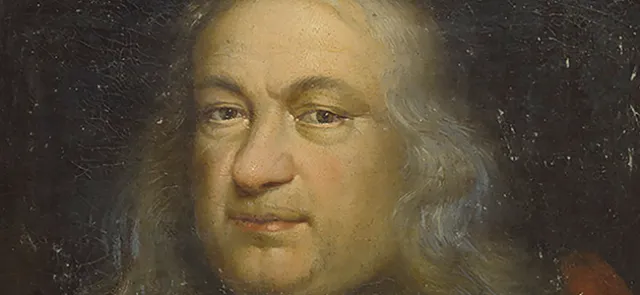
Although less known than its "big brother", Fermat's Little Theorem is, in turn, a gem of arithmetic, and all the more useful! That an abstract mathematical result finds, three hundred years after being established, fundamental applications, is surprising! Yet such is the case, in particular in the field of information exchange on the Internet. This small gem, uncovered by the "masterful magistrate" Pierre de Fermat, provides fundamental cryptographic algorithms, the most well-known being RSA. A gem that hasn't finished making waves: there are still gray areas and conjectures to prove!
Fertile errors
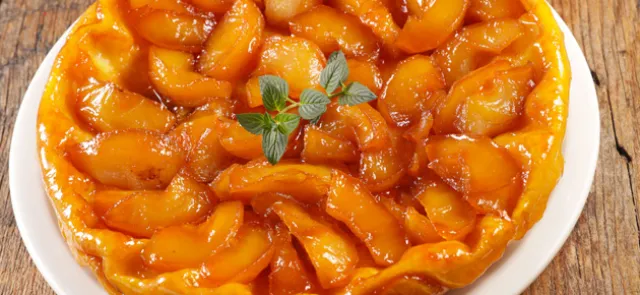
Mathematics is the discipline where errors are most feared and stigmatized. And yet, Fermat was able to make a mistake in a division and deduce a false theorem! Euler, with somewhat shaky reasoning, opened the way to a revolution in arithmetic. Legendre believed he had proved Euclid's fifth postulate by using circular reasoning. These errors, and some others that you will discover, nevertheless had a very positive impact on the history of mathematics: they were the driving force behind many works whose developments continue to fuel scientific thought.

Figurate numbers
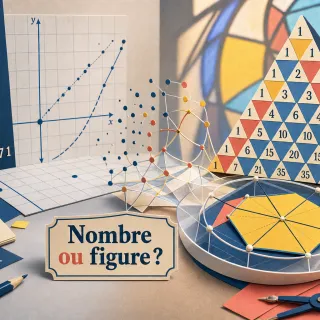
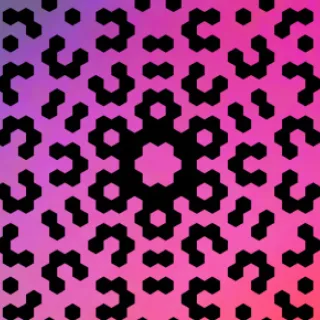
Square numbers, cubic numbers, pyramidal numbers, oblong numbers, pentagonal numbers, hexagonal numbers… A wealth of integers can be arranged in elegant regular geometric figures. Any change of perspective that makes it possible to move from an arithmetic representation to a geometric representation (and vice versa) is fruitful and leads to many puzzles… not always easy. You probably think everything has already been said and repeated (including in Tangente!) about figurate numbers. Wrong! Are you familiar with the work of Renaissance mathematician Francesco Maurolico? With this feature, you will rediscover arithmology!
Finding your way on Earth
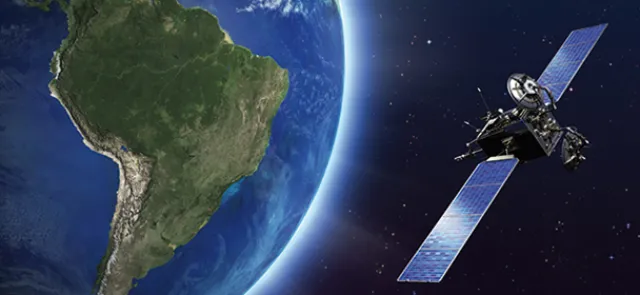
Knowing how to find your position and move around, on Earth as on the oceans, has been a vital necessity for centuries, for economic as well as political or military reasons. From the Jacob's staff, then the sextant, to GPS, inventiveness was boundless in imagining methods to achieve this by relying, most often, on mathematics. One thinks of the use of geometry and trigonometry, but not only that. To create his maps, Mercator, more than a century before the advent of integral calculus and logarithms, designed a transformation of the terrestrial sphere to the plane while preserving angles.
Fractions to observe
A frequent tendency regarding the value 1/2 is to want at all costs to write it as 0.5. The value 1/3, whose decimal expression has no end (0.333…), nevertheless offers a simple example of the superiority of fractional notation over decimal notation, at least in a mathematical context. Decimal expansion has not had its last word, however, since that of a fraction is always periodic, therefore also expressed in a finite form, even if in its own way. On the other hand, there exists a vast set of numbers, such as √2 or π, that cannot be expressed in the form a/b (with a and b integers). Despite this failure to represent all real numbers, fractions nevertheless remain a crucial tool for exploring the fundamental concept of proportionality, in which mathematical notions and school pedagogy intertwine.

From observing nature to mathematical thinking
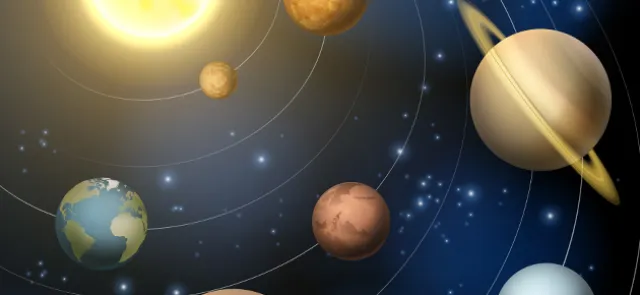
The study of the movement of celestial bodies illustrates the transformation in the physicists' relationship to mathematics. After Newton's synthetic method, Lagrange's analytical method, exploiting the power of integral calculus, gave rise to the theory of differential equations. A century later, under the inspiration of Henri Poincaré, the same problem will carry the beginnings of dynamical systems.
From various angles
The mention of polygons generally refers to the geometric figures of our tilings, often regular. Their apparent simplicity might make one believe that their study is without difficulty, therefore without interest. However, certain operations, such as checking convexity or differentiating vertex and side intersection for a crossed polygon, remain complex. A first task is therefore to seek a definition general enough to bring together polygons with exotic names – acoptic, aploic or isotoxal – into a single family. The question then arises whether one can obtain from all their characteristics a typology that makes it possible to classify and construct them.