Folders
Discover how great mathematicians shaped our world, explore the links between math and other fields like art, music, or even philosophy, and relive the key moments that marked its evolution.
From women scholars to calculators
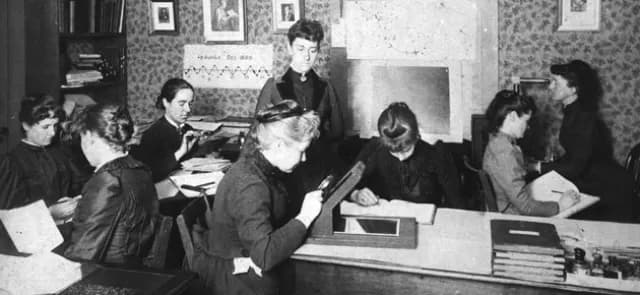
Being a mathematician, professionally or out of passion, encompasses many strategies, diverse paths, with sometimes a little recognition from institutions and the scholarly world, but often in obscurity where it is interesting to delve in order to understand what the different facets of the practice of mathematics by women were. Facing a science in the hands of men, some women thus responded to the spaces left to them in mathematics. Others wanted to conquer them in an even more assertive way. But the idea of the "learned woman" is a pitfall to avoid because society mocks this figure that has no place to be.
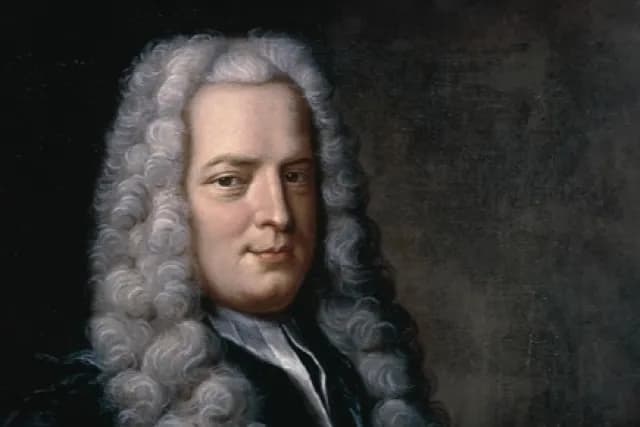
Gabriel Cramer, a 'friendly scholar'
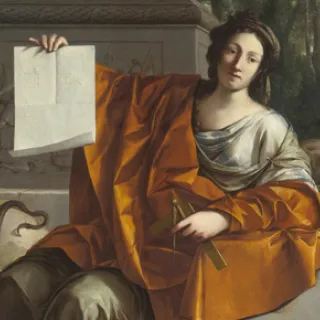
While Gabriel Cramer's name is today inseparable from the famous rule learned in high school for solving linear systems, his work goes well beyond that. Mathematician, professor, publisher, he is also, and this is not a weak word, a 'friendly scholar', to use Daniel Bernoulli's fond memory of him. His masterpiece remains his Introduction to the Analysis of Algebraic Curves, published in 1750 and celebrated by d'Alembert in about ten articles in the Encyclopédie. Let us discover his contributions to algebra, including the proof of what will be called Bézout's theorem, and even the surprising 'paradox' of Euler-Cramer.

Gabriel Cramer, an "amiable scholar"
While Gabriel Cramer's name is today inseparable from the famous rule learned in high school for solving linear systems, his work goes far beyond that. Mathematician, professor, publisher, he is also, and this is not a weak word, an "amiable scholar", to borrow the beautiful memory that Daniel Bernoulli had of him. His masterpiece remains his Introduction to the Analysis of Algebraic Curves, published in 1750 and celebrated by D'Alembert in about a dozen articles in the Encyclopédie. Let us discover his contributions to algebra, including also the proof of what will be called Bézout's theorem, and even the surprising "paradox" of Euler-Cramer.
Games and Probabilities
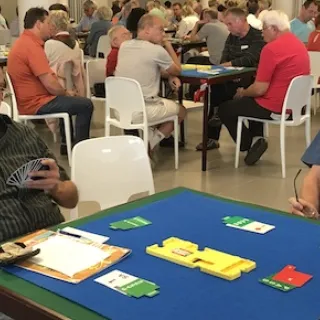
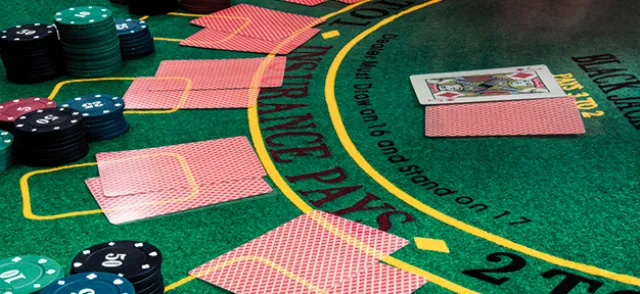
In games with incomplete information, game strategies are not certain, as they depend on information that the players do not have. Probabilities then play a strong role in how to play, the objective being to move toward the situation that maximizes the probability of gain, or even its expected value. But this probability is not always easy to calculate, especially since in certain contexts, such as casino games, the rules change to prevent players from mastering it.


Geometric Constructions
After the basic geometric shapes, more elaborate objects were subjected to the action of the ruler and compass. Can we obtain ellipses or parabolas point by point and reconstruct all their notable points? We enter the universe of constructible numbers... or not. Finding which ones are is quite an art. The power of the techniques developed has invaded number theory and made it possible to resolve — in the negative — a problem more than two thousand years old: the quadrature of the circle!

Geometric loci
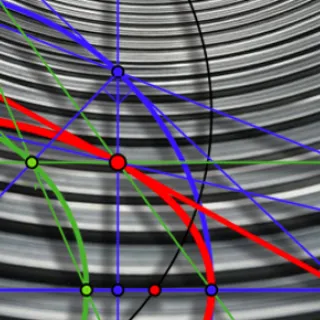
What do the perpendicular bisector of two points, an ellipse, a strophoid or a caustic have in common? These are geometric loci satisfying predefined conditions stemming from purely mathematical considerations or problems drawn from physics. The introduction of analytic geometry followed by differential calculus revolutionized the methods for finding such loci. Ingenious scholars designed mechanisms, specific machines to draw them. The advent of computers transformed the landscape and gave rise to new geometric questions.

Geometric representations
First things first: geometry is the first to benefit from the introduction of imaginary numbers. The representation of complex numbers as points in the plane allows one to cleverly 'encode' a transformation, to judiciously 'capture' the locus of a moving point. Homotheties, similarities and other inversions thus receive a simple algebraic interpretation and become easily manipulable. Thanks to the powerful tool of complex numbers, geometric results can be demonstrated, or even be discovered, such as Marden's theorem. Concepts, like that of fractals, can be highlighted.

Geometry in a New Way
Can we treat geometry as a branch of algebra? This is the purpose of using vector spaces. The results are spectacular: "algebraizing" geometry makes it possible to revisit the oldest of sciences, to generalize it to unexpected or more abstract contexts, to gain rigor, to adopt a more systematic and computational approach, to rethink the notion of space, and to discover new results! This new "mathematics without figures" preserves geometric intuition, but goes well beyond... By extending the notion of distance introduced by Euclidean spaces, the introduction of normed vector spaces, which makes it possible to broaden the field of vector spaces to functional analysis, leads to a new harvest of results and applications.
Georg Cantor
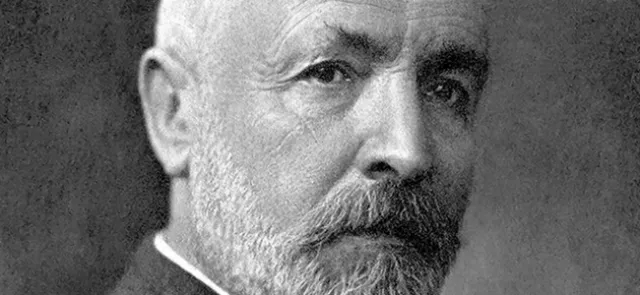
Father of set theory, Georg Cantor proves to be one of the pioneers of a reflection on the foundations of mathematics that will contribute to shifting the history of sciences. At the heart of conjectures, some of which are still unresolved today, sometimes rejected by mathematicians of his time, he will remain the man who sought to tame the infinite. Multiplicity of infinities, continuum hypothesis, unexpected relations between certain sets of numbers, sufficient conditions for there to exist bijections between two sets or, on the contrary, that there are none...\r\nCantor frenetically clears all the groundwork, sometimes making a few errors or being unable to explain certain paradoxes, but he opens the door to a new approach to the foundation of mathematics that will survive him for a long time!
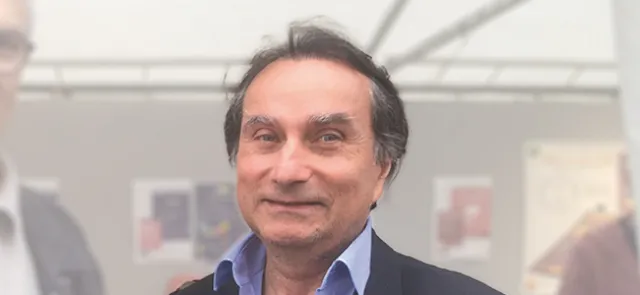
Gilles Cohen (1951-2023)
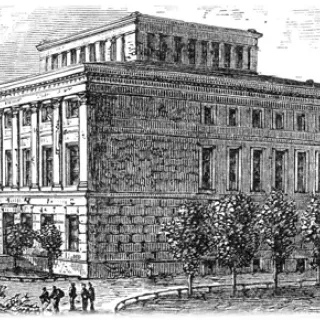
Gilles Cohen had a vision: that of a complete breaking down of barriers between disciplines, where sciences would be an integral part of culture, where mathematics would rub shoulders with other fields of knowledge in conversations. Through his numerous projects, the historic director of POLE Éditions and the magazine Tangente spared no effort to give substance to this approach. Gilles Cohen is no longer with us, but the fight he led is just as relevant today as it was at the beginning of Tangente. Now it is up to all those he inspired to continue to sow seeds of maths. This file is a tribute from the editorial team to Gilles and to his actions in favor of the development of mathematical culture for everyone.