Folders
Discover how great mathematicians shaped our world, explore the links between math and other fields like art, music, or even philosophy, and relive the key moments that marked its evolution.
Divisibility
An inexhaustible source of arithmetic wonders, divisibility criteria are far from all being known… and even farther from being mastered! Everyone knows how to recognize an integer divisible by 2, 3, 5, 9 or 10 or by one of their products. Divisibility by 11 is already a bit less familiar. But what about divisibility by prime numbers such as 13, 17, 19, 23 or 29? You're stumped? Yet there are simple tricks that make it possible to develop criteria for each of them. As early as the 17th century, Pascal had developed some to help merchants. Other original algorithms continue to thrive today, such as those of Vosburgh Lyons.
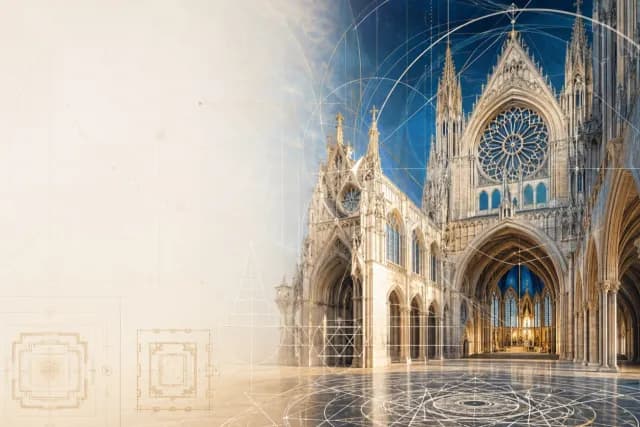
Dossier: Rituals, Sacred Architecture and Geometry
From Vedic altars to Gothic cathedrals, from Renaissance paintings to the orientation toward La Mecque, religious practices have often posed very concrete problems to mathematicians: to build, to align, to measure, to orient, to represent infinity. This dossier explores these places where sacred gesture meets geometric rigor, and shows how rites, architecture and spiritual arts have nurtured some of the most beautiful mathematical ideas.
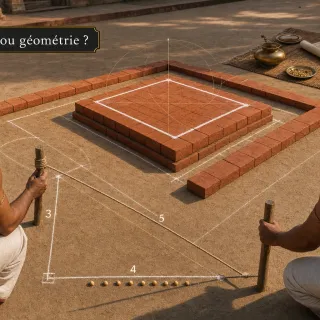
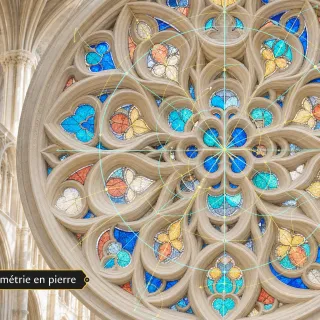
Duality, theorems that come in pairs
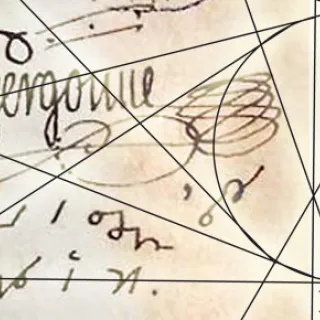
At the beginning of the 19th century, mathematician Joseph Gergonne thought he had discovered a new world when he understood that one theorem was born from another by interchanging the terms 'point' and 'line' in a statement. In a broader sense, this analogy had already been highlighted, particularly within the framework of Platonic solids. Later named duality, it allows, by 'reversing' two 'dual' concepts, to achieve strikingly quick proofs. Duality was the cradle of projective geometry. It is found today in many fields: set theory, logic, linear algebra... Analysis has also taken hold of it within the framework of functional spaces.


Encounters between economics and mathematics
The mathematical models used in economics are recent, but their role has become predominant today (even if our decision-makers don't always make the effort to try to tame them). Applications and illustrations of the main mathematical domains interfere daily with decision and management systems, making them increasingly efficient. Using linear algebra or differential and integral calculus, the economist was forced to become a major user of mathematics. Using concrete examples, readers of Tangente are invited to understand these concepts, not always known to the general public.

Envelopes of families of lines
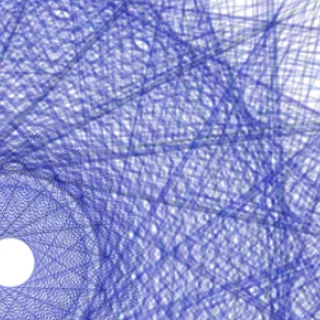
When we consider a family of lines, there often exists a curve that is tangent to each one of them: this is the envelope of that family. Its equation can be computed from the parametrization of the lines. What a delight for the eye to see these geometric figures made of cleverly placed lines along which a beautiful curve winds, seeming to brush against each one of them! Among the curves constructed this way, which can be recognized in folding or in tables of stretched threads, we find some well-known figures such as conics. Light rays reflecting off a surface also draw beautiful curves, called caustics. Passionate about optics and close to Leibniz, the Count of Tschirnhaus understood the importance of differential calculus for studying them. The evolutes of curves, envelopes of normals, also offer beautiful geometry!


Epidemiology
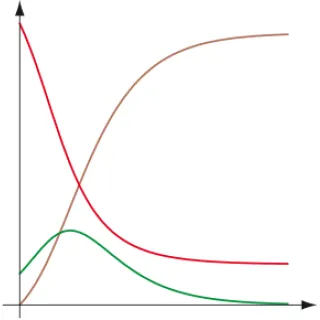
External transmission of microbes or viruses as well as internal propagation of malignant cells follows algorithms whose modeling is governed by a branch of mathematics: that of dynamic systems. Associated with probability theory, the models thus constructed make it possible not only to predict the evolution of diseases, but also to make decisions, both in terms of individual therapy choices and in terms of public policy, for example regarding isolation or vaccination.

Errors and Approximations
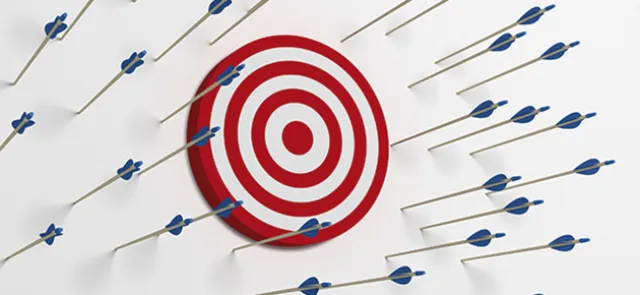
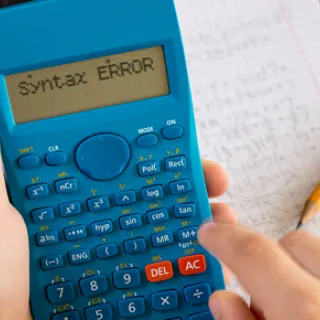
Even in mathematics, kingdom of rigor, one cannot escape the necessity of making approximations or roundings, of bounding deviations or potential errors. The handling of floating-point numbers, which bridges the world of ideas and that of technology, is a fine example. The goal of exactitude pushes one to quantify the uncertainty imposed by technical or material constraints. Inseparable from scientific computing, including with computer tools, approximation can have far-reaching consequences. Yet some errors are famous for having, inadvertently, allowed a door to be opened toward a new universe.
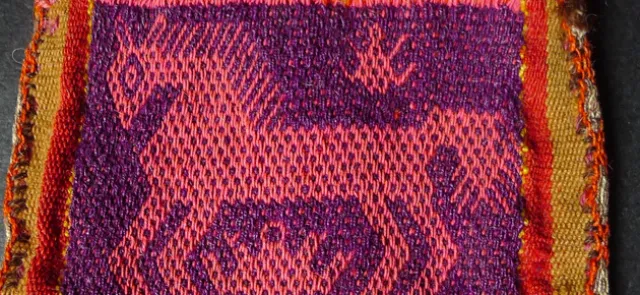
Ethnomathematics, at the crossroads of disciplines
Ethnomathematics is a recent discipline and still little known to non-specialists. It aims to study the expressions of types of rationality among various populations that do not practice mathematics as we teach and usually conceive it. Its history presents itself as a convergence between mathematics and anthropology, where geometry, numeration or algorithms prove to be valuable tools for the study of indigenous cultural practices. Conversely, the mathematical elements that we perceive by exploring these customs question our relationship to the discipline. An objective for this dossier: look at maths from elsewhere but above all differently!

Euclidean Division
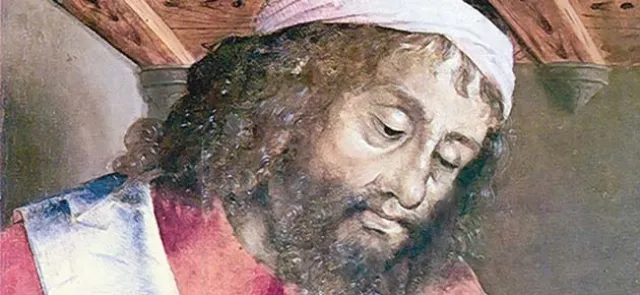
Division, the most difficult of the four elementary operations, has the unpleasant tendency to not always "come out even"; it then admits not only a quotient, but also a remainder: this is Euclidean division. Why does it owe its name to Euclid? It is because with the Greek mathematicians, Euclid in particular, numbers moved from the concrete – with the different algorithms that make it possible to arrive at the result – to the abstract. This approach is indeed the source of many properties, ranging from everyday use (such as the making of calendars) to the most advanced mathematics (such as quadratic residues) via a classic: divisibility criteria.

Euler's formula
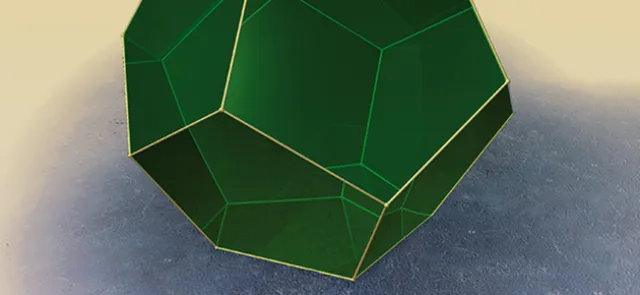
Visual, surprising and rich in applications (the structure of the football is the most well-known), it features in the pantheon of the most beautiful mathematical formulas: V + F = E + 2. While the study of polyhedra already fascinated Plato, the relationship connecting the number of its vertices, its faces and its edges had been anticipated by Descartes before being rigorously expressed by Euler, the Swiss mathematician who gave it his name (it's only fitting!). Poincaré undertook to generalize it, but it is still far from having revealed all its secrets.