Folders
Discover how great mathematicians shaped our world, explore the links between math and other fields like art, music, or even philosophy, and relive the key moments that marked its evolution.
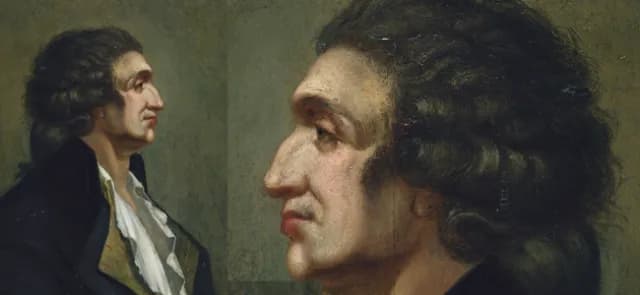
Condorcet, a Committed Mathematician
If Condorcet is known as the great defender of public education, we often forget that he was first and foremost a mathematician. His work in analysis was praised by the Academy of Sciences, even if it must be acknowledged that judgments on his mathematical work were sometimes rather negative. This is undoubtedly largely due to his attempt to found a social mathematics, that is, to apply probabilities to human questions, particularly electoral ones. This stems from a desire to use mathematics to eliminate reasoning errors and prejudices from our actions. It was also from this perspective that he advocated for popular mathematics education just as he opposed the magical thinking surrounding Mesmer's experiments. In the same way, he was politically engaged for women's suffrage and for the abolition of slavery. Condorcet is the author of a rich body of thought where mathematics always serves as a substrate.
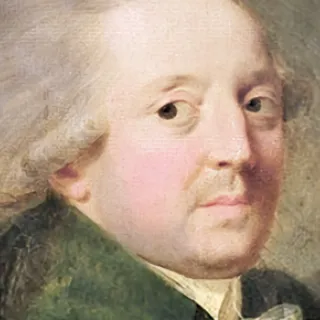

Congruences
The idea of grouping integers according to the remainder of their division by a given number is as old as arithmetic. From the "Chinese remainder theorem", inherited from ancient China and studied up to the 13th century, to that of Fermat, the field would see many advances, until the arrival of Gauss, who would formalize the notion of "congruence" and sign the birth certificate of modular arithmetic. This new and powerful vision of numbers, which allows encompassing the infinity of integers in a finite model, also applies to concrete domains: the proof by nine, calendar cycles, security codes... It is also found in music and produces some nice curiosities, such as certain magic tricks.
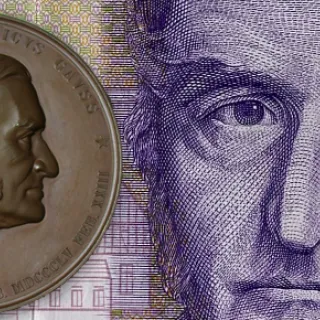


Contests and rewards around math
Rewards stimulate, this is also true for math, and this has been the case for centuries. Still, the authorities need to support these initiatives more, which they are unaware of and sometimes consider elitist… In the 1900s, the French national competition was created in France. Visionary and motivated teachers then developed other types of experiences: less school-like competitions, tests reserved for girls, tournaments with several rounds, group rallies… whose success seems undiminished among young people. Others, older, may receive other rewards: for popularization actions, for multidisciplinary creations, or even, if their research work is universally recognized, the famous Fields Medal!
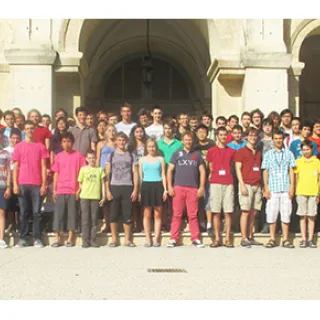


Convexity
Implicitly present in the geometry of ancient Greece, convexity finds its rigorous formulation in the 19th century in analysis, within the framework of solving inequalities. In all the fields that use it, as soon as the object being manipulated is convex, we observe that everything becomes easy! Subtle geometric properties "leap to the eye" or are easily established. The concept invades many mathematical fields (topology, operations research...) before being used well beyond, as in artificial intelligence, finance or economics.


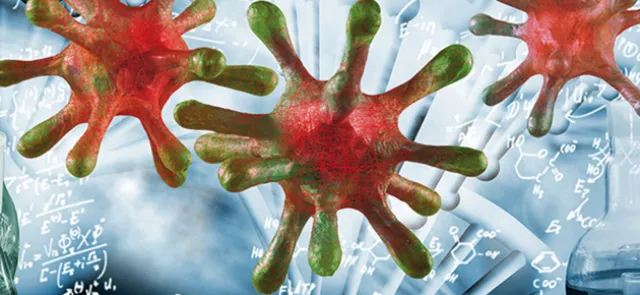
Covid-19, a mathematical approach
Can mathematics also save lives? The Covid-19 pandemic surprised us with its virulence but also with the speed of its spread. Many statistics, sometimes contradictory, have been published. Mathematical models allow us to understand, study, and predict the phenomena around us. But what can be their contribution when so many unknowns remain? By quantifying and explaining their direct consequences on the spread, do the models justify certain measures to be taken, however painful they may be? The mathematical tools used to understand the complexity of living things remain only approximations that can point to explanatory paths, but cannot replace a real understanding of the phenomena. The alliance of mathematics and other sciences will, let us hope, make it possible to make the right decisions.
Create and solve puzzles
Since the dawn of time, tens of thousands of mathematical puzzles have been imagined, many of which continue to captivate those who devote themselves to finding their solutions. These puzzles provoke genuine enthusiasm when the reasoning is surprising, when it draws upon unexpected analogies, when it reveals hidden information. How can the author of mathematical problems demonstrate such creativity to motivate so much enthusiasm? How can he/she reinvent himself/herself when so many topics have been covered?


Curious p-adic numbers
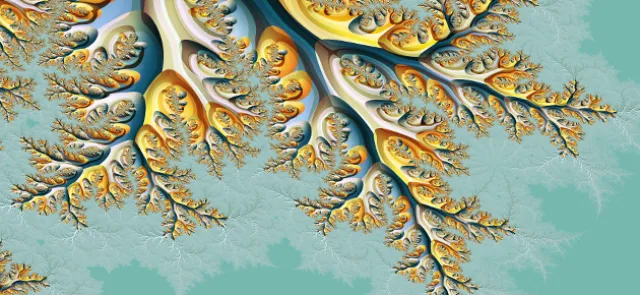
At the turn of the 20th century, the algebraist Kurt Hensel had the genius intuition that led to the invention of p-adic numbers. The resulting system is baffling: no need for a minus sign, the need to develop a new form of proximity between numbers, the appearance of an astonishing topology, and above all… deep applications in all areas of mathematics! The very writing of these numbers, which differs depending on the approaches (they can even be written with "decimals to the left"), is surprising. Thus, a negative number like –1 is represented using an infinite sequence of digits or as the sum of a series one might think diverges. A true poetry of numbers!

Curious p-adic numbers
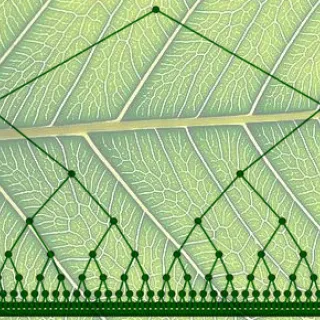
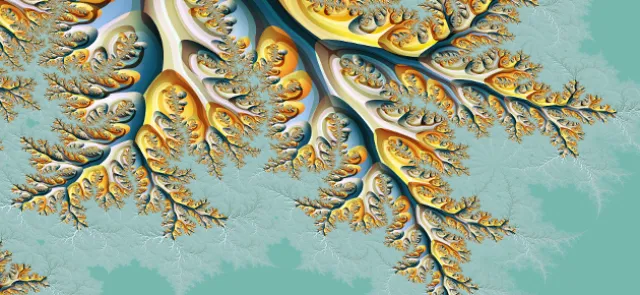
At the turn of the 20th century, the algebraist Kurt Hensel had the brilliant intuition that led to the invention of p-adic numbers. The system thus obtained is enough to bewilder: no more need for a 'minus' sign, necessity to develop a new form of proximity between numbers, appearance of an astonishing topology, and above all… profound applications in all areas of mathematics! The very writing of these numbers, different depending on the approaches (they can even be written with 'decimals to the left'), is surprising. Thus, a negative number like –1 is represented with an infinite number of digits or as the sum of a series that one might think diverges. A true poetry of numbers!

Curves and lines
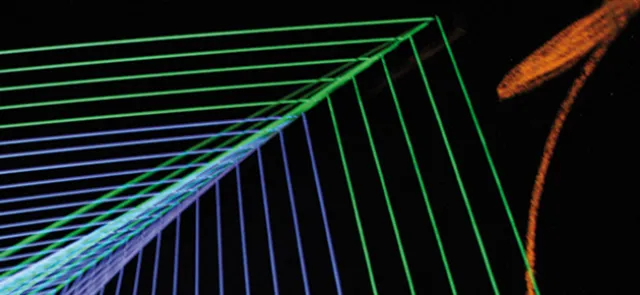
The infinite variety of trajectories in the plane seemed to escape any classification. Yet, smooth curves share a common property: when one "zooms in" on a generic point, one "sees" a line! The notions of tangent and derivative made it possible, quite belatedly, to formalize this observation. The tangent remains today a powerful universal tool for studying curves and trying to uncover their properties. However, be careful not to confuse the tangent to a curve with its asymptote at infinity. A priori, no confusion is possible. But beware of hasty conclusions: projective geometry has surprises in store for you!



Describing the real
Statistics consists first of all in describing in a numerical and synthetic way a given situation. A first question is that of classification: can we, in an automatic way, group individuals into classes, into 'coherent' sets, while relying only on a simple description by a few statistical variables? The answer is yes, in several ways! The reconstitution of the real from the synthesis of data also makes it possible to make decisions: in medicine, for example, it will be a question of testing and measuring the effectiveness of one therapy compared to another, based on small samples. In biology, the large quantity and heterogeneity of 'omic' data (relating to molecules at different scales) require rethinking algorithms and imagining new statistical methods adapted to their characteristics.