Folders
Discover how great mathematicians shaped our world, explore the links between math and other fields like art, music, or even philosophy, and relive the key moments that marked its evolution.
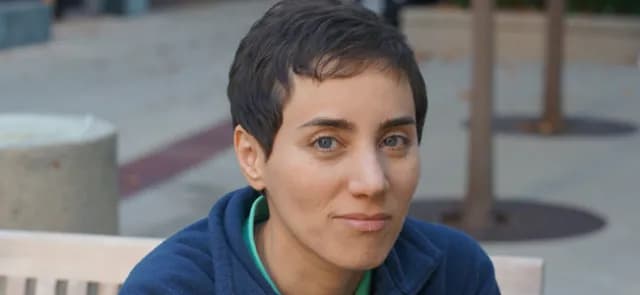
Maryam Mirzakhani, from the surface to the medal
Known to the general public for having been the first female recipient of the Fields Medal, Maryam Mirzakhani is often described by those who crossed her path as tenacious, shy and exceptional in more ways than one. From her brilliant studies in Tehran to her distinguished career at Stanford, passing through her various successes at the International Mathematical Olympiads, her meteoric trajectory is recounted by filmmaker George Cziczeri in his documentary The Secrets of the Surface. We have attempted, in this feature, to give an overview of her work on the geometry of surfaces and the importance of her results.


Mathematical experiments
There are the experimental sciences (physics, chemistry, biology, etc.) and mathematics, you may think. Well, no! In mathematics too, we carry out experiments, and even testing and manipulations (see Tangente Éducation 30). To divide, we test the possible quotients. At a higher level, how many conjectures, throughout history, have been stated tentatively after many attempts! Today, mathematical experiments take new forms, due to the development of computer science. What a wonderful tool the computer is to simulate, make trials, test conjectures or model a phenomenon! We must not forget, afterward, to prove…
Mathematicians in the Great War
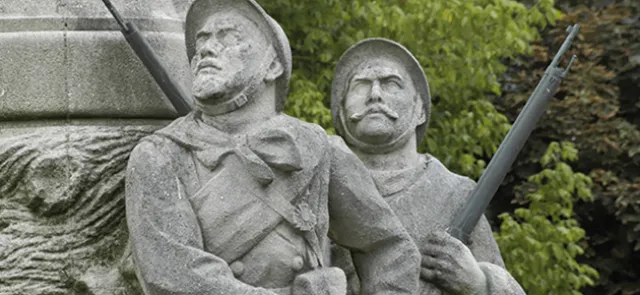
Mathematics played, from start to finish, a significant role in this, one of the deadliest conflicts that was the Great War. Thus, the mathematician Paul Painlevé was involved in developing aviation and organizing operations research which made it possible to best conduct the war. And it is to the tenacity of a brilliant cryptanalyst, Georges-Jean Painvin, that we owe the decryption of the key telegram which would lead the Allies to victory! This conflict, from which many mobilized mathematicians did not return (René Gâteaux and André-Louis Cholesky in France, Eugenio Levi in Italy...) also had very damaging consequences on international scientific cooperation.

Mathematics and Big Data
« Big Data » or « megadata » are invading our world. Thanks to new powerful algorithms, they make it possible to manage in a new way many actions concerning our daily life. More and more connected objects in our daily life exchange data, with the more or less implicit consent of their user. Their heterogeneity forces us to rethink the statistical approach. Their quantity requires revisiting traditional representations as well as classical algorithms, for the benefit of new methods from artificial intelligence: a sector full of future for mathematicians.
Mathematics and Espionage
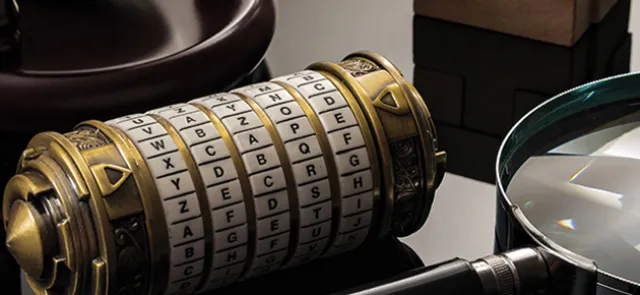
One is sometimes surprised to learn it, but intelligence agencies employ many mathematicians. To such an extent that they are probably the first employers for the profession! The usefulness of cryptology to encrypt or to decrypt confidential messages is no longer in question. But in a world of information submerged by digital data that circulates (too?) freely, securing transactions, searching for the "right" file have become highly strategic issues. Combinatorics, probabilities, statistics, data analysis... have become indispensable and will only continue to develop. Do you want to be a spy, become the next Matha (sic.) Hari? You know what you have left to do!

Mathematics and archaeology
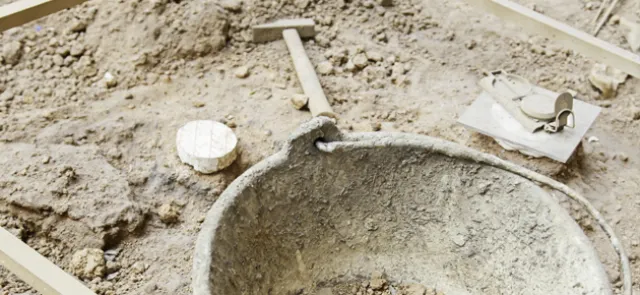
Archaeology is one of those privileged meeting grounds between the humanities and the « hard » sciences. The cutting-edge dating tools such as the carbon 14 method or dendrochronology rely on reliable sources, but these do not always exist. Mathematics is then brought in and provides archaeologists with numerous tools, essentially statistical, such as Bayesian methods, to refine a dating. Factorial analysis of correspondences makes it possible to make connections and bring things together and mathematical models make it possible to consider unusual viewpoints. Thus, some of them, combining human genetics and archaeology, have even made it possible to question the mode of expansion of populations and the myth of great invasions.
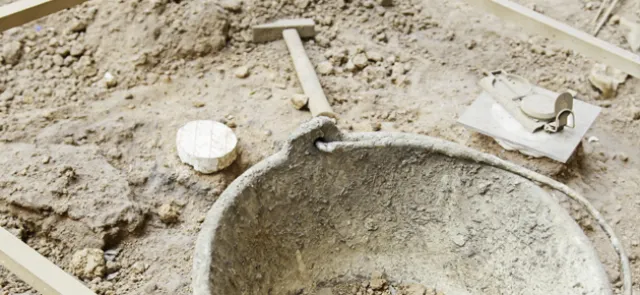
Mathematics and archaeology
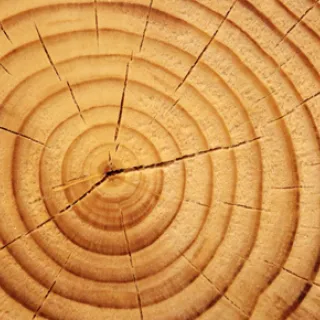
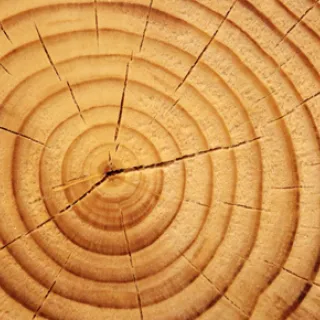
Archaeology is one of those privileged meeting grounds between the humanities and the "hard" sciences. Cutting-edge dating tools such as the carbon-14 method or dendrochronology rely on reliable sources, but these are not always available. Mathematics is then called upon and provides archaeologists with numerous tools, essentially statistical, such as Bayesian methods, to refine a dating. Correspondence analysis makes it possible to establish connections and links, and mathematical models make it possible to consider unusual viewpoints. Thus, some of them, combining human genetics and archaeology, have even made it possible to question the mode of expansion of populations and the myth of the great invasions.

Mathematics and comics
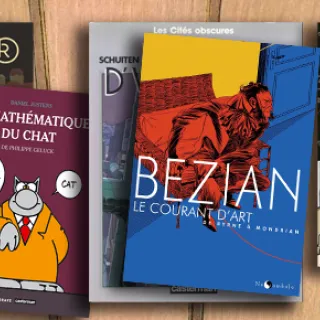
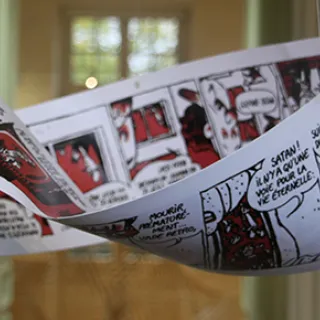
Why would mathematics escape the ninth art? Comics are full of slightly zany scientists like Tryphon Tournesol, Professor Nimbus or the scholar Cosinus, sometimes inspired by famous scientists. Whether it's to tackle a character, a concept or a story, the graphic form adapts wonderfully to mathematical representations. Another approach, that of constrained drawings, is explored by the Oubapo, Ouvroir de bande dessinée potentielle. Let yourself be seduced by this teeming universe and discover the work of three iconic contemporary artists whom mathematics leaves unmoved: Marc-Antoine Mathieu, Midam and Étienne Lécroart.
Mathematics and language _ a moving boundary
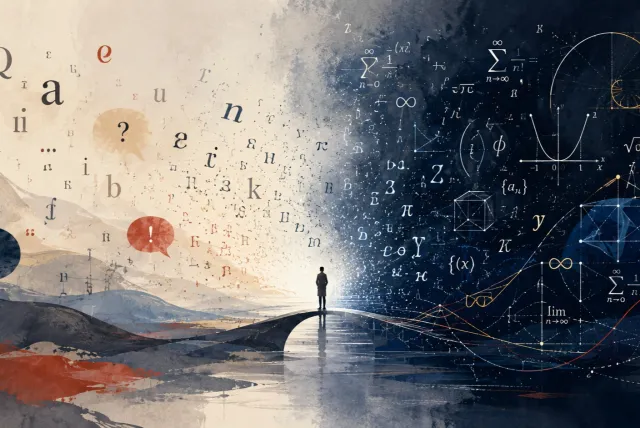
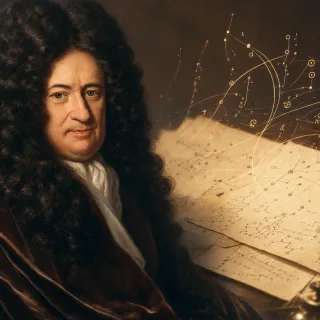
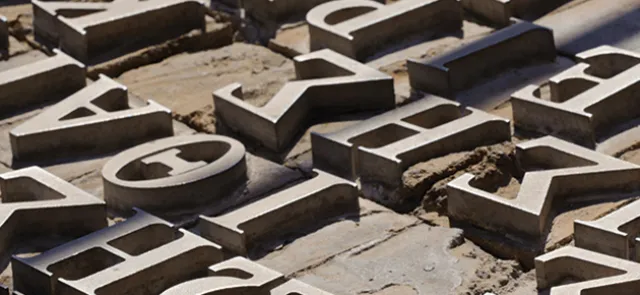
Language and mathematics have a complex relationship that neither philosophy nor neuroscience has managed to establish. Some thus imagine that mathematics is a language among others. It is from this perspective that Leibniz worked on a universal language modeled on algebra which would allow, in addition to mutual understanding for all, to establish, through a "calculation", the truth of stated propositions. Neuroscience, for its part, teaches us that at the cerebral level, mathematics constitutes, for the brain, a distinct semantic system, independent of natural language and rooted in universal numerical and spatial intuitions. The question of the relationship between mathematics and language remains, in the age of artificial intelligence, completely open.
Mathematics and languages
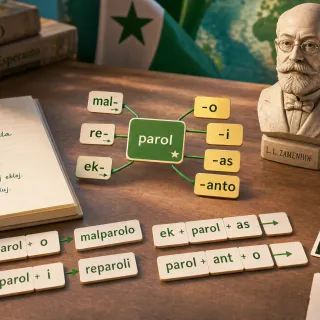
One of the great strengths of mathematics is the ability to question the language in which they are written: which word to choose to name an abstract concept? How to express an idea so that the vocabulary used does not slow down its assimilation? Better yet: mathematics can also take language itself as an object of study! From this approach stems the modern theory of information: formal languages, programming…