Folders
Discover how great mathematicians shaped our world, explore the links between math and other fields like art, music, or even philosophy, and relive the key moments that marked its evolution.
Maths and theater
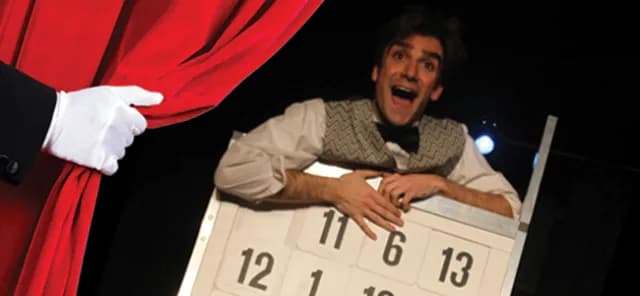
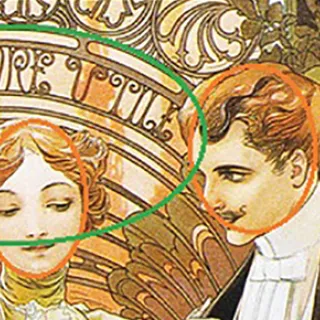
Not always apparent: mathematics can constitute a reservoir of inspiration for creators and give rise to plays about the lives of famous characters, stagings of abstract concepts or narratives around the teaching of the discipline. One can even find lessons in mathematics in Molière and Ionesco. Maths develop in many theatrical forms: solo performance, show, lecture, participatory theater, clown, mentalism, burlesque show, school performance, story, tale… The enthusiasts of 'transmission differently' are not lacking!

Maths et cinéma
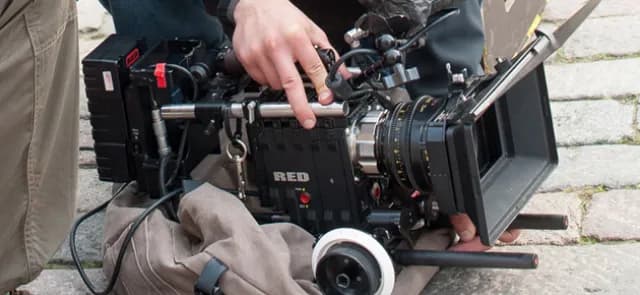
Cinema was made possible by the determination of great visionary pioneers combined with technological advances. How to create a special effect or illusion on the big screen? How to suggest a curve, evoke a shape, make movement and the third dimension visible? The pioneers - the Lumière brothers, Méliès... - used theatrical tricks. Today, we use mathematics! Morphing and fractal imaging are taking the lion's share in an industry that increasingly calls upon geometry, topology and algorithmic techniques. Aspiring graphic designers and future special effects creators, get your maths ready!


Maths-Vives, mathematics to experience
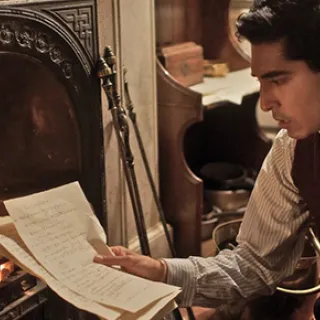
Maths-Vives is a research program focused on living things, the environment and society. Equipped with funding of fifty million euros as part of the France 2030 investment plan, it is led by the CNRS. Its objective is to integrate mathematics, not only as tools serving other disciplines, but as a driver of reflection and creativity. Offering numerous partnerships with scientists from all backgrounds (medicine, biology, agriculture, geosciences, physics, economics, geography, finance, computer science…), it currently concerns ten research projects selected in 2024.


Mechanisms and Mathematics
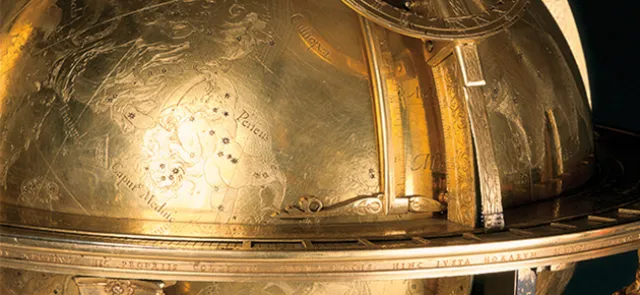
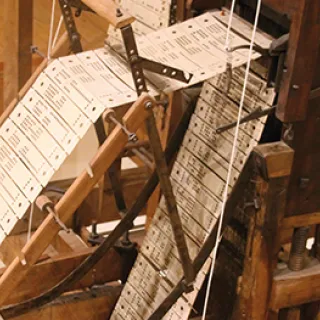
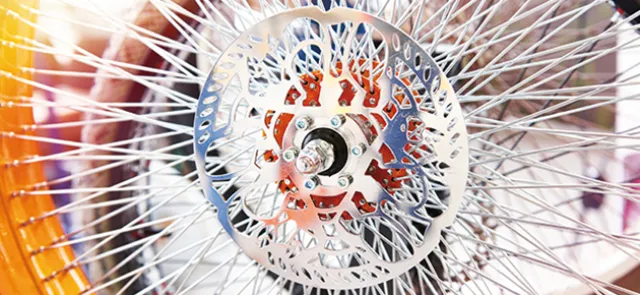
A mechanism is commonly perceived as a device for combining movement. Thus, physics, modeling, mathematics, movement and therefore technologies and mechanisms are intimately linked. They manifest themselves in a thousand clever and elegant ways, through gears, Archimedes' screw, clocks, engines, looms, punched cards and all the machines that human ingenuity has been able to design. Today, electronics has transformed the landscape by integrating other subtle movements: that of electrons and the transmission of information.

Medical imaging
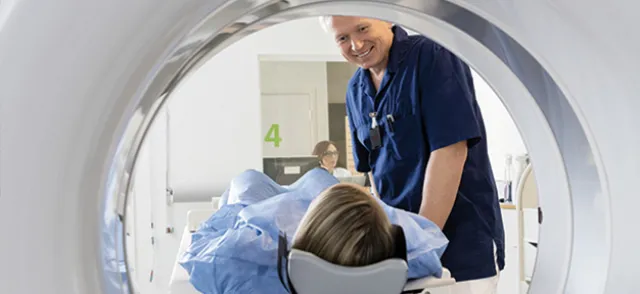
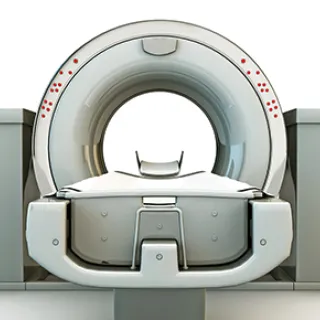
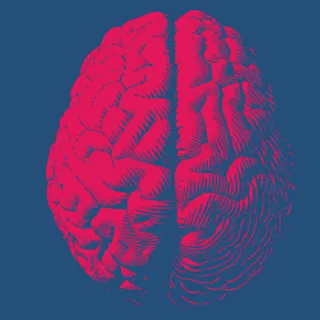
Mathematics is increasingly present in medicine, particularly for the needs of medical imaging. Thus, for over a century, non-invasive techniques have made it possible to see the invisible. From obtaining the image from the data provided by physics, through the various phases of its improvement, to its interpretation to aid in diagnosis, processing algorithms are constantly being improved. Everyone has heard of the scanner, which via tomographic reconstruction makes it possible to obtain cross-sections of objects. The mathematics of medical imaging are also used to simulate the functioning of an organ or to verify the design and placement of prostheses. And when it comes to studying a complex object like the brain, visualization proves to be particularly sophisticated.
Movements and trajectories
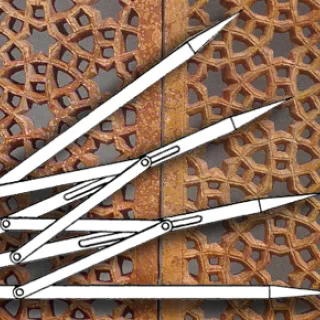
A curve can be seen in its entirety as a static object, but also as the trajectory of a point moving in space. From dynamics to kinematics, curves naturally allow us to represent the movements of bodies, from the most voluminous celestial bodies to the most minute particles or light rays. Another link between theory and practice is materialized by mechanical systems, these sometimes astonishing assemblies that can be used to draw curves.


Multiple uses
The richness of curves is exploited in many fields. In mathematics, they have served to solve geometric problems, sometimes impossible with a ruler and compass, such as the trisection of the angle or the duplication of the cube. More generally, their visual character gives rise to a thousand enigmas, problems or conjectures. What is the ideal shape of a branch for a vehicle to travel on it? If many curves come from the observation of movements, conversely, others make it possible to provide solutions to problems in astronomy or physics. And, like all beautiful geometric ideas, they have their own aesthetic that is found with joy in art or design.
Name of a number!
Positive integers are the simplest to conceive, they are even called 'natural'. Yet they contain rich and surprising properties. Some of them bear the name of the person who studied them, or even, one might say, discovered them. Whether they answer a counting question, possess remarkable arithmetic properties, or denote orders of magnitude that are difficult to conceive, encountering some of these 'numbers named after…' is an opportunity to explore the history of mathematics.



New horizons
Non-Euclidean geometry, projective geometry: each new vision extends the concept of line. The notion of 'the shortest path from one point to another' gives a glimpse of the notion of geodesic on a surface, with surprises and fun problems. And computers get involved to help us construct lines!

Numbering systems
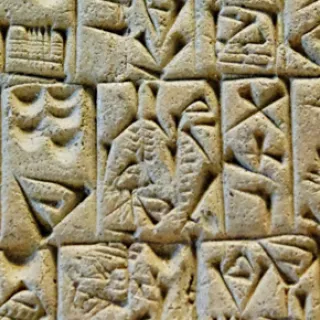
Civilizations have doubled their ingenuity to estimate quantities. They created systems based on new alphabets or symbols. The natural reaction was to use the decimal system, but other bases were invented, such as base 60, still thriving today to define time. Coming from India, positional notation made it possible to use algorithms to perform operations. More recently, the binary system proved essential in the explosion of computer science and data science.