Folders
Discover how great mathematicians shaped our world, explore the links between math and other fields like art, music, or even philosophy, and relive the key moments that marked its evolution.
Political commitment
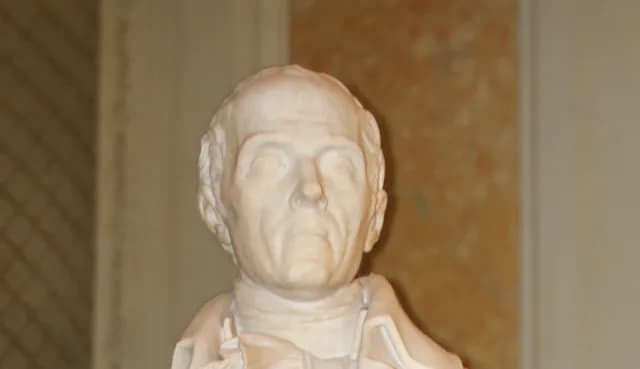
Laplace is the perfect example for refuting the idea according to which scientists, inaccessible and walled up in their ivory tower, are comfortably isolated from the world around them. Although he stayed away from revolutionary turmoil, he nevertheless became involved in politics. As senator and chancellor, he signs, for example, the deposition of Napoleon. Beyond this, his position at the Academy of Sciences and his commitment allow him to be at the heart of the development of the Grandes Écoles in France. This aspect of his life still remains little studied by historians.

Power of a point
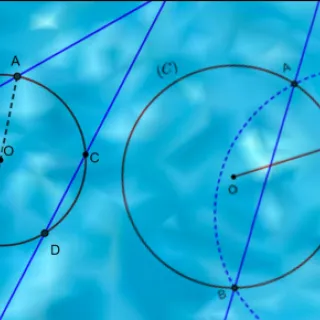
A point and a curve: that's all you need to define a geometric concept of formidable effectiveness, the power of a point. The most well-known case, although absent from today's school curricula, is the power of a point with respect to a circle, or more generally with respect to a conic. Since Antiquity, Euclid could have brought out this concept! Yet one would have to wait until the 19th century for Jakob Steiner to undertake a systematic study of these transformations. The power of a point considerably simplifies the search for geometric loci and leads to the concept of duality, thus opening up vast and new perspectives.

Powers of numbers
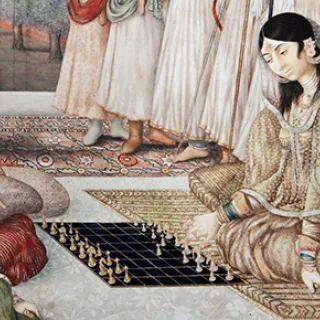
What do Fermat's Last Theorem, Catalan's conjecture, counting rice grains on a chessboard, and Waring's problem have in common? They all involve powers, and they have occupied (and still occupy!) mathematicians for sometimes centuries. Numbers lend themselves well to this 'fifth arithmetic operation' that is raising to a given power. From then on, experiments flourished, from which some of the most famous conjectures and some unexpected applications would emerge. In cryptography, ensuring the confidentiality of exchanges requires using very large numbers, and exponentiation is a tool that makes it possible to obtain them with a moderate cost in terms of computation time.
Practices of yesterday and today
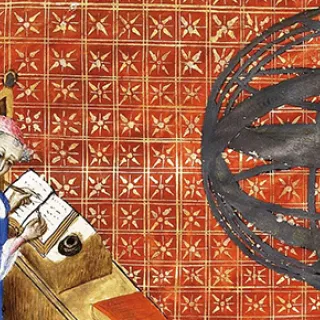
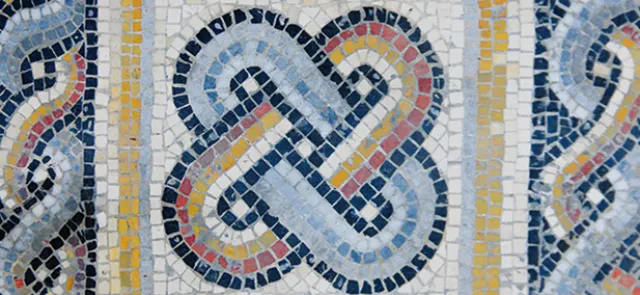
Redoubling ingenuity, the artisans of mosaics adorning the monuments of the Roman Empire, the builders of the Middle Ages or the designers of sangaku, these astonishing Japanese tablets, have widely used the two favorite instruments. But this is also the case (virtually) of today's dynamic geometry software, which always meet the same needs: copying lengths and connecting points. As for the very recent mathematical theory of origamis, it relies on... the absence of a ruler and compass, but the properties of lines and circles are still just as present!

Prodigious Terence Tao
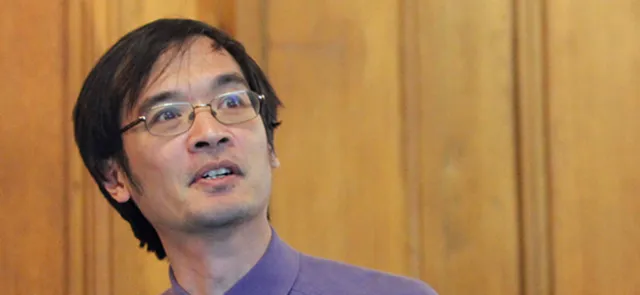
Terence Tao is the most famous prodigy in mathematics of our time. In this dossier, you will learn a lot of information about him, his studies, his work, the results he has obtained, the awards that have been bestowed upon him... His activity belies the idea that mathematics has become so vast that a mathematician can no longer, on his own, encompass its entire breadth. To his mathematical successes is added a formidable willingness to share. His blog, of inexhaustible richness, bears witness to this, where "Terry" dispenses a thousand pieces of advice, from specialized subjects where his answers help advance research, to more general ones, such as how to approach managing a career as a mathematician. His commitment to collaborative projects goes in this direction, through his involvement in "open science" or the energy he puts into the service of Polymath projects. Let us set out to discover this outstanding mathematician...


Progress born of industrial innovation
Mathematical expertise is at the heart of the demand from many industrial sectors. The amount of mathematics mobilized by certain fields, such as aerospace or 5G, is impressive. In image processing, they make it possible to manage compression, transmission, denoising or restoration of digital files. Entire areas of mathematics are being created to meet these needs. This is the case of information geometry, born from the desire to geometrize spaces of probability distributions. HPC (high-performance computing), which consists of using multiple units to perform very intensive calculations, is in full development, in particular thanks to the Total group, which was a pioneer in this field.


Proportionality and geometry
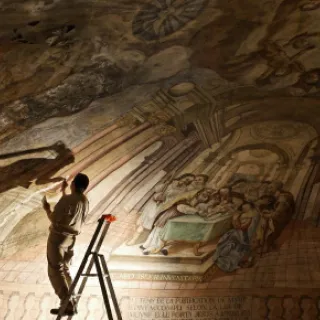
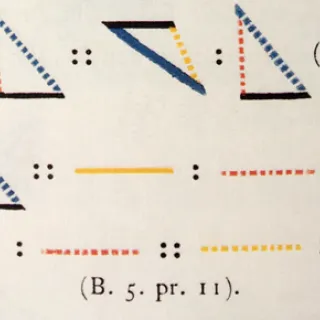
From the beginning, proportionality, which is found in algebra with the rule of three, has become essential in geometry. It is encountered to prove the incommensurability of certain lengths or to evaluate areas and volumes. In Euclid, it is an indispensable tool for many proofs. Very closely linked to parallelism configurations, through the famous Thales theorem, it gave rise to famous results, such as Ceva's or Menelaus' theorems. Less known, antiparallelism and the associated ratios opened the way to new approaches. We owe to them the power of a point with respect to a circle or the inversion transformation.
Pythagorean triples
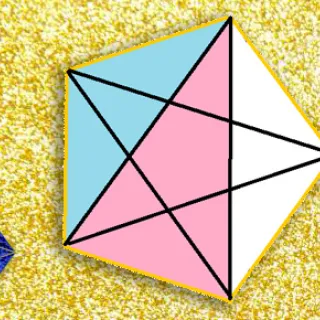
Which of our readers does not know the triple (3, 4, 5), embodied by the 'rope with thirteen knots' of the builders of ancient Egypt and then the Middle Ages? Why 3, 4, 5? Because 3² + 4² = 5², it's as simple as the Pythagorean theorem! This relationship links the lengths of the three sides of the most elementary right triangle there is. Beyond these three numbers that have become mythical, exploring Pythagorean triples will not only make it possible to know that the Pythagorean theorem was already known long before the birth of the most famous scholar of Antiquity, but also to uncover the secrets of these groups of three integers, through the procedures that will make it possible to construct them. This will also lead to studying the different properties of all varieties of 'Pythagorean triangles'. But do you know that Fermat, to show that 'the area of a right triangle cannot be a square', deduced his method of 'infinite descent'? The journey through this theme holds beautiful surprises!


Quantum mechanics
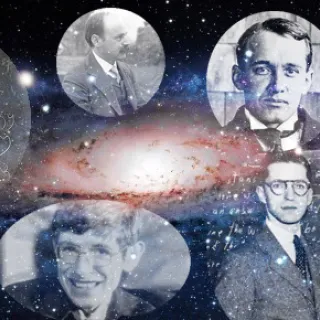
The relativistic revolution had already dealt a blow to Newtonian theories. The case seemed settled: physicists finally had "the great universal theory" that would allow them to methodically explore the universe, from the infinitely large to the infinitely small. The infinitely large, perhaps! But the subatomic world still obstinately refuses to submit to classical laws. New theories reign supreme in these realms. Mathematics was called upon to come to the rescue in order to express, formalize and explain the many phenomena, counter-intuitive to our senses and our scales, that occur in quantum mechanics.

Relativity
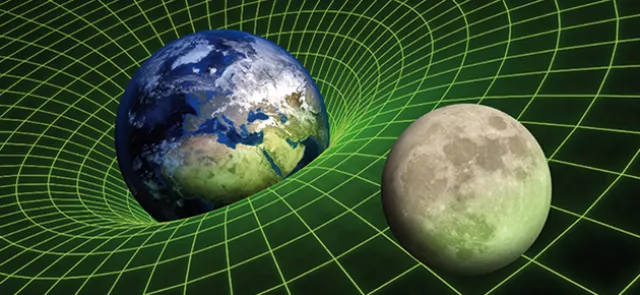
The arrival of relativistic theories imagined by Albert Einstein at the beginning of the 20th century overturned our understanding of the universe. The equations of the new model hold their share of mathematical surprises, and therefore of fascination. Gravity becomes a manifestation of geometry, non-Euclidean spaces impose themselves, the formation of theoretical singularities suggests the discovery of black holes and other very concrete objects, tensors impose new formalisms… A new world, where cosmology is based on mathematics, enriches itself day by day and it is far from having revealed all its secrets!