Folders
Discover how great mathematicians shaped our world, explore the links between math and other fields like art, music, or even philosophy, and relive the key moments that marked its evolution.
Numbers, operations, structures
Numbers are at the center of the mathematical edifice. After a long period where they were apprehended through intuition, the need arose to conceive them with the help of a rigorous axiomatic system; the one introduced by Peano for natural numbers is the finest example. Set theory subsequently led to the construction of rationals, reals, and complex numbers. Drawing inspiration from these methods and generalizing them, it enabled the definition of more general structures like the notion of group and to provide a rigorous foundation for geometry within the framework of vector space theory.

Old-fashioned fractions
When discussing fractions, we often begin by evoking the idea of fair sharing. Yet, even when sticking to their common definition, this approach does not do justice to the richness and variety of uses one can make of them, ranging from the definition of our musical notes to the handling of gears. For its part, Thales' theorem makes geometry equally fond of fractions. The so-called Egyptian fractions, that is to say those with numerator 1, seem to have been the first to have been considered. Their name alone indicates that their age is counted in millennia, and we may explain this by the fact that in a sense a third, a quarter, a fifth, and more generally an nth are the prime fractions, from which all others are derived by simple multiplication by an integer.

Omnipresent polynomials
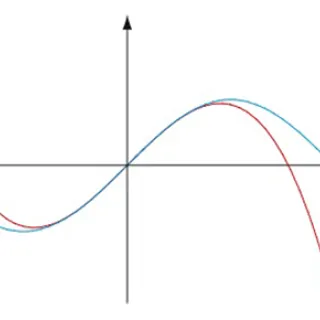
Algebra, analysis: the double nature of polynomials makes them essential. In algebra, they act a bit like numbers; we can add them, multiply them, divide them, factor them... In analysis, they metamorphose into functions. Their simplicity and flexibility allow them to facilitate the notion of integration and to approximate other, more complex functions, with a fascinating property: their ability to "hug" the graph of any differentiable function on an interval. And polynomials haven't had their last word! They still hold many surprises for anyone who ventures into their study.
Open problems and conjectures
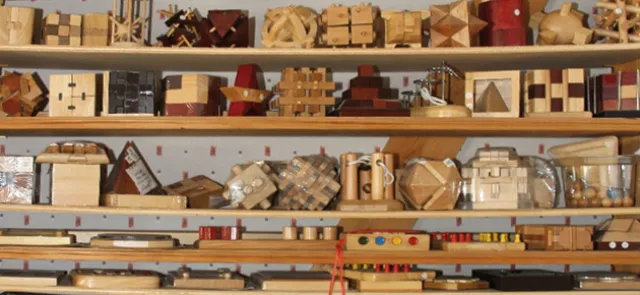
They are the driving force of mathematics. Those that spark curiosity, tease researchers and trigger breakthroughs. Who are they? Open problems, conjectures, hypotheses! The many conjectures that pepper their history, such as Goldbach's in number theory, Toeplitz's in geometry or Poincaré's in topology, are examples. Conjectures, once solved, call for others creating an endless chain of knowledge progression. A conjecture is a result that is suspected, for which no counterexample has been found, but which is not proven. In an open problem, on the other hand, the sought result is not known. All branches of mathematics are full of them: topology, combinatorics, analysis, probability, statistics... Even in geometry, objects as simple as polyhedron nets still escape our understanding!
Operations over time
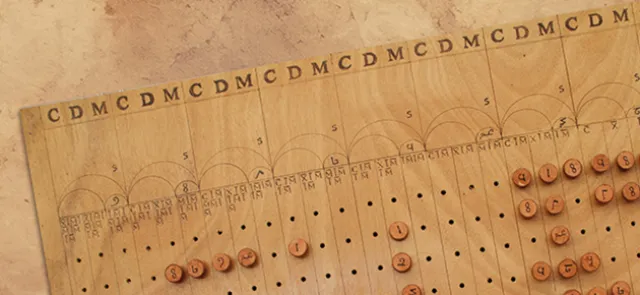
Today, schoolchildren still learn to perform calculations "by hand" by setting out their arithmetic operations on paper. These well-known algorithms are not the only ones that exist. Several techniques have evolved over time; the ones we are taught result from choices that may seem arbitrary. In Antiquity, it was abacuses that were used to represent numbers and add them. In the 17th century, John Napier developed his famous rods for performing multiplications. All these tools had to solve the same major problem: handling carries!
Optimization
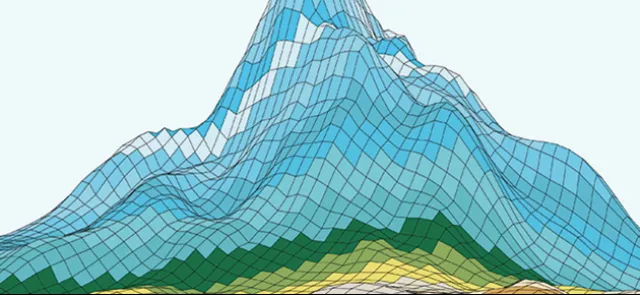
Human activity is subject to constraints of all kinds: material, human, financial, spatial, temporal… This limitation of resources explains why a large part of "applied mathematics" consists of optimizing a criterion under certain constraints. This targeted dossier proposes to explore a lesser-known and non-technical facet of optimization: yes, without sophisticated analytical machinery, with only a good understanding of simple algebraic or geometric concepts, one can already obtain astonishing results!

Optimum and graph theory
The notion of optimum often evokes that of maximum or minimum of a function which, like a fluid, would evolve in a continuous manner, and even differentiable. The arsenal of analysis and differential calculus then comes to mind. But optimization also often concerns quantities that can take only a finite or countable number of values. If the range of techniques from analysis is then of no use, discrete mathematics and graph theory take over. It is the computer, a sequential machine best suited to combinatorial environments, that will then most often be called upon to solve optimum problems.


Orientation
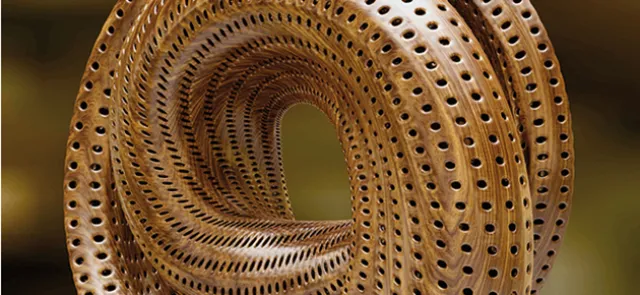
The notion of orientation makes it possible to greatly enhance the power and applications of geometry. How to find one's way on a line, on a plane, in space? Why are some objects, like the famous Möbius strip, said to be "non-orientable"? Why do clock hands turn in one direction and not the other? Not all orientation choices are arbitrary and, as is often the case in the history of science, it took several decades to move from intuition to rigor on these questions. If you feel a bit lost, you should find your way through the following pages…

Paradoxes to think about
A situation is generally described as "paradoxical" without really knowing what the notion of paradox means. If this word is vague, it is because the concept of paradox can take on many meanings, particularly in mathematics: a result that seems absurd, a result that seems to go against a theory, or even a situation where one no longer knows what to conclude. The common point of all these meanings is the astonishment one feels, an astonishment that is beneficial for the mind because it forces one to ask questions: have I been fooled by my intuition? This will be the case with Simpson's and Penney's paradoxes. Will I be able to find a convincing answer? We will see this with the two envelopes paradox. Does the conceptual framework of the problem have a blind spot? This will be the adventure of Allais's paradox. We will end with the aperitif...


Pascal's triangle
The "Pascal's triangle" is a strange array of numbers, imagined long before the French philosopher and mathematician: from India to China through the Arab-Muslim world, it has fascinated generations of scientists. We acknowledge the French scholar for giving it its full importance and for justifying many unexpected formulas that interact between its elements. We know the use of this combinatorial object in probability theory, in the binomial expansion. Perhaps we are unaware of all the corners where it hides…