Folders
Discover how great mathematicians shaped our world, explore the links between math and other fields like art, music, or even philosophy, and relive the key moments that marked its evolution.

Should the bac be abolished?
The bac, created in 1808, is "a social and political institution," as sociologist Émile Boutmy already wrote in… 1899. If it was a benchmark, both in university and social terms, until the mid-20th century, it no longer plays this role, devalued by its level, in constant decline, and by its growing but increasingly artificial success rate. Yet it has its defenders, in a world where profound reforms are not the order of the day, and where, as Jean Dhombres explains regarding mathematics programs, one prefers to modify the existing through small touches that are juxtaposed until there are no longer any true guiding principles. This is what will feed a sensitive case!



Societal challenges
From electoral redistricting to the organization of a hospital service, through the protection of biodiversity or the use of renewable energies, the applications of operations research concern very varied, sometimes unexpected, domains where its modeling methods and tools help humans in their decision-making. The goal: finding an optimal solution (or at least "not too bad") among a large number of possibilities. O.R. enables the design, configuration and operation of complex systems that are of great importance for businesses or for local authorities.

Spaces to discover
Hilbert spaces, Banach spaces, normed vector spaces, topological spaces, measurable spaces... Conceptualized at the end of the 19th century and the beginning of the 20th, spaces are indispensable to the work of today's mathematician. We can imagine them as 'working environments' that provide 'tools' (distances, norms, scalar products, measure...), allowing us to formalize the notions involved in solving problems (convergence, limit, continuity...). We then discover that ideas initially appearing on sets of numbers or vectors can apply to more complex sets, like spaces of functions. A small guide to find one's way in spaces.



Statistics and medicine, a marriage of convenience
The art of healing is not an exact science: an identical treatment, curative or preventive, applied to several groups of sick or healthy individuals, often yields paradoxical results, given the astonishing variety of living things. Whether it is to compare the effects of different drugs or placebos, to determine an ideal body mass index or to quantify the reliability of a screening test, the use of statistical and probabilistic reasoning proves indispensable in medicine.


Statistics today
Statistics is neither a science of the past nor a science of the future: it is firmly rooted in the present! The diversity of its applications demonstrates its importance in today's world. A quick overview of current topics will convince you: demographics and pension financing, purchasing power, health and manufacturing of innovative drugs, social networks... There are many challenges that those who study it face today. Among them, that of statistical confidentiality is crucial: how to process sensitive data without it being disclosed? It is still statistics that is behind the advances in artificial intelligence, for example the famous conversational robot Chat-GPT.



Structuring mathematics
The multiplication of mathematical discoveries leads, at the end of the 19th century, to the need for a structuration that involves questioning the foundations. The many paradoxes constructed within the framework of old theoretical systems lead to rethinking the definitions of various concepts previously perceived intuitively, such as infinity, sets, numbers… The work of Euclid having opened the way to an axiomatic approach, this is systematized throughout the 19th and 20th centuries with the work of Cantor, Hilbert, Peano, Russell, Gödel among many others. This approach is made possible by the formalization of logic, which results in the automatic processing of reasonings, opening the way to modern computer science.

Study
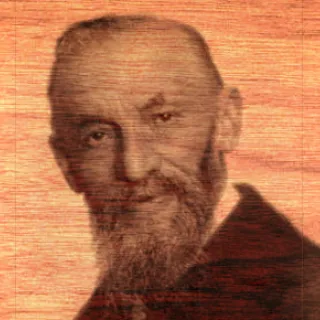
For a mathematician, understanding surfaces generally means doing differential geometry or integral calculus. What progress has been made since the ancient Greeks, who had to resort to fearsome tricks adapted to each case encountered! For the practitioner dealing with a specific case, for example the study of the Earth's surface, the question is rather to find specific tools for the particular surface to be studied. From virology to soap bubbles, concrete cases are not lacking. Various questions arise, whose impacts are often unexpected, sometimes leading to considerable applications.

Summing series, even divergent ones
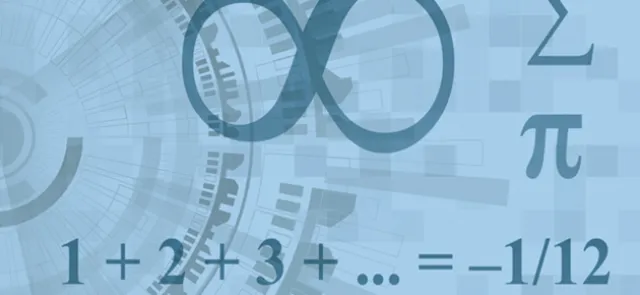
Infinite sequences of numbers have always puzzled mathematicians, who have consensually developed the notion of convergence and limit. But everything changed when they became interested in the successive sums of these sequences, to which they gave the name of series. Convergent series (the "nice" ones), studied by all those destined for a scientific career, pose no problem. They allow defining the sum of an infinite number of terms, as long as the "partial sums" converge to a limit. But the others, officially "divergent" (the "wicked" ones), were at the origin of very different, sometimes astonishing approaches, creating true philosophical conflicts between famous scientists. Euler, Abel and some pioneers ventured to imagine defining sums for them, finding some wonders… which today are the subject of a beautiful theory!


Surveying and measuring
Since the beginning, humans have needed to predict, and therefore to measure. How to evaluate the distance between two buildings, two cities, two mountains, two planets? The GPS integrated into our phones and our cars would almost make us forget that there was a time (not so far away) when estimating a distance was a scientific feat! This began with surveying in a nearby environment, then we became interested in distances that are directly inaccessible, allowing us to find our location on land, at sea or in space. New techniques, often relying on clever mathematics like triangulation, were imagined, as well as a whole range of challenges: finding the shortest paths, determining equidistance curves, placing points as regularly as possible on a sphere…



Taylor expansions
What better than a polynomial to approximate, near a point, a complicated function? Better yet: if the latter is "sufficiently regular", the coefficients of its Taylor expansion are its successive derivatives; this is the famous Taylor formula that teaches us this. Yet we get surprises: the adequacy between Taylor expansion at any order and Taylor development is sometimes called into question. Marvels of mathematics, and in particular of analysis, nobody can do without Taylor expansions. They are indeed indispensable in limits of functions, in the study of particular points of a curve, but also in probability calculations.