Folders
Discover how great mathematicians shaped our world, explore the links between math and other fields like art, music, or even philosophy, and relive the key moments that marked its evolution.
The geometric line
Since Euclid, the line has been the foundation of geometry. Most figures contain them and many theorems have taken up the challenge of proving that certain points are collinear; from this we deduce the existence of remarkable lines, such as those of Euler or Simson (see opposite). Lines seem to "guide" curves and surfaces. A curve is locally assimilated to its tangent, at infinity to its asymptote. It can be defined by a family of lines that all prove to be tangent to it: this is the envelope. Finding lines in a surface leads to better constructing it. Remarkably, some surfaces are even a union of lines while everything seems curved within them!


The geometric tradition
Arab-Muslim geometry is based on Greek treatises in order to study them more deeply. This is the case of Euclid's treatises, some of which were lost in the original Greek, but which we are able to reconstruct thanks to commentators in the Arabic language who, moreover, offer us original works such as very clever proofs of the Pythagorean theorem. This is also the case with astronomy, long considered a fundamentally geometric science. More surprisingly, this geometric deepening is also found in algebra where it is used to develop general methods of resolution. Thus, geometry is part of a tradition that scholars from Islamic lands considerably extend and refine.

The geometry of origami
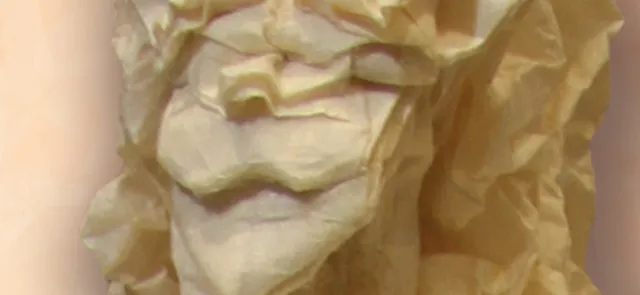
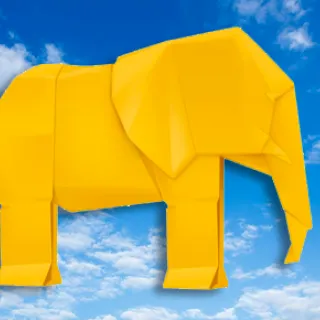
Paper folding is not only a pleasant diversion that teaches patience, precision and rigor. It is also a wonderful opportunity to question geometry. The mathematical results found by studying origami are indeed numerous, deep and full of surprises. One can thus exactly construct numbers that are inaccessible to the ruler and compass of Euclidean geometry. Or obtain any polygonal shape using… a single cut of scissors. Or identify the fold maps from a 'real' folding thanks to a few elementary but only recently discovered invariants. Paper folding, a mathematical discipline? You wouldn't believe it!

The great conjectures
What do we mean by the term 'conjecture'? How have they advanced mathematics? Mathematicians don't like a result resisting them: they regularly tackle the search for it until they find a solution. Fermat's Last Theorem kept the mathematical world in suspense for three and a half centuries. However, there are many other more or less famous conjectures, pending (Goldbach or the Riemann hypothesis), disproved or solved (some even very recently). Discover how mathematics prodigy Terence Tao proved Erdös' discrepancy conjecture!

The hidden side of probabilities and statistics
Students know this well: understanding probabilities and statistics often requires an adaptation period. Who has never confused correlation and causation? Chance being by nature unpredictable, how can we hope to build certainties on it? Even more surprising: how to create models on unpredictable phenomena? Our intuition being severely tested, paradoxes follow one after another, which the entertainment world (casinos, board games, media, card games or games of chance...) has known how to take advantage of. But taming chance even just a little brings powerful tools in a world where everything is connected: internet users' choices, online reservations, detection of unsolicited electronic mail rely on a theorem discovered three hundred years ago by an English theologian named Thomas Bayes.


The indispensable derivative
At first glance, the derivative, at the frontier between physics and mathematics, is nothing other than the instantaneous velocity of a moving object. But how to define it more precisely? Try then, without using limits... we seem to divide zero by itself! The greatest minds, from Fermat to Cauchy, passing through Newton, took centuries to rigorously and completely generalize this concept. Yet, it is found everywhere, in everything that varies; it allows us to predict the future in any deterministic phenomenon! A current example: your tax rate and the derivative get along very well...

The king of numbers
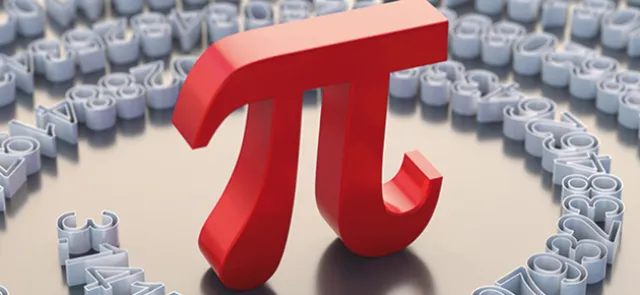
It is undoubtedly the most famous constant in all of mathematics after 0 or 1. The number π, whose history spans several millennia and continues to be written to this day, exerts a manifest fascination. Is it because of its omnipresence in geometry and its link with this perfect shape that is the circle? Or because the infinite sequence of its decimals seems totally random? Or yet because of the abyss that separates the simplicity of its definition from the difficulty one has in establishing its properties? What is certain is that π continues to give work to scientists and to intrigue us.


The line and real numbers
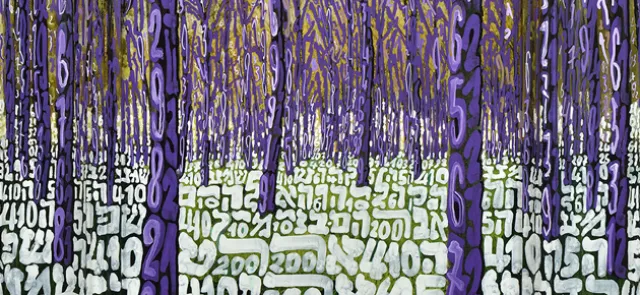
Representing real numbers as the points of a line is an idea that revolutionized geometry as much as analysis. Descartes, by locating the points of the plane with two numbers, played a major role in this. Since his contribution, we know how to express a line as an equation! The construction of real numbers in the 19th century is the culmination of the transition from an intuitive vision of the line to an axiomatic representation. This approach made it possible to study the notion of « proximity » of points, to define an interval and more generally to look at the topology of the real line.

The major concepts of economics
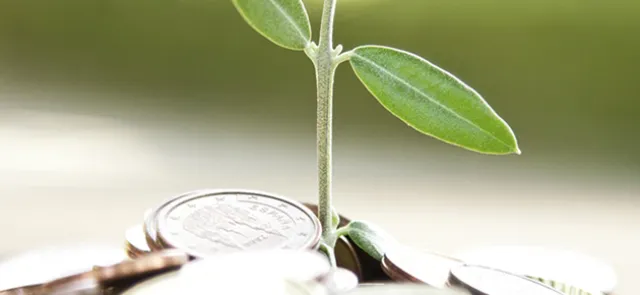
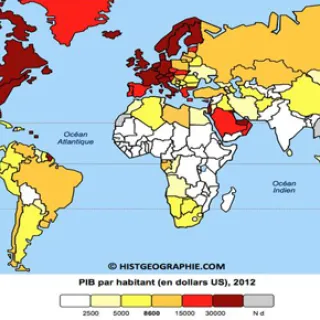
We only talk about it, without necessarily knowing what it covers! Economics studies the production and exchange of consumer goods, at the base of most human activities. Barter in early societies developed into a complex system. It is important to understand the essential concepts, constantly mentioned but whose meaning is often unknown: money (increasingly virtual), inflation, GDP, and the main indicators that structure and condition the health of states and citizens.


The mathematics of betting
At all times and in all civilizations, gambling and the chance that governs it have fascinated! Since the 15th century, mathematicians have gradually attempted to tame chance and to put betting into equation. Despite their conclusions, men still seek to "force the hand of fate" by developing martingales to win against the uncertain future. Can these strategies be applied to the next presidential elections? Do you know everything about odds, bookmaker methods and totally counterintuitive probabilistic paradoxes?